


Listen to the article
Iran Plunged Into Nationwide Internet Blackout as Death Toll Rises to 44
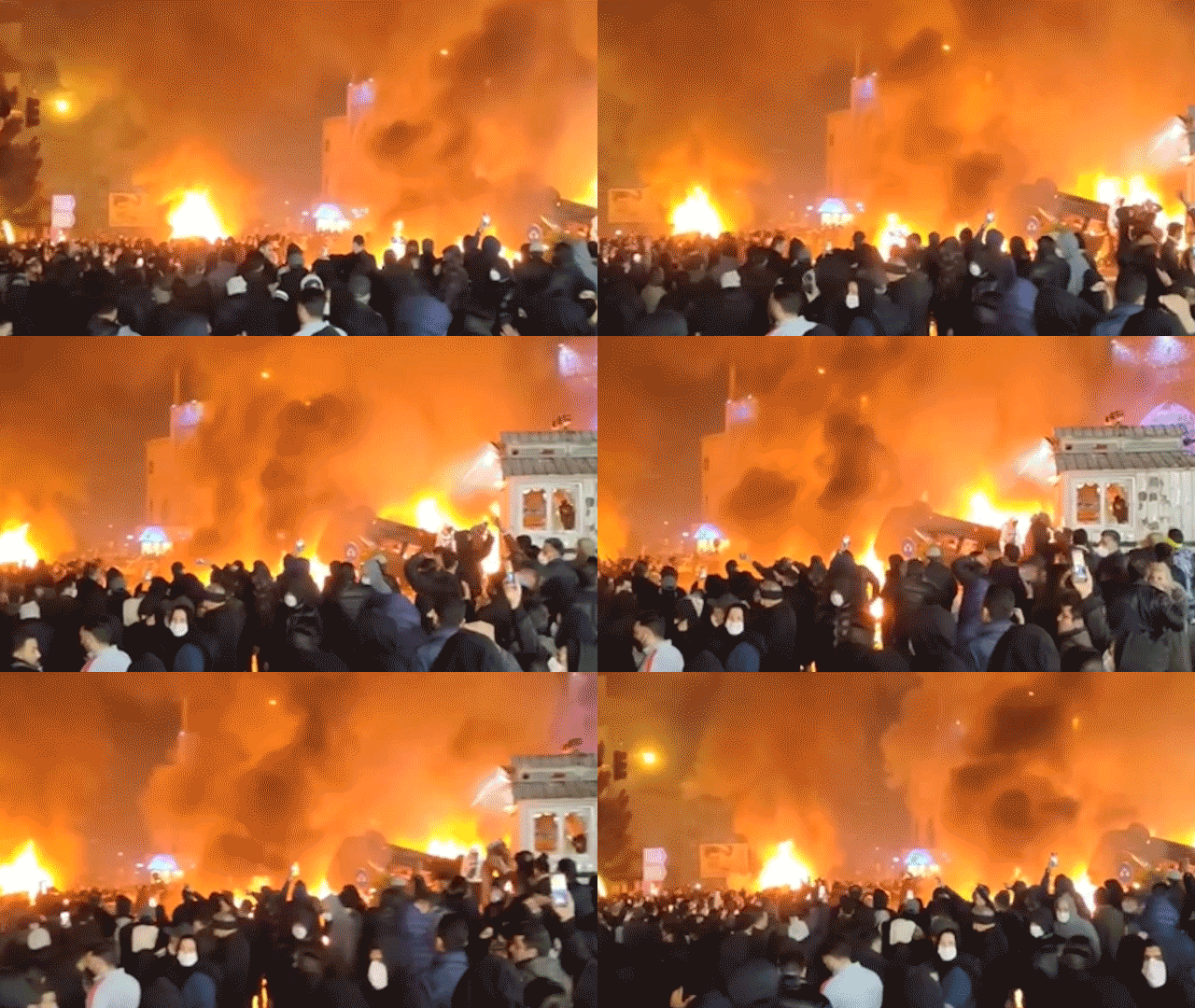
Iran has been thrust into a nationwide internet blackout as anti-regime protests intensify, severely limiting communication across the country. The demonstrations, now in their second week, have claimed at least 44 lives according to reports from opposition groups.
Live network data from NetBlocks revealed internet traffic collapsing across the troubled nation on Thursday evening, shortly after calls circulated for mass protests scheduled for 8 p.m. local time. The digital shutdown appears to be part of the regime’s strategy to contain the growing unrest.
“Around 1 p.m. local time, the internet traffic dropped,” said Ali Safavi, a member of the National Council of Resistance of Iran (NCRI). NetBlocks confirmed the outage followed “a series of escalating digital censorship measures targeting protests across the country,” while Associated Press reported that telephone lines were also cut in parts of Iran.
The communications blackout coincided with violent confrontations in several regions, including Lordegan in Chaharmahal and Bakhtiari provinces. In Isfahan, Iran’s third-largest city with approximately 2.3 million residents, “State radio and the TV station were set on fire by rebellious youth,” according to Safavi.
As digital communications went dark, the confirmed death toll rose sharply. The NCRI reported on Thursday that security forces had killed at least 44 protesters since the uprising began. The group released the names of 13 additional victims, describing them as “martyrs” of the nationwide uprising. Seven of these newly identified victims were from Lordegan, including a woman and two teenagers, reportedly killed by Revolutionary Guards and other security forces using live ammunition.
In Lordegan alone, security forces had reportedly killed eight protesters in a single day, while clashes also left a regime colonel and two Basij members dead. The violence has spread across the country, with protesters torching government buildings in cities including Lumar in Ilam province.
“Symbols of the state have been targeted nationwide,” Safavi noted. “Statues have been destroyed and set on fire. The day before, buses were set alight in Mashhad and another torched.”
The protests, which began in December following the collapse of Iran’s currency and soaring inflation, have evolved into a broader movement demanding the overthrow of the Islamic Republic. The unrest has now entered its 12th day with general strikes spreading across major commercial centers and street clashes intensifying, particularly in western Iran.
“Millions of Iranians from north to south and east to west have been out in the streets until nighttime,” Safavi explained. “Over the past 12 days, more young people have laid down their lives to free Iran.”
Footage circulating online showed protesters in Mashhad ripping an Iranian flag in half amid anti-government chants. In Tehran, demonstrators reportedly overturned a police car in the affluent Kaj Square area near the Alborz Mountains, while crowds shouted, “Death to the oppressor!”
The escalating situation has drawn international attention, with former U.S. President Donald Trump warning the regime against violent crackdowns. In an interview with Hugh Hewitt on Thursday, Trump cautioned that if Iranian authorities “start killing people, they will be hit very hard.”
When asked for a message to the Iranian people, Trump said: “You should feel strongly about freedom. There’s nothing like freedom. You’re brave people.”
The State Department’s Persian account on X subsequently reposted his warning in Farsi, underlining growing international concern about the situation.
As communications remain largely cut off, Reza Pahlavi, a prominent opposition figure, wrote on X: “Millions of Iranians demanded their freedom tonight. In response, the regime in Iran has cut all lines of communication. It has shut down the Internet. It has cut landlines. It may even attempt to jam satellite signals.”
The current protests represent one of the most serious challenges to the Islamic Republic’s authority in recent years, with demonstrations showing no signs of abating despite the increasingly severe crackdown.
Fact Checker
Verify the accuracy of this article using The Disinformation Commission analysis and real-time sources.

36 Comments
If AISC keeps dropping, this becomes investable for me.
Good point. Watching costs and grades closely.
Good point. Watching costs and grades closely.
Nice to see insider buying—usually a good signal in this space.
Good point. Watching costs and grades closely.
Good point. Watching costs and grades closely.
I like the balance sheet here—less leverage than peers.
Good point. Watching costs and grades closely.
Good point. Watching costs and grades closely.
Exploration results look promising, but permitting will be the key risk.
Good point. Watching costs and grades closely.
Exploration results look promising, but permitting will be the key risk.
Interesting update on Iran Cuts Internet Access as Protests Over 44 Deaths Sweep Major Cities. Curious how the grades will trend next quarter.
Good point. Watching costs and grades closely.
Good point. Watching costs and grades closely.
I like the balance sheet here—less leverage than peers.
Good point. Watching costs and grades closely.
Good point. Watching costs and grades closely.
Production mix shifting toward World might help margins if metals stay firm.
Good point. Watching costs and grades closely.
Good point. Watching costs and grades closely.
Production mix shifting toward World might help margins if metals stay firm.
Good point. Watching costs and grades closely.
Good point. Watching costs and grades closely.
Interesting update on Iran Cuts Internet Access as Protests Over 44 Deaths Sweep Major Cities. Curious how the grades will trend next quarter.
Good point. Watching costs and grades closely.
Good point. Watching costs and grades closely.
Interesting update on Iran Cuts Internet Access as Protests Over 44 Deaths Sweep Major Cities. Curious how the grades will trend next quarter.
Good point. Watching costs and grades closely.
Production mix shifting toward World might help margins if metals stay firm.
Good point. Watching costs and grades closely.
Nice to see insider buying—usually a good signal in this space.
Good point. Watching costs and grades closely.
Good point. Watching costs and grades closely.
Uranium names keep pushing higher—supply still tight into 2026.
Good point. Watching costs and grades closely.