


Listen to the article
Iran’s Army Chief Threatens Military Action Amid Rising Tensions with US and Domestic Protests
Iran’s army chief issued a stark warning on Wednesday, threatening preemptive military action in response to what he characterized as threatening “rhetoric” against the Islamic Republic. The comments from Major General Amir Hatami appear to be a direct reaction to recent statements from U.S. President Donald Trump, who warned that America would “come to the rescue” if Iran “violently kills peaceful protesters.”
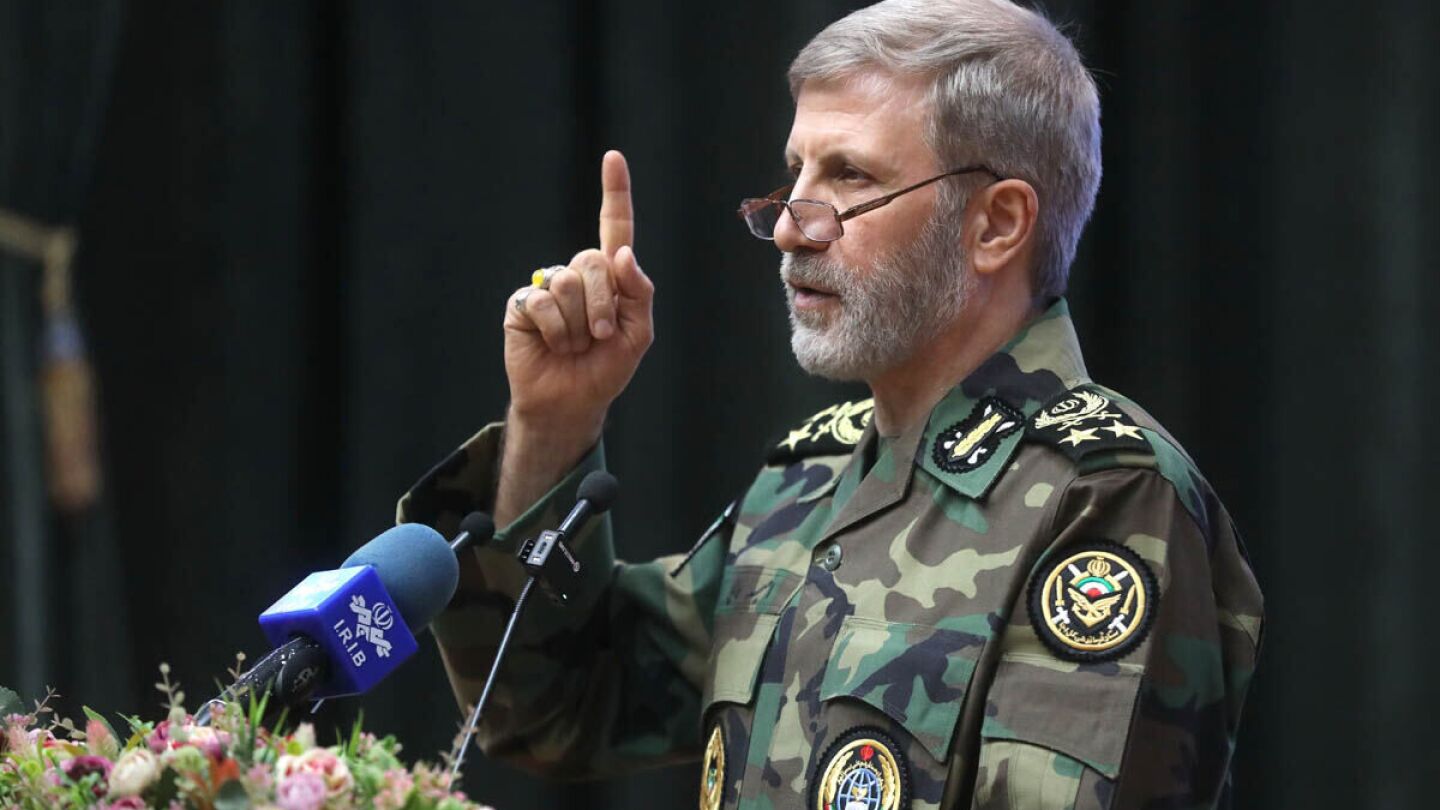
Speaking to military academy students, Hatami declared, “The Islamic Republic considers the intensification of such rhetoric against the Iranian nation as a threat and will not leave its continuation without a response.” He added with confidence that Iran’s armed forces are more prepared than ever, warning that “if the enemy commits an error, it will face a more decisive response, and we will cut off the hand of any aggressor.”
Hatami’s elevation to commander in chief of Iran’s regular army, known as the “Artesh,” represents a significant shift in Iran’s military leadership. He assumed the role after Israel killed several top Iranian military commanders during a 12-day conflict in June, making him the first regular military officer in decades to hold a position traditionally controlled by the Revolutionary Guard.
The military threats come as Iran faces mounting pressure from both external tensions and internal unrest. Iranian officials, including Supreme Leader Ayatollah Ali Khamenei, have been responding to Trump’s comments with increasing concern, particularly after the U.S. military operation that captured Venezuelan President Nicolás Maduro, a longstanding ally of Tehran. Despite the heated rhetoric, there have been no immediate signs of Iran preparing for military action in the region.
Meanwhile, the Iranian government is struggling to contain growing domestic unrest fueled by economic hardship. In an attempt to quell public anger, authorities began disbursing new subsidy payments on Wednesday, depositing the equivalent of $7 per month into the bank accounts of household heads across the country. State television reported that more than 71 million people will receive the benefit, which amounts to 10 million Iranian rials.
The subsidy represents more than double the previous payment of 4.5 million rials. However, the measure may provide little relief as the Iranian currency continues to plummet, now trading at over 1.4 million rials to the U.S. dollar. Iranian media have reported sharp increases in the prices of essential goods, including cooking oil, poultry, and cheese, further straining households already burdened by international sanctions and rampant inflation.
Mohammad Jafar Ghaempanah, Iran’s vice president for executive affairs, characterized the situation as a “full-fledged economic war” when speaking to reporters on Wednesday. He called for “economic surgery” to eliminate corruption and rentier policies within the country.
The current wave of protests began on December 28, following a sharp decline in the rial’s value after the June conflict with Israel and tightened international sanctions. Now in their eleventh day, demonstrations show no signs of abating. Social media videos purportedly show new cities joining the movement, including Bojnourd, Kerman, Rasht, Shiraz, and Tabriz, along with smaller towns.
According to the U.S.-based Human Rights Activists News Agency, which has been reliable in tracking previous unrest, at least 36 people have died during the demonstrations, including 30 protesters, four children, and two members of Iran’s security forces. The group reports that protests have spread to more than 310 locations across 28 of Iran’s 31 provinces, with over 2,100 people arrested.
The New York-based Soufan Center offered its assessment of the situation, noting that “more than a week of protests in Iran reflects not only worsening economic conditions, but longstanding anger at government repression and regime policies that have led to Iran’s global isolation.”
As economic pressures mount and tensions with the United States and Israel remain high, the Iranian regime faces perhaps its most significant challenge in recent years – attempting to maintain control domestically while projecting strength internationally.
Fact Checker
Verify the accuracy of this article using The Disinformation Commission analysis and real-time sources.

11 Comments
The threats from Iran’s army chief are deeply worrying. Both the US and Iran need to dial down the inflammatory rhetoric and focus on de-escalating tensions through patient, good-faith diplomacy.
Tensions are certainly high between Iran and the US. The army chief’s threat of preemptive action is concerning, but both sides need to exercise restraint to avoid further escalation.
Agreed. Inflammatory rhetoric from either side is unhelpful and could provoke unintended consequences. A diplomatic solution should be the priority here.
This is a concerning development. While Iran has legitimate security concerns, threatening preemptive strikes is an extremely risky and destabilizing move. All parties must exercise maximum restraint.
This is a highly volatile situation that requires cool-headed, pragmatic crisis management from all sides. Threats of military action are only going to inflame tensions further.
I agree. Resorting to force at this stage would be disastrous for the region. Maintaining open channels of communication and exploring diplomatic solutions should be the top priority.
Sabre-rattling from Iran’s army chief is not going to help matters. Both sides need to step back from the brink and focus on finding a diplomatic resolution to this brewing crisis.
I share your concern. Further escalation could have severe consequences for the region and global stability. Constructive negotiations are the only responsible path forward.
Iran’s army chief is playing a dangerous game with his bellicose rhetoric. Both the US and Iran need to step back, take a deep breath, and focus on finding a peaceful way to resolve this crisis.
This seems like a dangerous game of one-upmanship. The US and Iran need to find a way to de-escalate the situation through calm, measured dialogue rather than threats of military action.
Absolutely. The safety and security of the Iranian people should be the top concern for both governments. Cooler heads must prevail to avoid a disastrous conflict.