


Listen to the article
Russian President Vladimir Putin Operates from Hidden Locations Using Identical Offices, Investigation Reveals
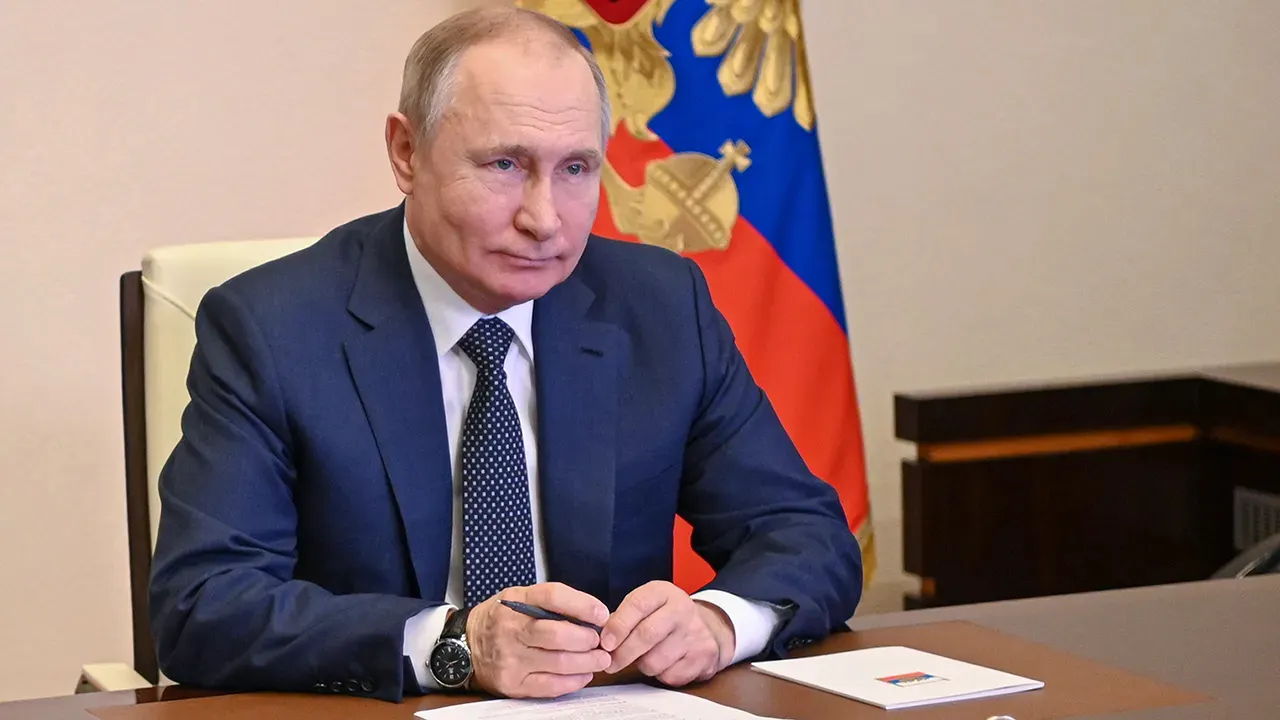
Vladimir Putin governs Russia from a series of hidden locations, using nearly identical offices to conceal his actual whereabouts, according to a comprehensive investigation by Radio Free Europe/Radio Liberty’s Sistema project. The report analyzed more than 700 Kremlin videos and found evidence that Putin frequently appears in broadcasts claimed to be from Novo-Ogaryovo near Moscow when he is actually at residences in Sochi or Valdai.
Researchers identified subtle differences between the seemingly identical offices, including thermostat shapes, door-handle placement, and decorative wall lines. Leaked itineraries of state television crews confirmed travel to Sochi and Valdai on dates when official captions stated Putin was “near Moscow,” further corroborating the deception.
Independent sociologist Konstantin Gaaze told RFE/RL that Putin’s current security and information control strategies “most resembles Saddam Hussein’s,” referencing the former Iraqi dictator’s use of multiple identical rooms and hidden residences to prevent assassination attempts. Security analysts noted that Putin’s Valdai compound, situated in dense forest approximately 250 miles northwest of Moscow, provides strategic advantages for protection, including easier deployment of Pantsir-M air-defense systems compared to more exposed locations like the Kremlin or Moscow suburbs.
Putin’s official estate, Novo-Ogaryovo, was built in the 1950s and became his primary workplace in the early 2000s. Satellite imagery reveals it is heavily fortified with high walls, helipads, and underground shelters. However, since the 2022 invasion of Ukraine, Putin has rarely been seen there.
Instead, investigators and satellite images reviewed by multiple news outlets indicate he now spends most of his time at the Valdai complex, a fortified lakeside facility hidden within forests between Moscow and St. Petersburg. His coastal residence in Sochi, once a preferred retreat, has reportedly been used less frequently since Ukrainian long-range drones demonstrated the capability to reach Russian territory.
The Sistema report claims the three matching offices were constructed gradually: Novo-Ogaryovo’s original around 2015, Valdai’s replica by 2018, and Sochi’s by 2020. Each features identical beige color schemes, furniture arrangements, and the Russian flag positioned behind Putin’s desk. This careful duplication allows Kremlin media to maintain the illusion of a single, stable center of power regardless of Putin’s actual location.
Russian opposition politician Maxim Katz told Fox News Digital that the findings reflect Putin’s obsession with personal safety. “He thinks NATO or the Ukrainians could strike him. For someone with a KGB background, it makes sense to have multiple identical rooms. They just didn’t execute it perfectly—you can see the differences.”
Katz added that the same security-conscious mentality governed Putin’s behavior during the COVID-19 pandemic. “It’s well known that he’s obsessive about his security and health—it was most obvious during COVID. Even ministers and prime ministers had to isolate for a week or two before meeting him,” Katz said.
The infamous long table used during French President Emmanuel Macron’s visit exemplified these concerns. According to Katz, “Macron refused a test, and Putin agreed to meet only at a very long table because he was afraid of infection.”
This pattern of extreme caution extends to Putin’s avoidance of frontline areas in the Ukraine conflict. “He never comes close to the front, or anywhere Ukrainians might reach. He takes his safety seriously and avoids unnecessary risks,” Katz observed.
The investigation provides rare insight into the secretive operational security measures of one of the world’s most powerful leaders, revealing how modern autocrats use technology and deception to maintain both personal security and the appearance of stability.
Fact Checker
Verify the accuracy of this article using The Disinformation Commission analysis and real-time sources.

14 Comments
The investigation into Putin’s use of multiple identical offices to conceal his location is a troubling example of the extreme measures authoritarian leaders will take to maintain an image of omnipresence and control. While the security rationale may be understandable, this tactic also reflects a concerning disregard for transparency and accountability.
Well said. This practice seems to prioritize the projection of power over genuine engagement with the public. It will be interesting to see if other nations adopt similar strategies, or if there is a growing global pushback against this erosion of democratic norms.
This report on Putin’s use of identical offices to conceal his whereabouts is a fascinating look into the security tactics employed by authoritarian leaders. While the rationale may be understandable, it also raises serious concerns about transparency and accountability. It will be interesting to see if this practice becomes more widespread among other nations.
Absolutely. The deception involved in this tactic undermines the public’s ability to hold their leaders accountable. It will be telling to see if there is any pushback against this erosion of democratic norms, or if other nations follow suit in an effort to maintain a facade of control.
The investigation into Putin’s use of identical offices to obscure his whereabouts is a fascinating insight into the security and information control strategies of authoritarian regimes. While the rationale may be understandable, it also highlights the troubling lengths that some leaders will go to avoid public scrutiny.
Agreed. This tactic seems to prioritize the projection of control over genuine openness and transparency. It will be telling to see if other nations adopt similar methods, or if there is a growing global pushback against this erosion of democratic principles.
This investigation provides an intriguing glimpse into Putin’s efforts to obfuscate his daily activities and locations. The use of multiple identical offices is a clever security measure, but it also reflects a troubling lack of openness from the Russian government.
Agreed. While the security rationale is understandable, the deception involved undermines public trust and accountability. It will be interesting to see if this practice becomes more widely adopted by other authoritarian leaders.
This report on Putin’s use of multiple identical offices to conceal his location is a striking example of the extreme measures authoritarian leaders will take to maintain a facade of omnipresence and control. While understandable from a security perspective, it also reflects a troubling disregard for transparency and accountability.
Well said. The deception involved in this tactic undermines the public’s ability to hold their leaders truly accountable. It will be interesting to see if other nations follow suit, or if there is pushback against this erosion of democratic norms.
The revelation that Putin utilizes a network of nearly identical offices to conceal his whereabouts is a fascinating example of the lengths authoritarian leaders will go to maintain an aura of omnipotence and control. This raises important questions about transparency and the public’s right to know the movements of their head of state.
Absolutely. This tactic seems to prioritize projecting an image of unwavering control over genuine engagement with the public. It will be telling to see if other nations adopt similar strategies to obscure the day-to-day activities of their leadership.
Interesting report on Putin’s use of identical offices to conceal his whereabouts. Seems like a sophisticated way to maintain control and security, though also raises transparency concerns. I wonder how common this practice is among other high-profile leaders.
You’re right, this tactic does seem to prioritize security over transparency. It makes me curious about other world leaders who may be employing similar methods to conceal their movements and activities.