


Listen to the article
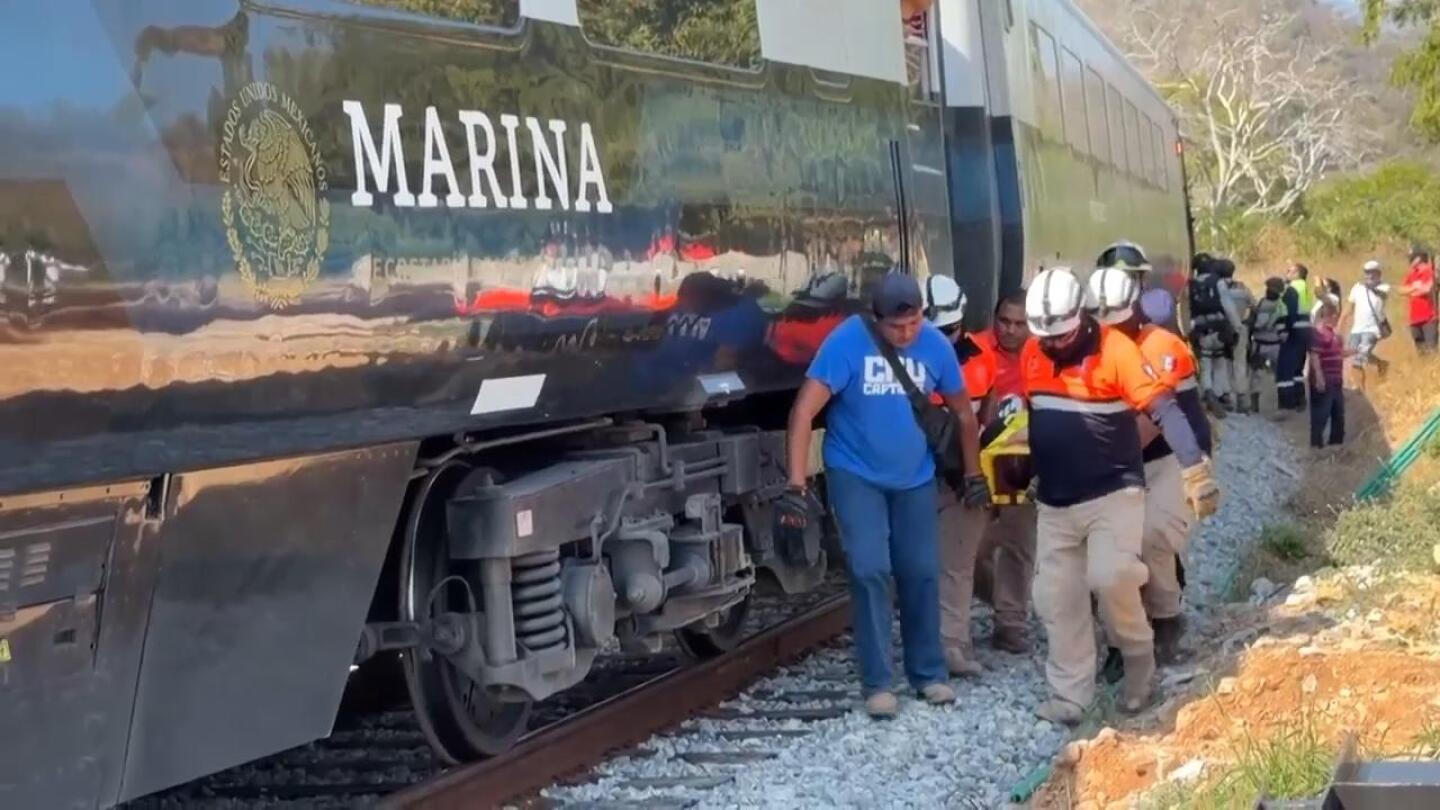
At least 13 people were killed and dozens injured when a passenger train derailed in southern Mexico on Sunday, disrupting traffic on a key transportation route connecting the Pacific Ocean with the Gulf of Mexico.
The Interoceanic Train, traveling between the states of Oaxaca and Veracruz, went off the rails while navigating a curve near the town of Nizanda in southern Mexico, according to officials.
Mexican President Claudia Sheinbaum confirmed the death toll on social media platform X, stating that 98 people were injured in the accident, with five of them in serious condition.
“The Mexican Navy has informed me that, tragically, 13 people died in the Interoceanic Train accident,” Sheinbaum wrote. She added that she had directed the secretary of the navy and the undersecretary of human rights from the Ministry of the Interior to travel to the site to personally assist affected families.
The train was carrying 241 passengers and nine crew members when the accident occurred. Oaxaca state Governor Salomon Jara reported that multiple government agencies had mobilized to the crash site to provide assistance to the injured.
The derailment represents a setback for Mexico’s ambitious infrastructure development plans in the southern region. The Interoceanic Train service was inaugurated just last year by then-President Andres Manuel Lopez Obrador as part of his administration’s broader initiative to revitalize train travel across southern Mexico.
The rail line is a cornerstone of the government’s development strategy for the isthmus of Tehuantepec, a narrow strip of land that represents Mexico’s shortest distance between the Pacific Ocean and the Gulf of Mexico. At approximately 125 miles (200 kilometers) wide at its narrowest point, the isthmus has long been viewed as a strategic corridor for trade and transportation.
Currently, the Interoceanic Train connects the Pacific port of Salina Cruz with Coatzacoalcos on the Gulf Coast, spanning approximately 180 miles (290 kilometers). The service forms part of Mexico’s broader Interoceanic Corridor project, which aims to position the region as a competitive alternative to the Panama Canal for certain shipping routes between Asia and the eastern United States.
Transportation safety advocates have previously raised concerns about Mexico’s rail infrastructure, particularly in remote areas where maintenance can be challenging. The accident occurs as Mexico continues efforts to modernize its rail network after decades of underinvestment.
Authorities have not yet determined the cause of the derailment, though investigations will likely focus on track conditions, train speed, and maintenance records. The curve near Nizanda where the accident occurred will be of particular interest to investigators.
The accident has temporarily halted operations on this strategic rail corridor, potentially affecting both passenger travel and freight movement through the region. Officials have not provided a timeline for when service might resume.
This derailment marks one of the most serious rail accidents in Mexico in recent years. It comes at a challenging time for the new administration of President Sheinbaum, who took office in October and has pledged to continue many of Lopez Obrador’s infrastructure initiatives.
Recovery efforts are ongoing at the site, with emergency teams working to clear the tracks and restore service while investigators gather evidence about the cause of the derailment.
Fact Checker
Verify the accuracy of this article using The Disinformation Commission analysis and real-time sources.

9 Comments
Sad to hear about the loss of life in this train accident. Reliable and safe public transportation is essential for economic development. Hopefully, this incident prompts a comprehensive review of infrastructure and safety procedures.
You raise a good point. Rail networks play a vital role in moving goods and people efficiently. Ensuring robust safety measures should be a top priority for transportation authorities.
Disasters like this are always concerning, especially when they impact public transportation. My condolences to the families of those who lost their lives. Infrastructure safety should be a top priority.
I agree. Maintaining and modernizing rail networks is crucial for efficient, sustainable transportation. Thorough inspections and safety measures are key to avoiding such tragic events.
This is a tragic situation. Reliable and safe public transportation infrastructure is crucial for economic growth and community wellbeing. I hope the authorities conduct a thorough investigation to identify and address any systemic issues.
Terrible news. Train derailments can have catastrophic consequences. My condolences to the families affected. Improving rail safety should be a top priority to protect passengers and prevent such devastating incidents.
My heart goes out to the victims and their families. Train accidents can be devastating, and I hope the investigation uncovers the root cause to prevent future incidents. Strengthening rail safety should be a key focus.
This is a terrible loss of life. Train derailments can have catastrophic consequences. I hope the investigation provides answers and leads to improved safety protocols to protect passengers.
Tragic accident. Train derailments can have devastating consequences. Hoping the injured make a full recovery and that authorities investigate the cause thoroughly to prevent similar incidents in the future.