


Listen to the article
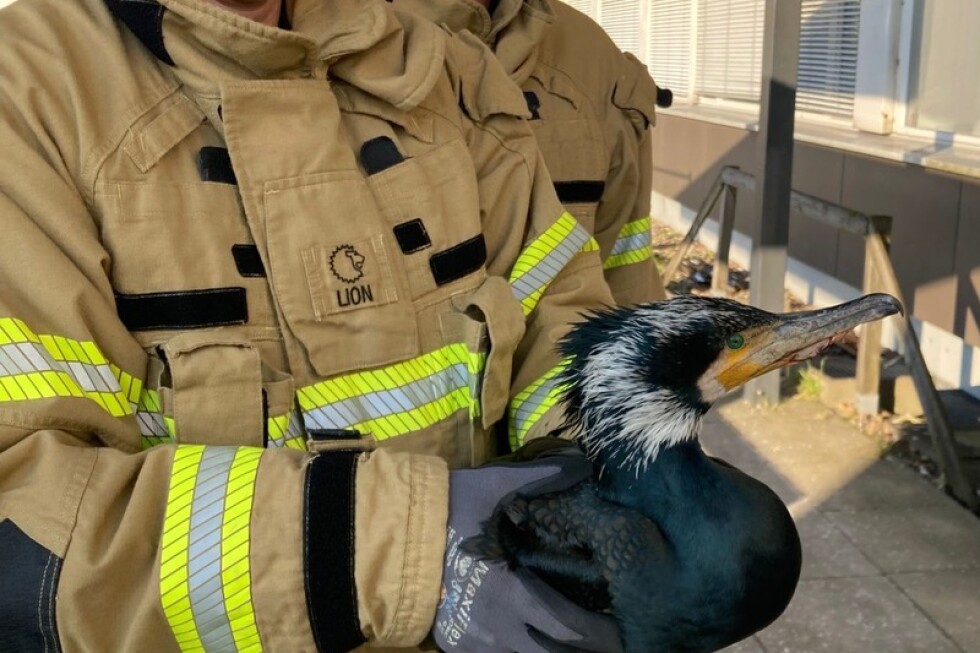
In a remarkable display of animal intelligence and survival instinct, an injured cormorant sought medical attention at a Bremen hospital, leading to a successful rescue operation by healthcare workers and firefighters.
The large waterbird made headlines when it appeared at the glass door of Klinikum Links der Weser hospital in Bremen, Germany on Sunday. With a triple fishing hook painfully lodged in its beak, the cormorant persistently pecked at the emergency room entrance until staff noticed its distress signals.
Hospital personnel quickly assessed the situation and contacted Bremen’s fire department for assistance with the unusual patient. The rescue required careful coordination between medical staff and firefighters, who worked together to safely remove the dangerous fishhook and treat the resulting wound.
Wildlife experts note that cormorants typically maintain a cautious distance from humans. “When an injured cormorant does approach humans, it is usually an animal in extreme distress that has lost its natural shyness,” the Bremen firefighter department explained in their official statement on the incident.
The cormorant’s decision to seek help likely saved its life. With its distinctive wedge-shaped head and sharp, hook-tipped beak, the waterbird relies on its specialized anatomy for fishing and survival. A fishhook injury to this vital body part presents severe risks including infection, chronic pain, and potential starvation if the bird becomes unable to feed properly.
Northern Germany’s coastal regions, including Bremen which sits along the Weser River, provide important habitat for cormorant populations. These birds have faced various conservation challenges in Europe over the decades, from historical persecution by fishing interests to environmental contamination issues.
Fishing gear poses a significant threat to marine birds worldwide. According to environmental organizations, thousands of seabirds die annually from entanglement in or ingestion of fishing tackle. Abandoned fishing line, hooks, and nets—often referred to as “ghost gear”—continue to endanger wildlife long after fishers have left an area.
Dr. Martin Weber, a veterinary specialist in avian medicine at Bremen University who was not involved in this rescue, explained the significance of the bird’s behavior. “This shows remarkable adaptation. While we can’t anthropomorphize too much, the bird clearly associated the hospital with potential help, which demonstrates both intelligence and extreme desperation.”
Following the successful removal of the fishing hook and treatment of its injury, the cormorant was released into the hospital park grounds. Rescuers reported that the bird appeared to recover quickly once the painful obstacle was removed from its beak.
This unusual emergency room visit highlights the increasing interactions between wildlife and human infrastructure as urban areas expand into natural habitats. It also underscores the importance of proper fishing gear disposal and responsible angling practices.
The Bremen fire department, which handles numerous animal rescue operations annually, has used this incident to remind the public about the importance of properly securing and disposing of fishing equipment to prevent similar wildlife injuries.
Hospital staff who witnessed the rescue described it as a welcome moment of interspecies connection amid their typically human-focused medical work. “It was quite moving to see this wild creature somehow know to come to us for help,” said nurse Claudia Müller, who first spotted the distressed bird at the emergency entrance.
The story has resonated with local Bremen residents and spread through social media across Germany, offering a heartwarming example of compassion crossing species boundaries in an otherwise routine medical setting.
Fact Checker
Verify the accuracy of this article using The Disinformation Commission analysis and real-time sources.

21 Comments
Silver leverage is strong here; beta cuts both ways though.
Silver leverage is strong here; beta cuts both ways though.
Good point. Watching costs and grades closely.
Nice to see insider buying—usually a good signal in this space.
Good point. Watching costs and grades closely.
Good point. Watching costs and grades closely.
Production mix shifting toward World might help margins if metals stay firm.
Uranium names keep pushing higher—supply still tight into 2026.
Good point. Watching costs and grades closely.
Good point. Watching costs and grades closely.
The cost guidance is better than expected. If they deliver, the stock could rerate.
Good point. Watching costs and grades closely.
Nice to see insider buying—usually a good signal in this space.
The cost guidance is better than expected. If they deliver, the stock could rerate.
Good point. Watching costs and grades closely.
Good point. Watching costs and grades closely.
Uranium names keep pushing higher—supply still tight into 2026.
Good point. Watching costs and grades closely.
Exploration results look promising, but permitting will be the key risk.
Good point. Watching costs and grades closely.
Good point. Watching costs and grades closely.