


Listen to the article
Indonesian Safari Park Celebrates Growth of Rare Giant Panda Cub
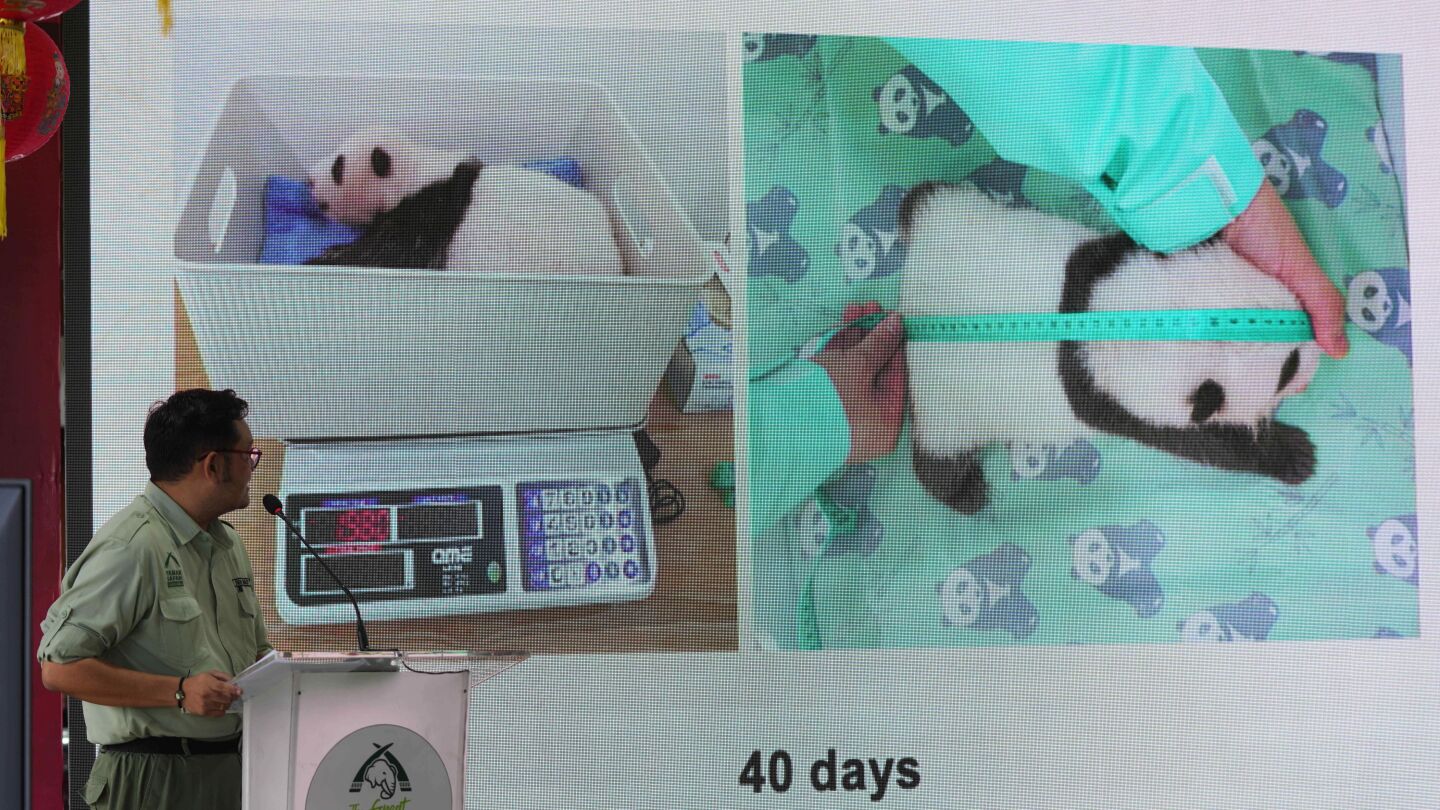
Indonesian conservation officials at Taman Safari park have released a video documenting the remarkable progress of a 40-day-old giant panda cub, showcasing his development from a tiny pink newborn to a recognizable black and white panda.
The cub, officially named Satrio Wiratama but affectionately called “Rio” by caretakers, underwent his first examination outside an incubator at the conservation facility in Cisarua, West Java province, approximately 70 kilometers from Jakarta.
“The panda cub is developing healthily and growing very well. Its body weight has increased by 46% over the past 30 days, while its body length has increased by 95%,” said Bongot Huaso Mulia, the veterinarian monitoring Rio’s development. This rapid growth rate indicates positive progress for the endangered species.
Born on November 27 to 15-year-old mother Hu Chun and father Cai Tao, Rio represents a significant achievement for Indonesia’s conservation efforts. The parent pandas arrived in Indonesia in 2017 as part of a 10-year conservation partnership with China, reflecting the ongoing “panda diplomacy” that has characterized China’s international wildlife conservation relationships.
The birth followed multiple attempts at breeding, highlighting the notorious difficulty pandas have reproducing in captivity. “We tried natural mating four times first, followed by four rounds of artificial insemination. It really was not easy,” Mulia explained. Rio was successfully conceived during the fourth artificial insemination attempt.
Giant pandas face significant reproductive challenges, which makes each successful birth especially noteworthy in the conservation community. Females have a brief annual fertility window of just 24-72 hours, and males in captivity often struggle with mating behaviors. These biological limitations have contributed to their endangered status.
The successful birth has diplomatic significance as well. China’s Ambassador to Indonesia, Wang Lutong, emphasized the importance of the event, stating, “This is the moment we’ve been waiting for. After years of hard work, finally we’ve got real. The baby panda, joining the global panda family.”
Pandas have long served as unofficial mascots for China, and the country’s practice of loaning these rare animals to foreign zoos and conservation centers—known as “panda diplomacy”—has been a soft power tool in international relations for decades. These arrangements typically involve significant fees and strict agreements regarding the animals’ care and the status of any offspring.
The birth at Taman Safari park marks an important addition to the global conservation effort for the species. According to latest estimates, fewer than 1,900 giant pandas remain in their native wild habitats across the Chinese provinces of Sichuan, Shaanxi, and Gansu. While the species was downgraded from “endangered” to “vulnerable” by the International Union for Conservation of Nature in 2016, pandas still face significant threats from habitat fragmentation and climate change.
Rio’s progress will continue to be closely monitored as he develops. In typical panda development, cubs begin to crawl at approximately three months and start eating bamboo alongside their mother’s milk at around six months. Most pandas remain with their mothers for up to three years before becoming independent.
The Taman Safari park has invested significantly in creating an appropriate environment for the pandas, including temperature-controlled enclosures and specialized dietary provisions to replicate their natural habitat. This successful birth demonstrates the effectiveness of these conservation measures and strengthens the wildlife preservation partnership between Indonesia and China.
Fact Checker
Verify the accuracy of this article using The Disinformation Commission analysis and real-time sources.

12 Comments
The growth rate of the panda cub is truly impressive. Veterinary care and a nurturing environment are clearly paying off. This is great news for the endangered giant panda species.
Wonderful to see the panda cub Rio thriving in Indonesia! Conservation efforts like this are crucial to protect endangered species. I’m glad the cub is growing so quickly and healthily.
As a mining industry observer, I’m curious to know if Indonesia’s panda conservation program has any links or synergies with the country’s mineral extraction efforts. Protecting biodiversity is so important alongside resource development.
That’s an interesting question. It would be worth looking into any connections between Indonesia’s panda program and its mining sector to understand how they are balancing conservation and economic priorities.
It’s heartening to see the panda cub thriving in Indonesia. This is an important milestone for the country’s conservation program and its partnership with China. I hope Rio continues to grow and thrive.
Rapid development of the panda cub is a positive sign, but I wonder about the long-term sustainability of this conservation effort. Maintaining healthy panda populations will require ongoing vigilance and resources.
The progress of the panda cub is truly remarkable. It’s great that Indonesia is partnering with China on this conservation program. Pandas are such iconic animals, and it’s heartening to see them being cared for.
Agreed. Panda diplomacy and international cooperation are key to preserving these special creatures for future generations.
Panda diplomacy between China and Indonesia sounds like an innovative approach to wildlife protection. I hope this partnership leads to continued growth and breeding success for the giant panda population.
Kudos to the Taman Safari park for their successful panda breeding program. This is a great example of how zoos and conservation facilities can play a vital role in preserving endangered species.
As an investor in mining and commodities, I’m curious to learn more about how Indonesia balances its environmental protection efforts, like the panda program, with its resource extraction industries. Responsible development is key.
46% weight gain and 95% length increase in just 30 days? That’s an impressive growth rate for the baby panda. The veterinarians must be doing an excellent job caring for Rio.