


Listen to the article
Indonesia implemented its newly ratified penal code on Friday, marking a historic shift in the country’s legal system by replacing colonial-era Dutch law that had governed the nation for more than eight decades.
The comprehensive 345-page criminal code, known as KUHP, represents the culmination of decades-long efforts to create a legal framework that better aligns with Indonesian values. The code was passed in 2022 and enters into force after a three-year transition period designed to prepare the justice system and public for the changes.
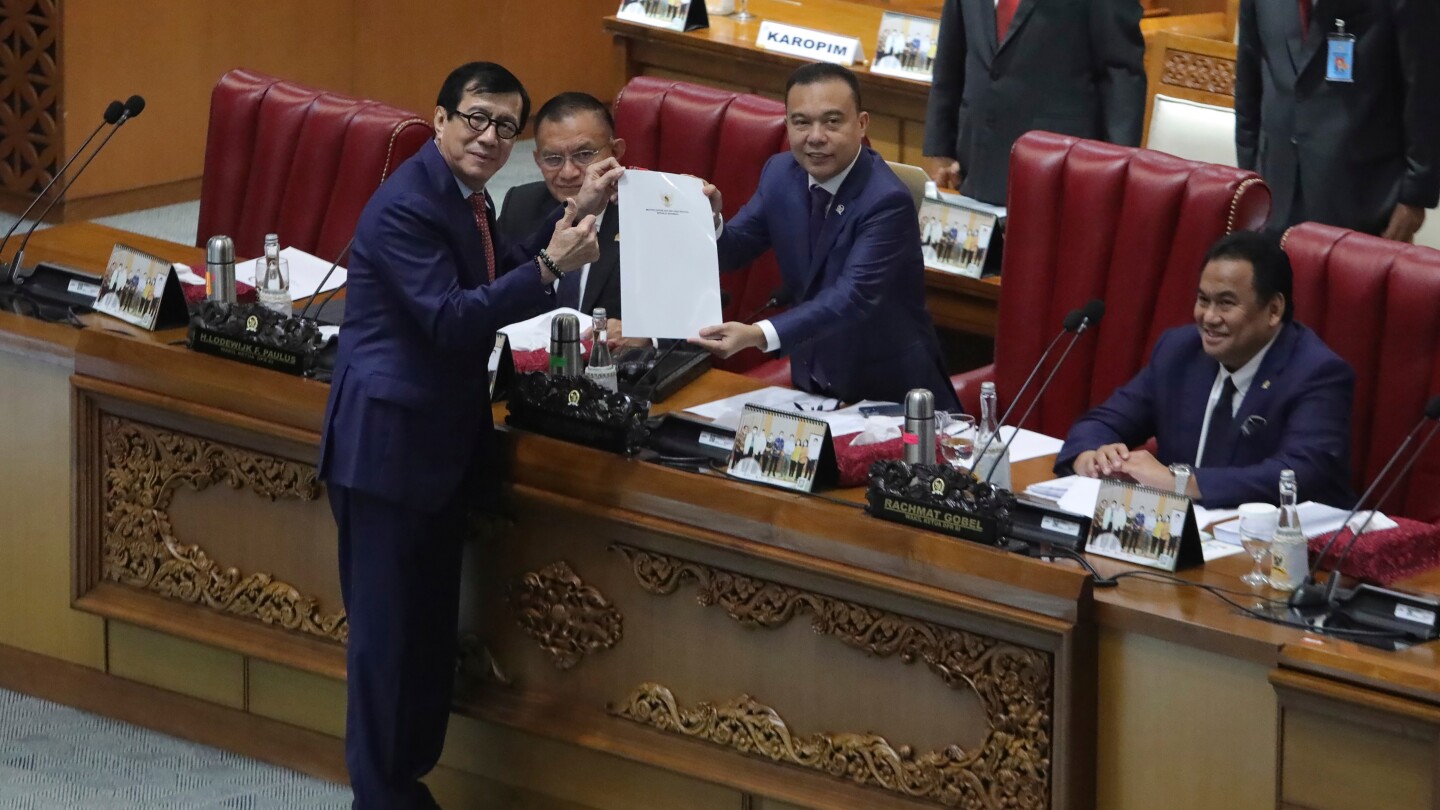
“This is a historic moment for the Indonesian nation,” said Coordinating Minister for Law, Human Rights, Immigration, and Corrections Yusril Ihza Mahendra. “The enforcement of the new penal code marks the end of the colonial criminal law era and the beginning of a more humane, modern, and just legal system rooted in Indonesian culture.”
Since declaring independence in 1945, Indonesia had continued operating under colonial legal structures widely criticized as outdated. Attempts to revise the code stalled repeatedly as lawmakers struggled to balance human rights protections with religious norms and local traditions in the world’s largest Muslim-majority country.
The previous attempt to pass a revised code in 2019 was halted by then-President Joko Widodo following nationwide protests involving tens of thousands of people. Critics at the time argued the draft contained discriminatory articles and lacked legislative transparency.
After a parliamentary task force finalized a new version in November 2022, lawmakers unanimously approved it the following month. The United States, through then-State Department spokesperson Ned Price, indicated it was “closely monitoring” the code’s development, reflecting international interest in Indonesia’s legal reforms.
Among the most controversial provisions are those criminalizing sex outside marriage, which carries a potential one-year prison sentence, and cohabitation, which is punishable by up to six months imprisonment. The government has emphasized that adultery cases can only proceed following a complaint by a spouse, parent, or child—a limitation officials say prevents arbitrary enforcement, particularly against tourists.
Human rights organizations remain unconvinced. Human Rights Watch has expressed concern that morality-based provisions could lead to privacy invasions and selective enforcement. The code also restores prohibitions on insulting the sitting president, vice president, state institutions, and the national ideology, with penalties of up to three years imprisonment.
Deputy Minister of Law Edward Hiariej noted that the government has issued guidelines distinguishing legitimate criticism from criminal insult, but rights advocates fear these provisions will nonetheless restrict free expression.
“This overreaching criminal code will entrench obstacles to freedom of speech while criminalizing legitimate and peaceful dissent,” said Amnesty International Indonesia executive director Usman Hamid, who described the KUHP as “a significant blow” to civil liberties.
The code maintains Indonesia’s blasphemy law, with prison sentences of up to five years for deviations from the core teachings of the country’s six officially recognized religions. It also preserves penalties for associating with Marxist-Leninist organizations and spreading communist ideology.
Not all aspects of the code have drawn criticism. Advocates welcomed lawmakers’ decision to drop a proposed article criminalizing homosexuality following opposition from civil society groups—a rare positive outcome for Indonesia’s LGBTQ community, which faces increasing discrimination.
While the revised code retains the death penalty despite calls from rights groups for its abolition, it introduces a 10-year probationary period after which death sentences may be commuted to life imprisonment or 20 years if the convict demonstrates good behavior.
Legal experts note the KUHP represents a fundamental shift in Indonesia’s sentencing philosophy. The Institute for Criminal Justice Reform praised the code’s expansion of non-custodial sentences, including community service and supervision, and the increased discretion given to judges in tailoring penalties.
“This is a good mechanism and meaningful progress for criminal justice reform,” said ICJR executive director Erasmus Napitupulu, who also highlighted the probationary mechanism for death row inmates as “an initial step toward eventually abolishing the death penalty in Indonesia.”
As Indonesia implements this sweeping legal reform, its effectiveness in balancing traditional values with modern human rights principles will likely determine whether it fulfills the government’s vision of a more just system or reinforces concerns about shrinking civil liberties in Southeast Asia’s largest democracy.
Fact Checker
Verify the accuracy of this article using The Disinformation Commission analysis and real-time sources.

14 Comments
The transition to this new penal code will likely face some challenges, but it’s a necessary evolution for Indonesia. Modernizing the legal system is important for the country’s development.
I agree. Indonesia is navigating a complex balancing act, and this reform is part of a broader effort to strengthen the rule of law and social cohesion.
I’m curious to see how this new penal code will impact religious minorities and human rights in Indonesia. Upholding universal principles while respecting local customs is tricky.
That’s an important consideration. Protecting the rights of all citizens should be a top priority as the new laws take effect.
It’s good to see Indonesia moving away from its colonial-era legal system. Developing a criminal code that aligns with the country’s values and culture is an important step.
You’re right. This change represents an assertion of Indonesian sovereignty and identity after decades of foreign rule.
Indonesia deserves credit for undertaking this complex reform. Updating a country’s criminal laws is no easy task, especially for a large, diverse nation like Indonesia.
Agreed. It will be crucial for the Indonesian government to ensure a smooth transition and engage the public throughout the implementation process.
This is a historic moment for Indonesia. Replacing the colonial-era legal framework with a system grounded in Indonesian values is a significant achievement.
Well said. It will be important to monitor how the new penal code is implemented and its real-world impact on Indonesian society.
This is a significant development, but the true test will be how the new laws are applied in practice. Effective implementation and enforcement are key.
Absolutely. The legal framework is only the first step – ensuring fair and consistent application across Indonesia’s diverse regions will be crucial.
This is an important milestone for Indonesia, moving away from its colonial legal legacy. It will be interesting to see how the new penal code balances modern human rights protections with local religious and cultural norms.
You raise a good point. Integrating diverse values and traditions within a unified legal framework is always a delicate challenge.