


Listen to the article
Hours after his release from police custody in connection with the deadly New Delhi blast investigation, Kashmiri shopkeeper Bilal Ahmed Wani set himself on fire, according to family members. The 55-year-old dry fruit seller, who died a day later from his injuries, was reportedly driven to self-immolation by the stress and humiliation of detention. His eldest son remains in custody.
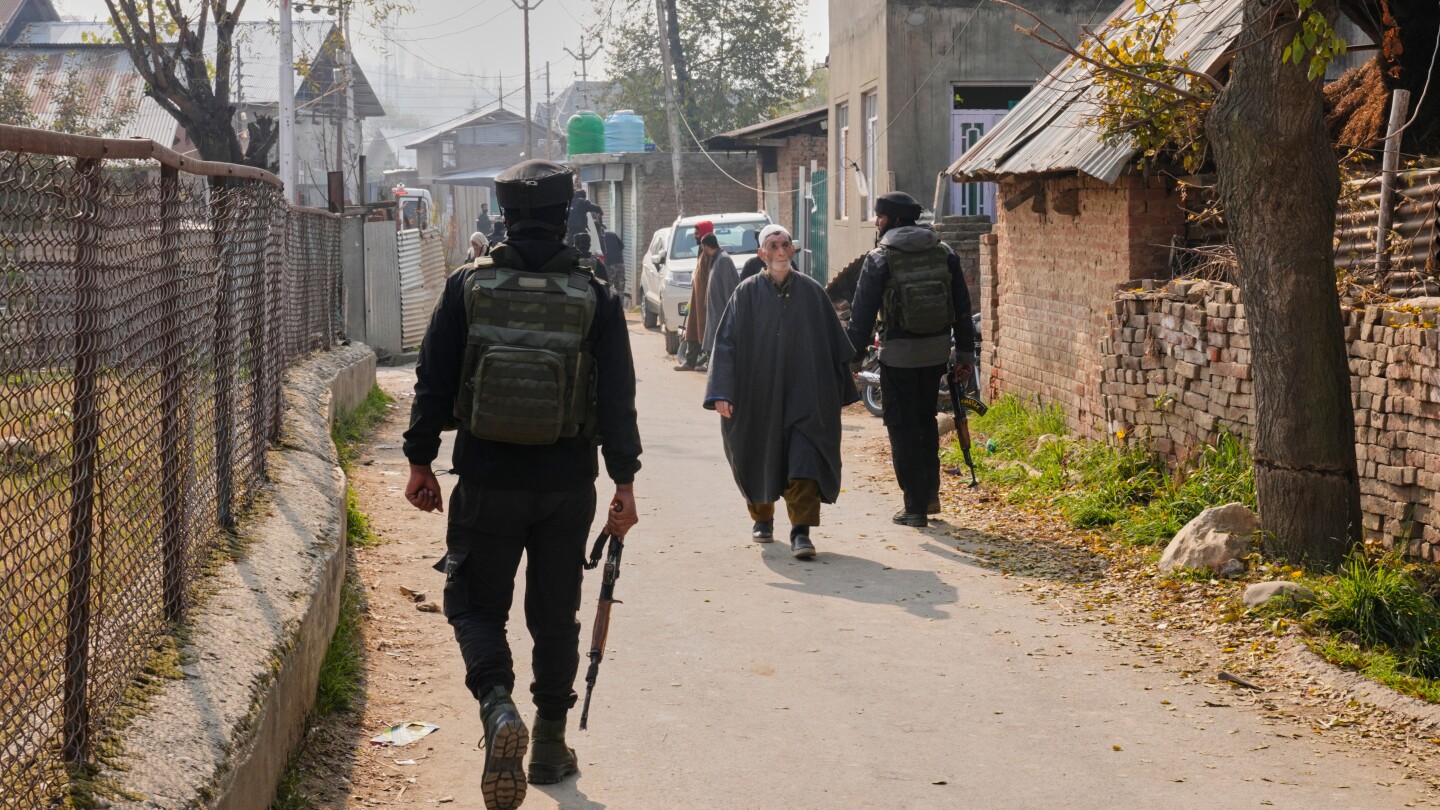
The November 10 explosion near New Delhi’s historic Red Fort killed 10 people and wounded 32 others. Indian investigators quickly launched sweeping security operations across Kashmir, detaining suspects and questioning thousands for potential links to what authorities termed a “heinous terror incident.” Hundreds remain in custody as the investigation continues.
The blast occurred shortly after police in Indian-controlled Kashmir announced they had dismantled a suspected militant cell operating from the region to the outskirts of New Delhi. Officers initially arrested at least seven people, including two Kashmiri doctors, and seized substantial quantities of bombmaking materials in Faridabad, a city near the capital.
In a tragic turn of events on November 14, some of the confiscated explosives brought to a police station in Kashmir’s Srinagar city detonated, killing at least nine people. The region’s top police officer, Nalin Prabhat, ruled out sabotage, suggesting mishandling of the explosive materials likely caused the secondary explosion.
The same day, police detained Wani’s eldest son, student Jasir Bilal Wani. The following day, authorities also held Wani himself, his younger son, and his brother, a physics lecturer. While Wani and his younger son were released that evening, family members say Wani returned home distraught. The next morning, he walked outside, doused himself with gasoline, and set himself ablaze. Despite being rushed to multiple medical facilities, he succumbed to his injuries.
Family members, speaking on condition of anonymity for fear of reprisals, maintain the men’s innocence and accuse authorities of using them as scapegoats in the investigation.
Security experts note that while crackdowns in Kashmir are not uncommon, particularly during periods of public unrest, the current operation is exceptionally severe. Only the restrictions imposed in 2019, when India revoked Kashmir’s special autonomous status, surpassed today’s measures in scope and intensity.
India’s National Investigation Agency has identified the suspected suicide bomber as Umar Un Nabi, a doctor, and stated that the car used in the New Delhi blast was registered to a Kashmiri man. Government forces subsequently demolished Nabi’s family home in Kashmir’s southern Pulwama district, continuing a controversial practice of destroying houses belonging to those accused of aiding militants.
The agency claims Wani’s son “worked closely with the terrorist Umar Un Nabi to plan the terror carnage,” alleging he provided technical support through drone modifications and rocket-making attempts.
Authorities have intensified scrutiny of what they describe as a “white-collar terror ecosystem of radicalized professionals and students,” with particular focus on Kashmiri medical practitioners. Several doctors, speaking anonymously due to security concerns, described the scrutiny as unprecedented and intrusive, creating a climate of fear within the medical community.
Avinash Mohananey, a former Indian intelligence officer who served in Kashmir, observed that the involvement of educated individuals in the alleged plot reflects deep-seated anger that has been building beneath the surface. “Kashmiris feel disempowered and humiliated” because their political aspirations remain unaddressed, Mohananey noted.
The Kashmir conflict dates back to 1989, when militants in the Indian-controlled portion began fighting against New Delhi’s rule. While India characterizes the Kashmir militancy as Pakistan-sponsored terrorism, Pakistan denies these allegations, and many Kashmiris consider it a legitimate freedom struggle for self-determination. Both India and Pakistan administer parts of Kashmir while claiming the territory in its entirety.
Praveen Donthi, a senior analyst with the International Crisis Group, attributes the current tensions to political disenfranchisement following India’s 2019 decision to revoke Kashmir’s special status. “This is fueling a groundswell of quiet anger and a resurgence of militancy,” Donthi explained.
Since 2019, authorities have intensified crackdowns on pro-freedom groups, independent media, and human rights activists in the region. In what officials call the creation of “Naya Kashmir” (New Kashmir), civil liberties have been curtailed and dissent suppressed.
“The crackdown following the New Delhi blast is adding to the existing sense of pervasive insecurity and vulnerability,” Donthi said. “A moderate approach by New Delhi to the region would be far more effective in preventing any further cycle of violence.”
Fact Checker
Verify the accuracy of this article using The Disinformation Commission analysis and real-time sources.

14 Comments
This is a very sensitive situation that requires a delicate touch. While the authorities must investigate the attack thoroughly, they must also avoid excessive force and respect the civil liberties of the Kashmiri people.
Transparency and accountability will be key to building public trust and preventing further escalation of tensions in the region.
The reported self-immolation of the Kashmiri shopkeeper is heartbreaking. Authorities must ensure fair treatment and avoid excessive force in their investigations to prevent further tragedies.
Cracking down too harshly could further inflame tensions in the already volatile region. A measured, rights-respecting approach is crucial.
The reported self-immolation of the Kashmiri shopkeeper is a heartbreaking consequence of the crackdown. I hope the authorities can find a way to balance security concerns with upholding the human rights of the local population.
A heavy-handed approach risks further inflaming tensions in the region. A measured, rights-respecting response is crucial to avoid making the situation worse.
The tragic loss of life in this attack is deeply concerning. However, a heavy-handed crackdown risks escalating tensions and harming innocent civilians. I hope the authorities can find a measured response that upholds the rule of law.
Striking the right balance between security and human rights will be crucial in the coming days. Careful, impartial investigation is needed to prevent further tragedies.
This is a complex and volatile situation that requires a nuanced approach. While the authorities must investigate the attack thoroughly, they must also be mindful of the potential for further escalation and the need to protect civil liberties.
Transparency and accountability will be critical to maintaining public trust and preventing the situation from spiraling out of control.
This is a very concerning situation in Kashmir. It’s critical that authorities conduct a thorough and impartial investigation into the attack, while also respecting civil liberties and avoiding further escalation of tensions in the region.
The loss of life is tragic, and the authorities must balance security concerns with upholding human rights. Transparency and due process will be key to maintaining public trust.
Dismantling suspected militant cells is understandable, but the detentions and questioning of thousands raise concerns about civil liberties. I hope the investigation is conducted with the utmost care and impartiality.
It’s a delicate balance – upholding security while protecting the rights of the Kashmiri people. Transparent, accountable policing will be critical.