


Listen to the article
European Leaders Unite Against Trump’s Tariff Threat Over Greenland Dispute
European governments have issued a coordinated rebuke to U.S. President Donald Trump’s announcement that eight European nations will face 10% tariffs beginning next month. The tariffs target Denmark, Norway, Sweden, France, Germany, the United Kingdom, the Netherlands, and Finland for opposing what Trump characterized as American control of Greenland.
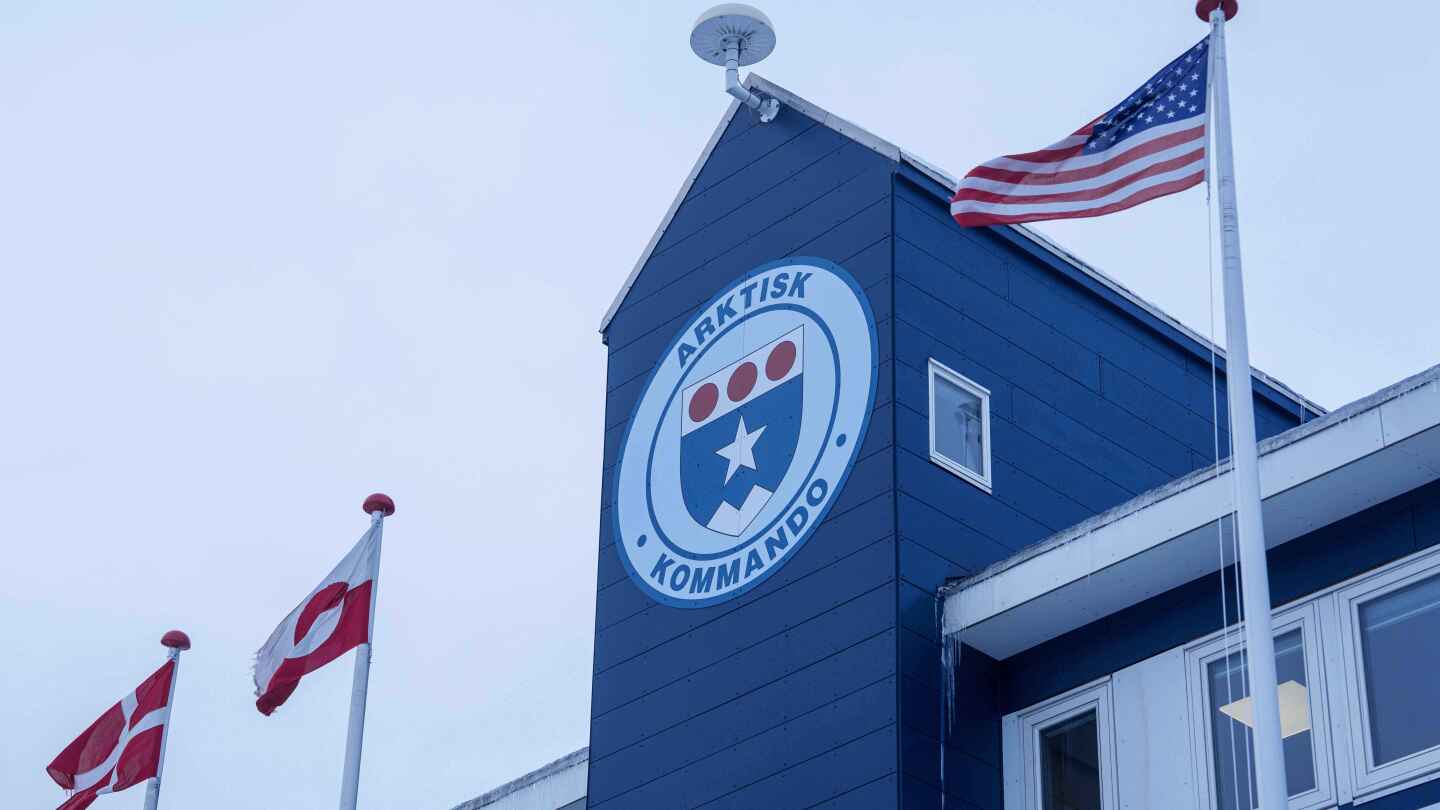
The dispute represents a significant test for transatlantic relations and NATO solidarity. According to Trump, the tariffs are retaliation for the deployment of European troops to Greenland. European officials counter that these deployments were actually in response to Trump’s own calls for strengthened Arctic security measures.
Danish Prime Minister Mette Frederiksen emphasized the broader implications of the conflict. “The Kingdom of Denmark is receiving strong support. At the same time, it has become even clearer that this is an issue that extends far beyond our own borders,” she stated, adding that allies must “stand firm on the fundamental values that created the European community. We want to cooperate, and we are not the ones seeking conflict.”
Norwegian Prime Minister Jonas Gahr Støre took a similarly firm stance. “Threats have no place among allies,” he wrote on social media, reaffirming that “Greenland is part of the Kingdom of Denmark” and noting that “Norway fully supports the sovereignty of the Kingdom of Denmark.”
The Scandinavian response remained resolute, with Swedish Prime Minister Ulf Kristersson declaring, “We will not allow ourselves to be blackmailed. I will always stand up for my country, and for our allied neighbors. This is an EU issue that concerns many more countries than those now being singled out.”
Major European powers echoed these sentiments. French President Emmanuel Macron stated firmly: “No intimidation or threats will influence us, whether in Ukraine, Greenland or anywhere else in the world when we are faced with such situations. Tariff threats are unacceptable and have no place in this context.”
The German government took a more measured approach, with government spokesperson Stefan Kornelius noting that Berlin “is in closest coordination with its European partners. Together, we will decide on appropriate responses at the appropriate time.”
British Prime Minister Keir Starmer reiterated the international consensus on Greenland’s status. “Our position on Greenland is very clear — it is part of the Kingdom of Denmark and its future is a matter for the Greenlanders and the Danes,” he said. Starmer added that “Arctic security matters for the whole of NATO” and criticized Trump’s approach, stating that “applying tariffs on allies for pursuing the collective security of NATO allies is completely wrong.”
Dutch Foreign Minister David van Weel highlighted the inappropriate mixing of trade and security matters. “It’s inappropriate, because we’re not in favor of using trade tariffs in situations that have nothing to do with trade,” he said during a television interview. “As allies, I don’t think this is how you should treat each other; not seek dialogue with each other, but try to put pressure on each other.”
Even Finnish President Alexander Stubb, who reportedly shares Trump’s passion for golf and has maintained cordial relations with him, emphasized that “among allies, issues are best resolved through discussion, not through pressure,” warning that tariffs “would undermine the transatlantic relationship and risk a dangerous downward spiral.”
In a show of unity, all eight countries issued a joint statement on Sunday defending their actions and rejecting Trump’s tariff threat. “As members of NATO, we are committed to strengthening Arctic security as a shared transatlantic interest. The pre-coordinated Danish exercise ‘Arctic Endurance,’ conducted with Allies, responds to this necessity. It poses no threat to anyone,” they wrote.
The statement concluded with a firm commitment to solidarity: “We stand in full solidarity with the Kingdom of Denmark and the people of Greenland… We will continue to stand united and coordinated in our response. We are committed to upholding our sovereignty.”
The dispute occurs against the backdrop of increasing geopolitical competition in the Arctic region, which contains valuable natural resources and strategic shipping lanes that are becoming more accessible due to climate change.
Fact Checker
Verify the accuracy of this article using The Disinformation Commission analysis and real-time sources.

12 Comments
The Trump administration’s aggressive stance on Greenland is troubling. Levying tariffs against allied nations over a territorial dispute is an escalation that risks damaging vital economic and security partnerships.
Absolutely. European leaders are right to push back firmly against these threats. Cooperation, not conflict, should be the priority for all sides.
This dispute over Greenland represents a significant test for transatlantic relations. I hope both sides can find a way to address their differences without damaging the vital economic and security ties between Europe and the US.
Agreed. Maintaining a strong NATO alliance should be the top priority here, not escalating trade conflicts. Cooler heads need to prevail on both sides.
The Trump administration’s aggressive posturing over Greenland is a concerning development. While the US may have strategic interests in the region, threatening tariffs against allies is an ill-advised approach that could backfire.
I agree. Europe’s response in defending their sovereignty and shared values is the appropriate way forward. Cooperation and diplomacy should prevail over unilateral economic pressure.
It’s unfortunate to see this dispute over Greenland turn into an economic conflict. While the US may see strategic value in the region, Europe’s concerns about sovereignty and shared values deserve respect.
Agreed. Threatening tariffs is a heavy-handed tactic that is unlikely to resolve this complex geopolitical issue. A more diplomatic approach would be better for all involved.
This seems like a concerning escalation in the tensions between the US and Europe over Greenland. While Trump’s tariff threats are worrying, I’m glad to see a coordinated European response defending their sovereignty and shared values.
Agreed, a united European front is crucial here. This dispute over Greenland could have far-reaching implications for NATO and transatlantic relations if not handled carefully.
This situation highlights the fragility of the transatlantic relationship under the current US administration. I hope cooler heads can prevail and the two sides can find a way to address their differences constructively.
Absolutely. Maintaining a strong NATO alliance should be the priority, not escalating trade disputes over Greenland. Deescalation and dialogue are needed here.