


Listen to the article
Hundreds of Thousands Gather to Mourn Former Bangladesh PM Khaleda Zia
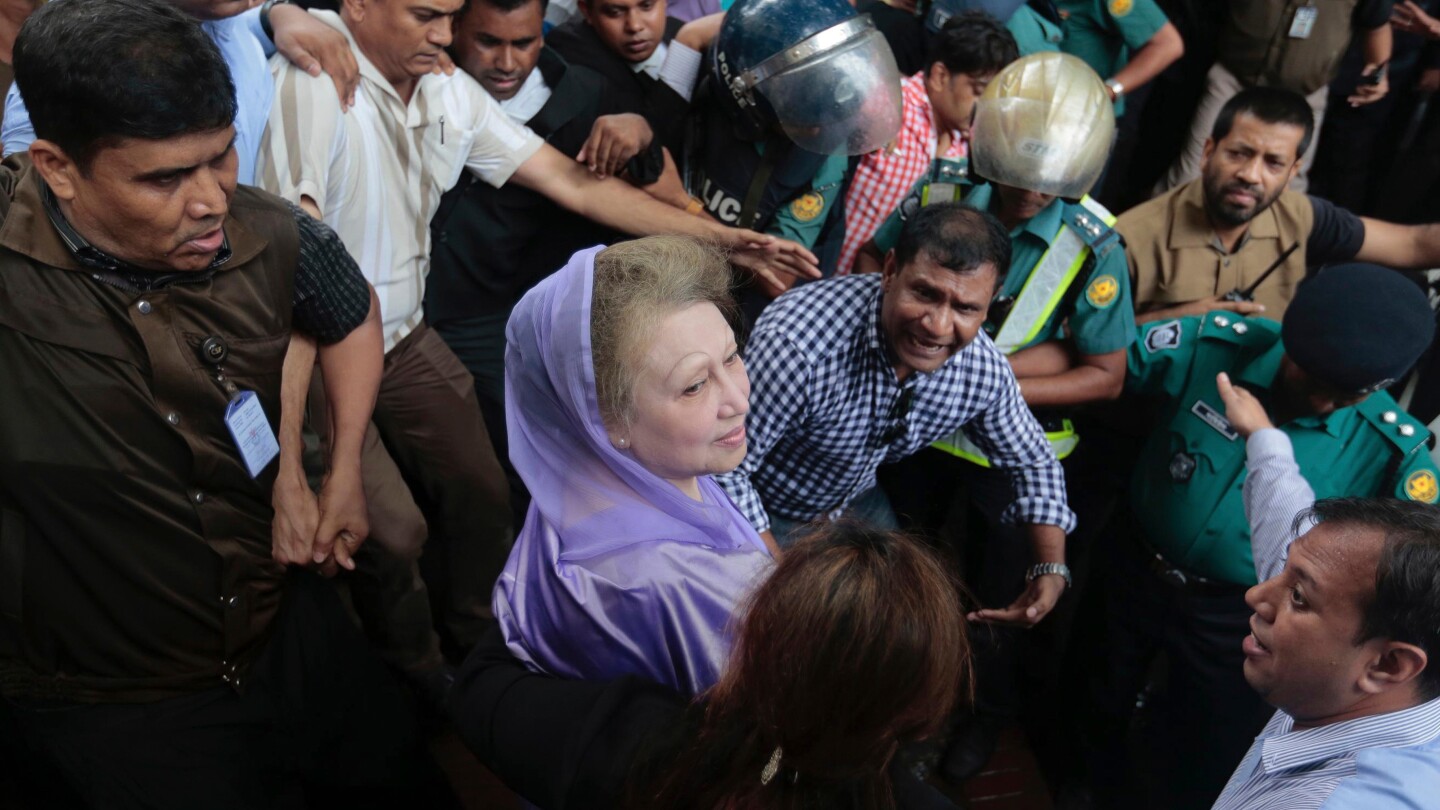
Massive crowds converged on the grounds outside Bangladesh’s national parliament building in Dhaka on Wednesday to attend funeral prayers for former Prime Minister Khaleda Zia, who died Tuesday at age 80 after a prolonged illness.
Mourners began streaming toward the venue on Manik Mia Avenue early in the morning, with many traveling overnight from rural areas. Witnesses reported emotional scenes as supporters openly wept, referring to Zia as their “mother.” The crowds were so extensive that in neighborhoods kilometers away from the main venue, streets overflowed with people joining in prayer.
“This is more than a funeral—it’s a historic gathering,” said one local observer, noting that streets throughout Dhaka had been transformed into impromptu prayer grounds as the formal ceremony took place.
The funeral drew dignitaries from across South Asia, with representatives from 32 countries in attendance according to local media. India’s External Affairs Minister S. Jaishankar personally met with Zia’s elder son Tarique Rahman to deliver a letter from Indian Prime Minister Narendra Modi. Officials from Pakistan, Nepal, Sri Lanka, and Bhutan also traveled to Dhaka to pay their respects.
By late afternoon, Zia was buried with state honors beside the grave of her husband, former president Ziaur Rahman, who was assassinated in a military coup in 1981. The burial site, located in a park outside the parliament building, saw soldiers forming an honor guard and offering a salute as family members stood in solemn attendance.
The Bangladesh interim government, led by Nobel Peace Prize laureate Muhammad Yunus, declared three days of national mourning and a public holiday on Wednesday. Flags across the country were flown at half-staff to honor Zia, who held the distinction of being Bangladesh’s first female prime minister.
Zia’s political career, spanning over four decades, began following her husband’s assassination. She rose to prominence as an opposition leader during a nine-year movement against military dictatorship, which ended with a mass uprising in 1990. Her subsequent electoral victory in 1991 marked a significant moment in Bangladesh’s transition to parliamentary democracy. She would go on to serve two full terms as prime minister, plus a brief third term.
Throughout her political life, Zia maintained a fierce rivalry with Sheikh Hasina, who led the Bangladesh Awami League party and ruled the country for 15 years before being ousted in a mass uprising earlier this year. Hasina, currently in exile in India, was sentenced to death in absentia last month on charges related to last year’s uprising.
Security was tight throughout the funeral proceedings, with authorities deploying approximately 10,000 security personnel, including soldiers, around the venue to maintain order.
The death of Khaleda Zia comes at a pivotal moment in Bangladesh’s political landscape. Her son, Tarique Rahman, is currently the acting head of her Bangladesh Nationalist Party, which is positioned as the frontrunner in the country’s upcoming elections scheduled for February.
Political analysts suggest Zia’s death could significantly reshape Bangladesh’s political future. “Her passing removes one of the country’s most enduring political figures, creating both challenges and opportunities for her party,” noted one regional expert.
As Bangladesh continues to navigate a period of political transition following Hasina’s ouster, the massive turnout for Zia’s funeral underscores her enduring influence on the nation’s political consciousness, even after years of illness had limited her public appearances.
Fact Checker
Verify the accuracy of this article using The Disinformation Commission analysis and real-time sources.

8 Comments
While Zia was a polarizing figure, the massive turnout shows the deep loyalty she inspired among her supporters. Her legacy and the future of her political party will be closely watched in the months ahead.
Massive turnout for the former PM’s funeral reflects her enduring political influence and the deep respect she commanded among the Bangladeshi people. It’s a poignant moment that highlights the complexities of the country’s political landscape.
The funeral of a former prime minister is always a significant event, but the scale of this gathering underscores Khaleda Zia’s continuing importance in Bangladeshi politics, even after her passing. It will be interesting to see how the country moves forward.
The presence of so many foreign dignitaries underscores the important role Khaleda Zia played in regional geopolitics during her time as prime minister. Her passing will likely have ripple effects across South Asia.
Indeed, her relationships with leaders like Modi and Musharraf were crucial. Her funeral is a significant event that deserves close observation for what it may signal about Bangladesh’s future direction.
This is a somber moment for Bangladesh, as the country bids farewell to a former head of state who left a complex and contentious political legacy. The large crowds reflect the enduring passions she evoked, for better or worse.
Zia was a towering figure in Bangladeshi politics, and her death will undoubtedly have ramifications for the country’s political dynamics. The massive crowds at her funeral are a testament to her enduring influence, for good or ill.
You’re right, her passing marks the end of an era in Bangladeshi politics. It will be crucial to see how her party and other political forces respond in the coming months.