


Listen to the article
In a dramatic escalation of U.S. intervention in Latin American affairs, President Donald Trump has invoked the historic Monroe Doctrine to justify the military capture of Venezuelan leader Nicolás Maduro. The operation marks one of the most significant applications of this two-century-old foreign policy principle in recent decades.
The Monroe Doctrine, formulated by President James Monroe in 1823, originally aimed to prevent European powers from colonizing or interfering in the Western Hemisphere. In his announcement of Maduro’s arrest, Trump referenced this cornerstone of American foreign policy, even jokingly referring to his adaptation as the “Don-roe Doctrine.”
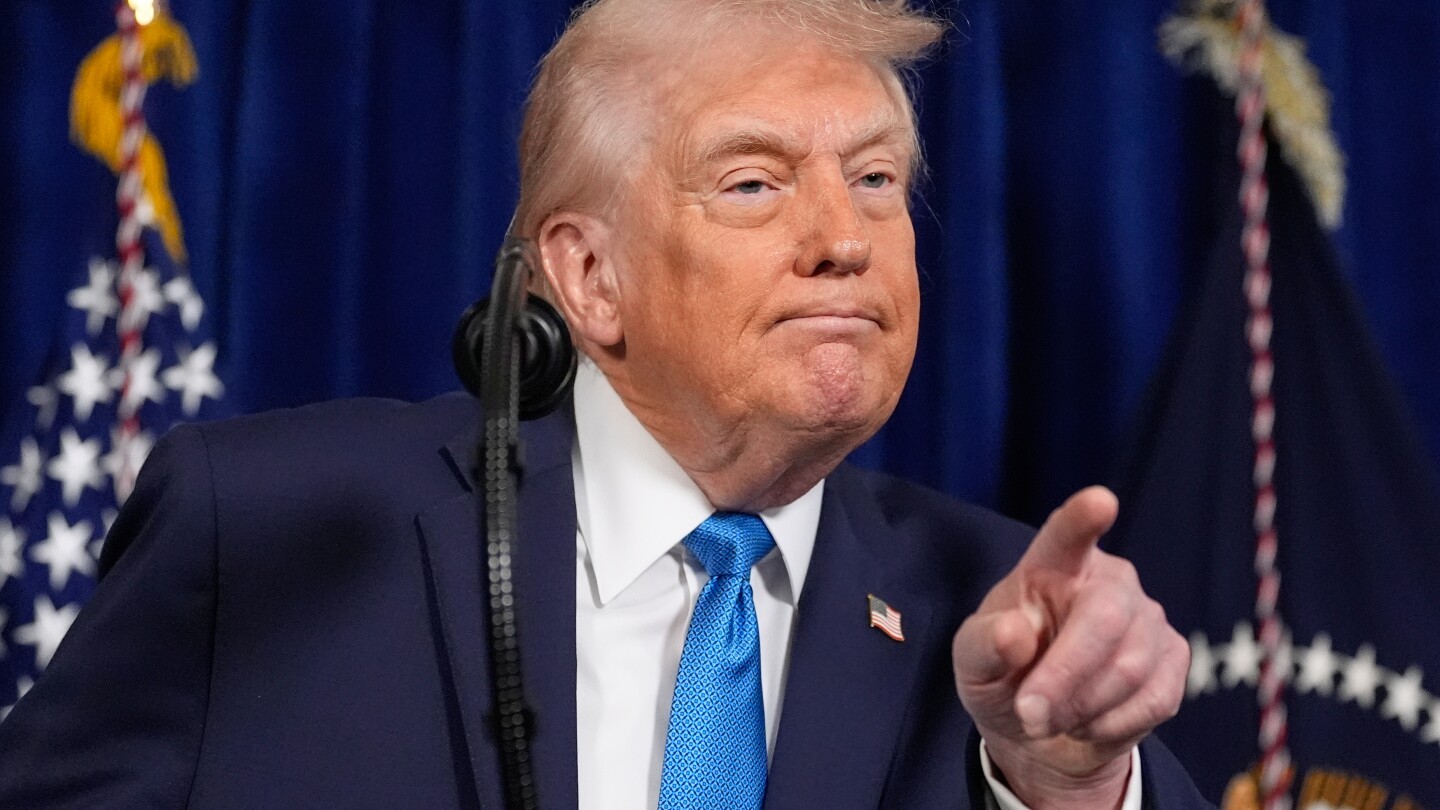
“Under our new national security strategy, American dominance in the Western Hemisphere will never be questioned again,” Trump declared, signaling a bold reassertion of U.S. influence in the region. The president cited Venezuela’s hosting of “foreign adversaries” and acquisition of “menacing offensive weapons that could threaten U.S. interests” as violations of the doctrine’s core principles.
Trump further justified the operation by claiming the U.S. would temporarily “run” Venezuela until a suitable replacement for Maduro could be established. When questioned about how this aligned with his “America First” policy, Trump defended the action as strengthening America itself – particularly emphasizing Venezuela’s energy resources as critical for both the U.S. and global markets.
The administration’s national security strategy explicitly references a “Trump Corollary to the Monroe Doctrine,” designed to “restore American preeminence in the Western Hemisphere.” This approach represents a significant shift in regional engagement, including military strikes on alleged drug trafficking vessels in the Caribbean Sea and eastern Pacific Ocean.
“For decades, other administrations have neglected or even contributed to these growing security threats in the Western Hemisphere,” Trump stated. “Under the Trump administration, we are reasserting American power in a very powerful way in our home region.”
Historians and political scientists note that Venezuela has frequently been at the center of Monroe Doctrine applications throughout American history. Jay Sexton, a history professor at the University of Missouri and author of “The Monroe Doctrine: Empire and Nation in Nineteenth-Century America,” observed that “Venezuela has been the pretext or trigger for a lot of corollaries to the Monroe Doctrine” dating back to the 19th century.
The doctrine has evolved significantly since its inception. In 1904, Theodore Roosevelt expanded it with what became known as the Roosevelt Corollary, asserting the U.S. right to intervene in unstable Latin American countries. This justification supported numerous interventions, including securing the Panama Canal Zone. During the Cold War, presidents invoked the doctrine to counter communist influence, most notably during the Cuban Missile Crisis and in opposition to Nicaragua’s Sandinista government.
Gretchen Murphy, professor at the University of Texas and author of “Hemispheric Imaginings,” sees Trump’s use of the doctrine as following established patterns. She argues Trump is “citing the Monroe Doctrine to legitimate interventions that undermine real democracy, and ones where various kinds of interests are served, including commercial interests.”
The Venezuelan operation may create divisions among Trump’s supporters, particularly those who oppose foreign entanglements. “This is not just the sort of hit-and-run kind of job,” noted Sexton. “This is going to be potentially quite a mess and contradict the administration’s policies on withdrawing from forever wars — and there’s a lot of isolationists within the MAGA coalition.”
The administration has built up the largest U.S. military presence in the Western Hemisphere in generations, reimagining America’s regional footprint while focusing on combating narcotics flow and controlling migration. This expanded military posture reflects the broader ambitions outlined in the “Trump Corollary.”
As the situation unfolds, the international community watches closely to see how this modern application of the Monroe Doctrine will reshape U.S.-Latin American relations and what precedent it sets for future interventions in the region.
Fact Checker
Verify the accuracy of this article using The Disinformation Commission analysis and real-time sources.

7 Comments
The Monroe Doctrine has long been a cornerstone of US foreign policy in the Western Hemisphere. But its modern application against Maduro raises questions about America’s commitment to principles of non-intervention and self-determination.
Maduro’s hosting of ‘foreign adversaries’ and acquisition of ‘offensive weapons’ are serious allegations. The US is clearly concerned about Venezuela’s growing ties with countries like Russia and China in the region.
It will be interesting to see how this plays out and what the implications are for US-Venezuela relations and the balance of power in Latin America.
This is a complex geopolitical situation with a lot of historical context. I hope any US action in Venezuela is measured and seeks to prioritize regional stability and the wellbeing of the Venezuelan people.
While the Monroe Doctrine has historically been used to counter European influence, it’s concerning to see it applied so aggressively against a Latin American leader. This could further destabilize the region and raise tensions.
I’m curious to hear more about the legal and diplomatic justifications the US is using to intervene in Venezuela in this way. It sets a concerning precedent.
This is a significant move by the US, invoking the Monroe Doctrine to justify action against Maduro. It demonstrates a more assertive and interventionist approach to Latin American affairs under the Trump administration.