


Listen to the article
Hong Kong Cancels New Year’s Fireworks in Aftermath of Deadly Fire
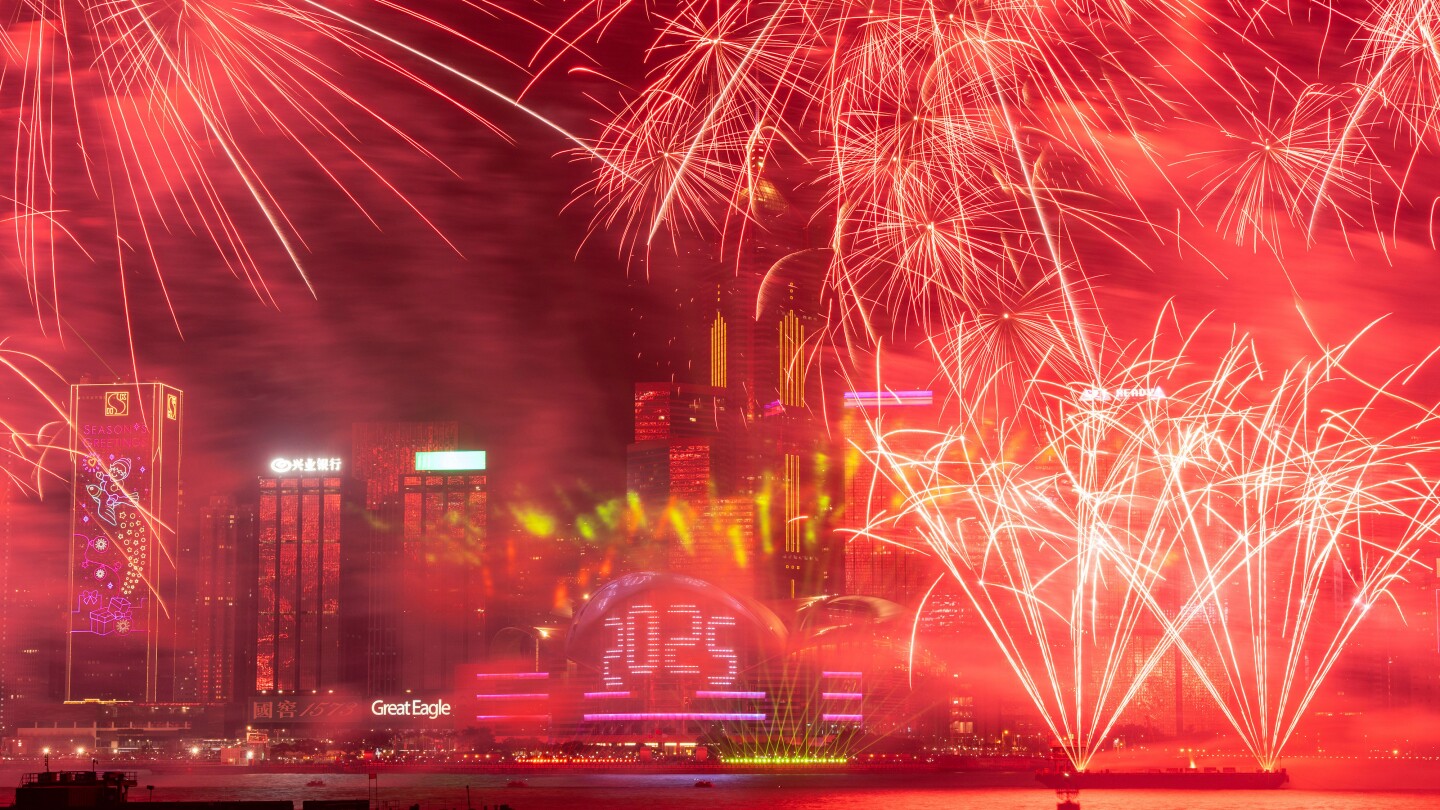
Hong Kong will welcome 2026 without its traditional New Year’s fireworks display over Victoria Harbor, a decision made in the wake of November’s devastating fire that claimed at least 161 lives. The pyrotechnic show, typically a highlight of the territory’s New Year celebrations, has been replaced with alternative festivities as the city continues to mourn.
The Hong Kong Tourism Board has organized a music concert featuring Australian soft rock duo Air Supply and other performers at Central, one of the city’s primary business districts and home to the popular nightlife area Lan Kwai Fong. When the clock strikes midnight, eight landmark buildings will transform into giant countdown displays, culminating in a three-minute light show.
For decades, fireworks displays have been integral to Hong Kong’s major celebrations, including the New Year, Lunar New Year, and National Day. The spectacular shows against the backdrop of Hong Kong’s iconic skyline typically attract hundreds of thousands of spectators, including many international tourists who gather along both sides of the harbor promenade.
Rosanna Law, Hong Kong’s secretary for culture, sports and tourism, acknowledged on Tuesday that the absence of fireworks would impact local hotels and restaurants, many of which typically offer special packages and viewing events for the display. The hospitality industry, still recovering from years of pandemic-related disruptions, will likely feel the financial effects of this cancellation during what is normally a peak tourism period.
Despite the disappointment, many visitors expressed understanding about the decision. Annie Wang, a university student visiting from Shanghai, told reporters she had originally planned to watch the fireworks but fully supported the cancellation after learning about the tragic fire. “It’s quite regretful. But there’s no way around it after the fire,” Wang said.
Another tourist, Wang Miao, a teacher from neighboring Guangzhou, planned to participate in the official countdown activities despite the absence of fireworks. “It doesn’t affect our experience in Hong Kong,” she remarked, acknowledging the somber circumstances behind the decision.
By early Wednesday evening, crowds had already begun gathering near the performance stage in Central, eager to secure prime viewing spots for the musical performances that would replace the traditional pyrotechnic display.
The fire that prompted the cancellation erupted at Wang Fuk Court in the northern suburban district of Tai Po in late November, marking Hong Kong’s worst blaze since 1948. The apartment complex was undergoing extensive renovations, with buildings encased in bamboo scaffolding and green protective netting – common construction practices in the territory.
Investigators have identified substandard netting materials and foam boards installed on windows as key factors that contributed to the fire’s rapid spread through the residential complex. The devastating blaze left thousands of residents displaced, with many now living in transitional homes, hotels, and youth hostels as they struggle to recover from their losses. Many victims had spent years saving to purchase the homes that were destroyed.
The cancellation of celebratory events following tragedies is not unprecedented in Hong Kong. Similar decisions were made after a 2012 vessel collision that killed 39 people, prompting the cancellation of National Day fireworks in 2013, and following a 2018 bus crash that claimed 19 lives, leading to the cancellation of Lunar New Year celebrations. Multiple fireworks displays were also scrapped during the 2019 anti-government protests and throughout the COVID-19 pandemic.
The irony of canceling fireworks in China’s territory is particularly poignant given that fireworks themselves trace their origins to China. According to the American Pyrotechnics Association, the discovery of fireworks dates back to the second century B.C. in China, when someone noticed that bamboo stalks created loud explosions when thrown into fire, becoming the world’s first natural “firecrackers.”
The Guinness World Records organization attributes the first documented firework to Li Tian, a monk from China’s Tang dynasty (618-907 C.E.), who discovered that gunpowder enclosed in hollow bamboo stems created powerful explosions. Li reportedly bound these crackers together to create traditional New Year firecrackers meant to drive away evil spirits – a tradition that has evolved into the spectacular displays that normally illuminate Hong Kong’s skyline on New Year’s Eve.
Fact Checker
Verify the accuracy of this article using The Disinformation Commission analysis and real-time sources.

11 Comments
Canceling the iconic fireworks display is a solemn but prudent move by Hong Kong authorities. After such a devastating loss of life, it’s understandable they would want to create a more somber and reflective atmosphere for the new year. I hope the alternative festivities can still capture the spirit of the occasion.
While the fireworks are a beloved tradition, I think Hong Kong is making the right call here. After a tragedy of this magnitude, it’s important for the city to mourn and heal rather than engage in large-scale celebrations. The alternative festivities sound like a thoughtful way to mark the new year.
Agreed. Honoring those lost and allowing the city to reflect is more important than keeping up appearances right now.
The decision to cancel the fireworks is undoubtedly a difficult but necessary one. Hong Kong’s New Year celebrations are world-famous, so this will be a significant shift. I’m curious to see how the city adapts its festivities to strike the right tone.
The light displays and music performance seem like meaningful ways to mark the occasion while honoring the tragedy. It will be interesting to see if this sets a new precedent for Hong Kong’s future New Year celebrations.
Interesting to see Hong Kong forgo its iconic New Year’s fireworks display this year after the tragic fire. While it’s understandable given the somber mood, I hope the city can find meaningful ways to honor those lost and celebrate the new year in a respectful manner.
The light show and music concert sound like thoughtful alternatives. It’s important to balance mourning with hope and resilience as the city moves forward.
It’s a shame to see Hong Kong’s famous New Year’s fireworks display canceled, but given the recent tragedy, it’s understandable. The light and music shows sound like an appropriate way to welcome 2026 with a more somber and reflective tone. Hopefully the city can find a way to restore the fireworks in future years when the time is right.
Agreed. The city needs time to heal, and these alternative festivities seem like a respectful compromise.
This is a tough but necessary decision by Hong Kong authorities. After such a devastating fire, it would be inappropriate to carry on with the usual raucous New Year’s celebrations. The light shows and music performance strike a more somber and reflective tone, which is what the city needs right now.
While the fireworks are a beloved tradition, I think Hong Kong is making the right call here. After a tragedy of this magnitude, it’s important for the city to mourn and heal rather than engage in large-scale celebrations. The light show and music concert sound like thoughtful ways to mark the new year.