


Listen to the article
Margarita Island: Hezbollah’s Growing Stronghold in the Caribbean
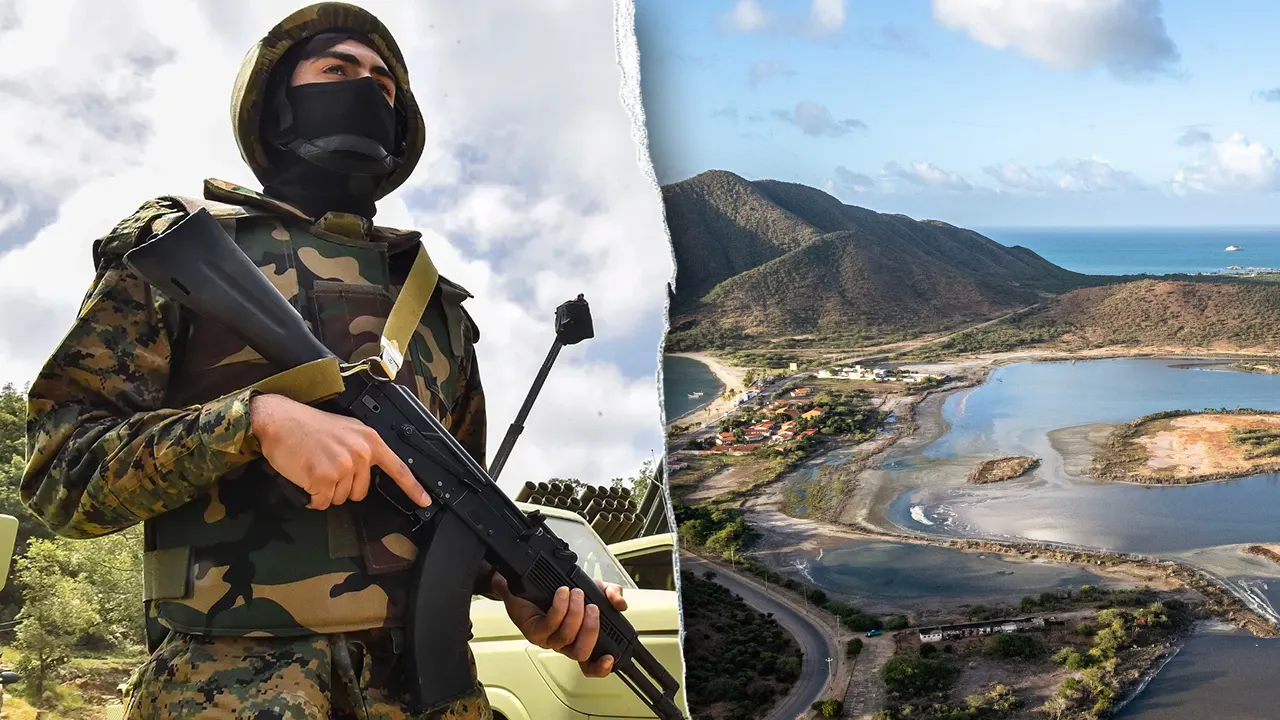
From a distance, Margarita Island appears to be an idyllic Caribbean getaway. Palm-lined beaches, duty-free shops, and resort towns create the image of a tropical paradise just off Venezuela’s northeastern coast. But beneath this tourist-friendly facade lies a more troubling reality: U.S. officials now identify the island as Hezbollah’s most important base of operations in the Western Hemisphere.
The threat has grown under the protection of Nicolás Maduro’s regime and with Iran’s expanding influence in the region. “The single most serious threat to the United States from the Western Hemisphere is from transnational terrorist criminal groups primarily focused on narcotrafficking,” Secretary of State Marco Rubio warned during a recent State Department press conference.
Melissa Ford Maldonado, director of the Western Hemisphere Initiative at the America First Policy Institute, explained the island’s strategic significance: “Margarita Island might be of significance to the U.S. because of its location and the security dynamics around it. It is close to Trinidad and Tobago and Grenada, in an oil-rich part of the Caribbean along key maritime routes, and it has long had a reputation for being a major drug-trafficking hub.”
The island’s relative isolation from Venezuela’s mainland and limited law enforcement presence have made it attractive to “irregular armed groups, foreign intelligence actors and criminal networks that use it as a departure point for boats carrying illicit shipments,” according to Maldonado.
Marshall Billingslea, former assistant secretary for Terrorist Financing and Financial Crimes in the U.S. Treasury Department, describes the island as “the center of gravity” for Hezbollah’s Western Hemisphere operations. “From what I have seen and what I have been told, there is a wide range of activities that Hezbollah and to some extent Hamas are engaged in,” he said.
The transformation of Margarita Island into a terrorist stronghold began more than two decades ago under Hugo Chávez’s leadership. According to Billingslea’s testimony to the Senate Caucus on International Narcotics Control, Chávez “opened its doors to Hezbollah, allowing the group to establish a major footprint, including a paramilitary training site, on Margarita Island.”
The situation intensified after Maduro seized power. “The breadth and depth of Hezbollah’s presence in Venezuela dramatically expanded, as did their ties to the narco-terrorist regime and the Cartel de los Soles,” Billingslea noted. This cartel, a network of senior Venezuelan officials accused by the United States of drug trafficking, maintains close ties with the terrorist organization.
Hezbollah has strategically embedded itself into Margarita Island’s economy, taking advantage of the island’s duty-free status and proximity to Colombia to generate revenue through smuggling operations and drug importation. The group reportedly operates numerous businesses on the island and maintains several training facilities.
Venezuela’s government has actively facilitated Hezbollah’s presence in the country. Former senior official Tareck El Aissami, while overseeing Venezuela’s passport and naturalization agency, reportedly provided passports and citizenship documents to Hezbollah operatives and thousands of individuals from Lebanon, Syria, and Iran. Between 2010 and 2019, Venezuelan authorities issued more than 10,400 passports to people from these countries.
A 2020 Justice Department announcement further revealed that Diosdado Cabello, a high-ranking Venezuelan official, allegedly directed lawmaker Adel El Zabayar to travel to the Middle East to obtain weapons and recruit members of Hezbollah and Hamas for training at clandestine camps inside Venezuela.
Recent developments in the Middle East have elevated Margarita Island’s importance to Hezbollah. Israel’s military campaign in Lebanon has damaged the group’s leadership and financial infrastructure, forcing greater reliance on overseas networks.
“Israeli successes against Hezbollah in Lebanon in particular, including their strikes on the financial infrastructure Al-Qard al-Hassan that operates in Lebanon, are going to have two effects,” Billingslea explained. “The first is that it is making the fundraising and the revenue generation that comes out of Latin America even more important to the terrorist group. Secondly, we have seen indications that Hezbollah actually has been relocating fighters from Lebanon, several hundred from Lebanon to Venezuela in particular.”
This relocation positions Hezbollah “close to the U.S. and further away from the Israelis,” according to Billingslea, potentially heightening security concerns for the United States.
Iran’s role in Venezuela has grown alongside Hezbollah’s presence. “There is a substantial Iranian footprint in Venezuela related to the trade of weapons and drones, in particular, for gold,” Billingslea noted. After setbacks in the Middle East, “the Iranians find themselves even more dependent on that supply of gold in exchange for drones and weapons.”
While the United States has positioned military forces in the Caribbean to address potential threats, Billingslea emphasized that effectively countering Hezbollah requires precise intelligence. He believes the Venezuelan opposition possesses valuable intelligence that the U.S. government may not be fully utilizing.
For Billingslea, the conclusion is clear: eliminating Venezuela’s narco-terrorist regime would significantly strengthen U.S. national security and reduce the growing threat posed by Hezbollah’s Caribbean stronghold.
Fact Checker
Verify the accuracy of this article using The Disinformation Commission analysis and real-time sources.

14 Comments
The infiltration of Margarita Island by Hezbollah operatives is a concerning development that could have far-reaching implications for regional stability and security. This underscores the need for vigilance and proactive measures to prevent the group from further entrenching its presence in the Caribbean.
Absolutely. The potential for Hezbollah to leverage its position on Margarita Island to facilitate illicit activities, like drug trafficking and money laundering, is a serious threat that requires immediate attention and a comprehensive response.
The decline in tourism on Margarita Island is a concerning development that underscores the broader instability and security challenges facing the region. Hezbollah’s infiltration of the island highlights the need for increased vigilance and a comprehensive regional strategy to address the group’s activities and influence.
Agreed. The strategic importance of Margarita Island, coupled with the Maduro regime’s complicity, creates a perfect storm that Hezbollah is exploiting to its advantage. Addressing this issue will require a concerted effort to disrupt the group’s operations and isolate it from its financial and logistical networks.
The declining tourism on Margarita Island is a worrying sign of the instability and insecurity plaguing the region under Maduro’s rule. This provides an ideal environment for Hezbollah to expand its presence and operations, further destabilizing the area.
Absolutely, the collapse of the tourism industry on the island is a clear indicator of the broader economic and political crisis in Venezuela, which Hezbollah is exploiting to its advantage. This situation requires a comprehensive regional strategy to address both the security and humanitarian dimensions.
This news underscores the importance of monitoring and disrupting Hezbollah’s global financial and logistical networks. Their presence in the Caribbean, in close proximity to the U.S., poses a significant threat that needs to be taken seriously by policymakers and law enforcement.
You make a good point. Hezbollah’s integration with transnational criminal organizations, like drug trafficking groups, provides them with funding and operational capabilities that enable their expansion into the region. Cutting off these illicit revenue streams should be a top priority.
This report highlights the need for greater regional cooperation and information-sharing to counter Hezbollah’s growing influence in the Caribbean. The island’s strategic location and the Maduro regime’s complicity create a dangerous environment that requires a multilateral response.
I agree. Addressing this issue will require close coordination between the U.S., its regional allies, and international bodies like Interpol to disrupt Hezbollah’s activities and financial networks operating in the Caribbean.
Concerning to hear about Hezbollah’s growing foothold in the Caribbean. The strategic location of Margarita Island makes it an ideal hub for their illicit activities. This highlights the need for increased security and intelligence cooperation in the region to counter these transnational threats.
You’re right, the nexus of terrorism and organized crime in the Caribbean is a major security challenge. Strengthening border controls and information-sharing between law enforcement agencies will be crucial to disrupt these networks.
This report highlights the complex web of geopolitical, security, and economic factors that have enabled Hezbollah to establish a foothold in the Caribbean region. Addressing this challenge will require a multifaceted approach that addresses the root causes and disrupts the group’s operations.
You make a good point. Tackling Hezbollah’s presence in the Caribbean will necessitate a coordinated effort involving law enforcement, intelligence agencies, and policymakers across the region to counter the group’s financing, recruitment, and logistical capabilities.