


Listen to the article
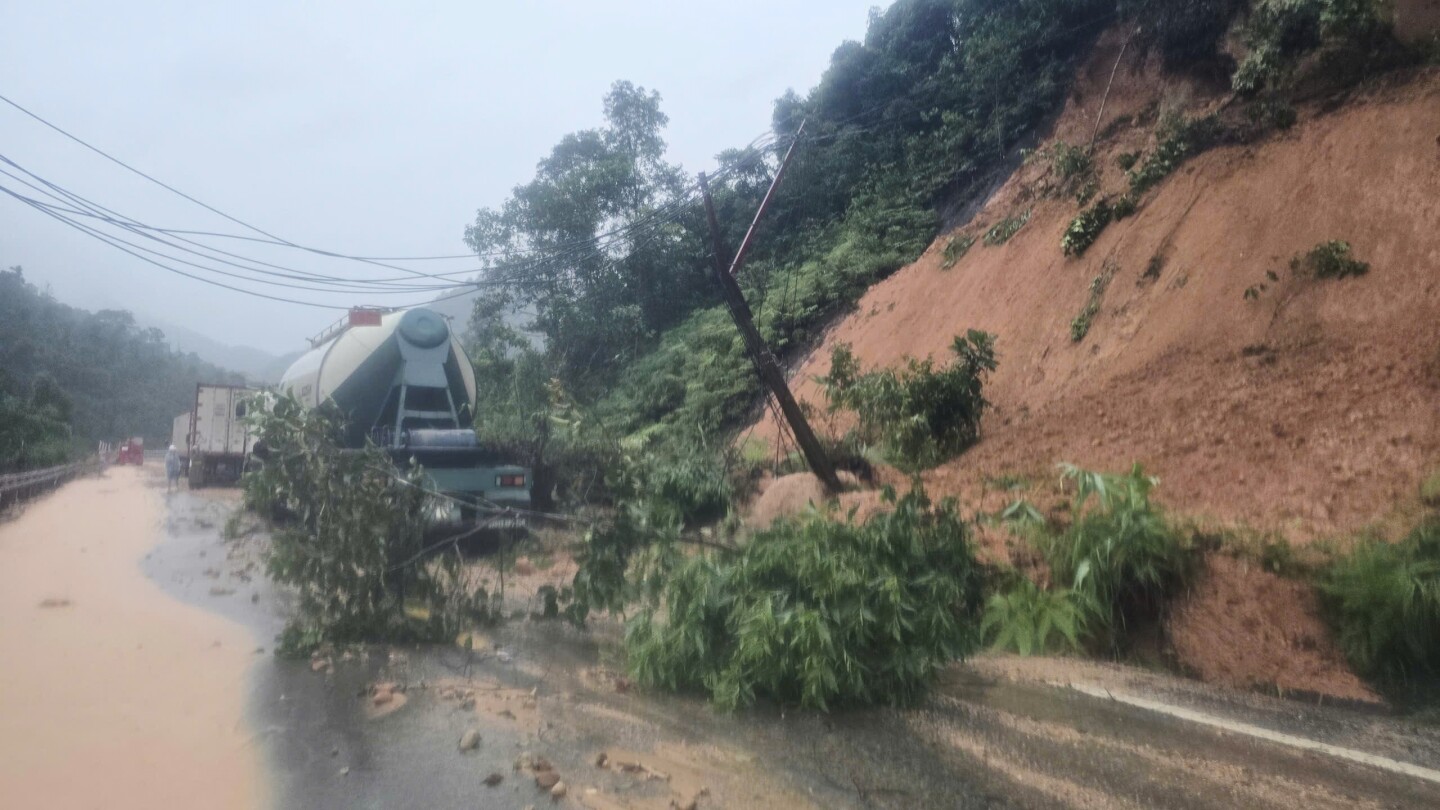
Heavy rainfall has battered central Vietnam, triggering deadly landslides and widespread flooding that have killed at least seven people, injured dozens more, and left thousands stranded across the region. The devastating weather comes just weeks after the area was hit by record rainfall and Typhoon Kalmaegi.
Meteorologists expect the deluge to continue through Wednesday, with rainfall projections between 30 and 60 centimeters (12-24 inches) for parts of central Vietnam. Some areas may receive more than 85 centimeters (33 inches), further threatening a region already grappling with saturated soil and compromised infrastructure.
Khanh Hoa province, known for its coastal areas and hilly inland terrain, has been particularly hard hit. On Sunday night, a catastrophic landslide struck a passenger bus traveling through the treacherous Khanh Le mountain pass, killing six people and trapping numerous passengers. The bus, carrying 32 people from Ho Chi Minh City, was en route from Da Lat to the coastal city of Nha Trang when rocks and soil cascaded onto the vehicle around 9:30 p.m.
“Rocks and soil fell down with a loud bang. I was thrown on the roof of the bus before falling down,” Nguyen Long Cuong, the 39-year-old bus conductor, told state media VN Express.
Rescue operations were significantly hampered as landslides had blocked both sides of the pass, cutting off access to the crash site. Emergency teams only reached the bus after midnight, and as of Monday, two bodies remained trapped beneath the debris due to the precarious terrain. The 33-kilometer (20-mile) Khanh Le pass, while popular with tourists for its scenic views, is notorious for landslides during Vietnam’s rainy season.
The same night, another tragedy struck in Khanh Hoa when waterlogged soil collapsed on 10 workers at the Khanh Son pass. One worker was killed, another injured, and a third remains missing, while seven others managed to escape.
The extreme weather has severely disrupted transportation networks across Vietnam’s Central Highlands. Multiple landslides have blocked major routes, prompting authorities to suspend traffic on several mountain passes. In Cam Ranh and the coastal district of Cam Lam, flooding submerged over 100 meters (328 feet) of railway lines under water and debris, stranding more than 800 passengers on four trains as of Monday evening.
The economic impact has been swift and significant. In Du Long Industrial Park, floodwaters reaching depths of 1 meter (3.2 feet) inundated numerous factories, including German and South Korean operations. The flooding forced power cuts and halted production, affecting thousands of workers.
The disaster’s scope extends beyond Khanh Hoa. In Dak Lak province, heavy rain flooded a national highway, prompting police to block the road and redirect traffic. In the historic city of Hue, landslides blocked a major north-south highway and isolated several villages, cutting off thousands of residents from assistance.
In Quang Ngai province, intense rainfall between 150 to 235 mm (5.9-9.3 inches) caused a bridge collapse over a stream, stranding approximately 1,200 people in remote hamlets. Adding to the destruction, a tornado tore through southern areas of Danang city and Quang Ngai province Sunday night, ripping roofs from dozens of houses and uprooting trees.
Vietnam is particularly vulnerable to flooding, with nearly half its population living in high-risk areas. The country’s geography, featuring extensive coastlines and numerous river systems, makes it susceptible to seasonal monsoons and tropical storms. Climate scientists warn that global warming is intensifying storms and rainfall patterns across Southeast Asia, making floods and landslides increasingly destructive and frequent.
As rescue operations continue, authorities are racing against forecasts of additional rainfall, working to reach isolated communities and provide emergency assistance to those affected by what has become one of the region’s most severe weather events in recent years.
Fact Checker
Verify the accuracy of this article using The Disinformation Commission analysis and real-time sources.

30 Comments
The cost guidance is better than expected. If they deliver, the stock could rerate.
Uranium names keep pushing higher—supply still tight into 2026.
Good point. Watching costs and grades closely.
Good point. Watching costs and grades closely.
I like the balance sheet here—less leverage than peers.
Good point. Watching costs and grades closely.
Good point. Watching costs and grades closely.
I like the balance sheet here—less leverage than peers.
Good point. Watching costs and grades closely.
Good point. Watching costs and grades closely.
Interesting update on Heavy rain triggers landslides and floods in central Vietnam, killing 7. Curious how the grades will trend next quarter.
Good point. Watching costs and grades closely.
Good point. Watching costs and grades closely.
If AISC keeps dropping, this becomes investable for me.
Good point. Watching costs and grades closely.
Good point. Watching costs and grades closely.
Nice to see insider buying—usually a good signal in this space.
Good point. Watching costs and grades closely.
Good point. Watching costs and grades closely.
Exploration results look promising, but permitting will be the key risk.
Exploration results look promising, but permitting will be the key risk.
Good point. Watching costs and grades closely.
Exploration results look promising, but permitting will be the key risk.
Good point. Watching costs and grades closely.
Silver leverage is strong here; beta cuts both ways though.
Good point. Watching costs and grades closely.
Interesting update on Heavy rain triggers landslides and floods in central Vietnam, killing 7. Curious how the grades will trend next quarter.
Uranium names keep pushing higher—supply still tight into 2026.
Production mix shifting toward World might help margins if metals stay firm.
Good point. Watching costs and grades closely.