


Listen to the article
Water Crisis Looms Over Greece’s Epiphany Celebrations as Reservoirs Hit Critical Levels
As Orthodox Christians gathered across the globe for Epiphany ceremonies on Tuesday, Greek officials used the solemn occasion to highlight a growing environmental crisis that threatens the nation’s capital.
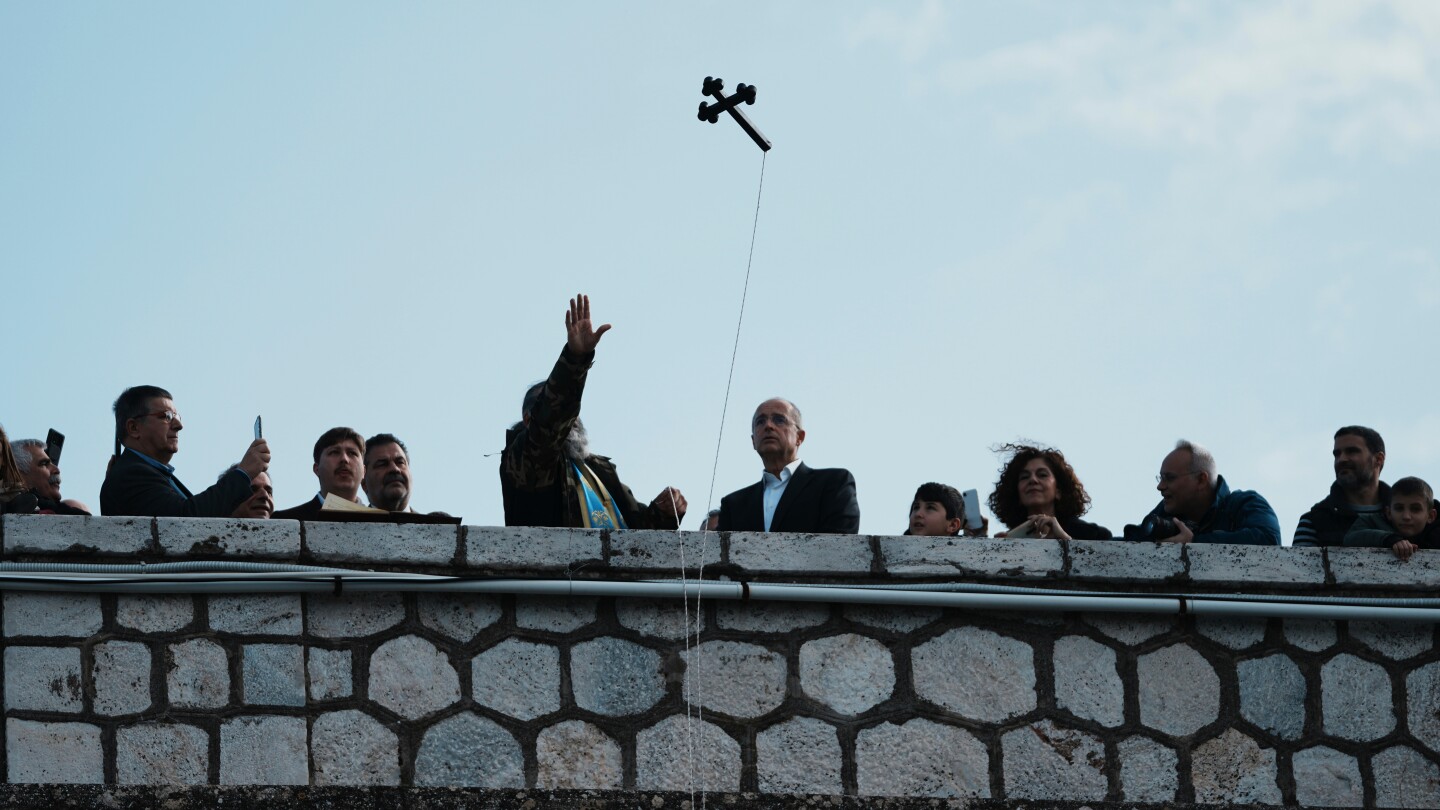
In Marathon, north of Athens, the traditional blessing ceremony took on added significance as a priest cast a wooden cross into the visibly depleted waters of Lake Marathon, an artificial reservoir crucial to the region’s water supply. The symbolic act, meant to commemorate the baptism of Christ, instead underscored a troubling reality facing millions of Athenians.
Water stored in Marathon and the three other reservoirs supplying Athens has plummeted from more than 1 billion cubic meters in 2022 to approximately 390 million cubic meters today—a decline so severe that authorities declared a water emergency in the capital last November.
“This is the third consecutive year of a significant drop in reservoir levels. This means that the problem is right in front of us,” said George Stergiou, chairman of the greater Athens water utility EYDAP, speaking to The Associated Press after attending the Marathon ceremony.
Stergiou pointed to a worrying climate pattern that has become increasingly common in the Mediterranean region: prolonged droughts followed by intense rainfall events that do little to replenish water supplies. These brief, violent storms often result in runoff rather than absorption into groundwater systems that feed reservoirs.
In response to the crisis, EYDAP has announced an ambitious €2.5 billion ($2.9 billion) investment program spread over the next decade. The comprehensive plan aims to enhance water security through infrastructure improvements including pipe replacements, installation of smart meters, and expanded wastewater recycling initiatives.
“What we want to do, as a first step, is replace all those uses that today could be met with non-potable water by recycled water,” Stergiou explained, outlining the utility’s strategy to preserve potable water for essential needs.
Reservoir manager Sofia Nalpantidou offered some context for Marathon’s current condition, explaining that the lake’s low level is partly by design. “We usually keep it lower in winter because we want to maintain a buffer,” she noted, referring to the reservoir’s role in seasonal flood control as part of the wider water management system.
However, long-term residents have observed concerning changes in precipitation patterns that go beyond seasonal management. Antonis Stamou, a 78-year-old retiree who attended Tuesday’s Epiphany service, recalled, “In the past, it used to rain a lot more, sometimes daily. That doesn’t happen anymore.”
Greece’s water challenges mirror similar situations emerging across Southern Europe and the Mediterranean basin, where climate scientists have identified the region as a “hot spot” for climate change impacts. Rising temperatures, altered precipitation patterns, and increased evaporation rates are straining water resources that have historically supported dense populations and agricultural production.
The Athens water crisis arrives amid growing concerns about climate adaptation across Europe. While northern regions often contend with increased flooding, southern nations increasingly face drought conditions that threaten agriculture, tourism, and basic municipal water supplies.
Water security experts note that Greece’s situation exemplifies the need for comprehensive adaptation strategies that extend beyond emergency measures. Long-term solutions will likely require significant investment in infrastructure, conservation initiatives, and possibly shifts in agricultural and industrial water usage.
For now, as the blessed cross was retrieved from Lake Marathon’s diminished waters, the ceremony served as both religious observance and environmental warning—a reminder that even the most timeless traditions now unfold against a backdrop of rapidly changing environmental conditions.
Fact Checker
Verify the accuracy of this article using The Disinformation Commission analysis and real-time sources.

9 Comments
The symbolic baptism ceremony taking place against a backdrop of dwindling water supplies is a poignant illustration of the environmental pressures facing Greece. Raising public awareness and garnering cross-sector collaboration will be vital to address this crisis.
Kudos to the Greek authorities for using this religious event to shine a spotlight on the critical water situation. Proactive and transparent communication with citizens will be essential to drive the necessary changes and adaptations.
Concerning to see water levels drop so drastically in Greece. As climate change impacts worsen, innovative solutions will be needed to ensure water security, especially for densely populated regions like Athens.
This is a sobering reminder of the far-reaching impacts of climate change. As water scarcity becomes more prevalent globally, initiatives to improve water conservation, efficiency and alternative sourcing will be essential.
The blessing ceremony taking place against the backdrop of depleted reservoirs really highlights the gravity of the water crisis. Authorities must act quickly to address this issue before it becomes a severe threat to the local population.
Agreed. Proactive water management strategies and infrastructure upgrades will be crucial to build resilience. Balancing environmental, economic and social needs will be a delicate challenge.
Three consecutive years of reservoir depletion indicates a structural problem that requires comprehensive solutions. Diversifying water sources, improving infrastructure and driving behavioral change will all be crucial to overcoming this challenge.
Well said. Tackling the root causes of water scarcity, rather than quick fixes, will be key to building a sustainable water management system for the future.
The decline in Athens’ water supply is quite alarming. I hope the Greek government can implement effective policies and investments to improve long-term water security for the region. Effective public-private partnerships may help address this complex issue.