


Listen to the article
Greek authorities are working to acquire recently discovered photographs that appear to show the final moments of 200 Greeks executed by Nazi forces in Athens during World War II, officials announced Monday.
The images, which surfaced on eBay over the weekend, allegedly document a mass execution that took place on May 1, 1944, at a shooting range in the Kaisariani suburb of Athens. Until now, while the executions were well-documented in historical records, no photographic evidence of the atrocity was known to exist.
“It is very possible that these are authentic photographs,” Greece’s Culture Ministry said in a statement. The images were listed for sale by a collector of German military memorabilia based in Belgium.
The photographs depict men being led through a gateway and along a path before being positioned in front of a wall where they were to face the firing squad. According to historical accounts, the victims maintained dignified postures even in their final moments.
The Kaisariani executions stand as one of the most brutal atrocities committed during Nazi Germany’s occupation of Greece from 1941 to 1944. The victims were communist political prisoners, and their deaths represent a pivotal moment in modern Greek history that continues to resonate deeply within the nation’s collective memory.
The Nazi occupation of Greece was particularly harsh, resulting in widespread famine, systematic destruction of infrastructure, and numerous massacres of civilians in reprisal for resistance activities. Historians estimate that approximately 300,000 Greeks died from famine alone during the occupation period, with thousands more killed in mass executions similar to the one at Kaisariani.
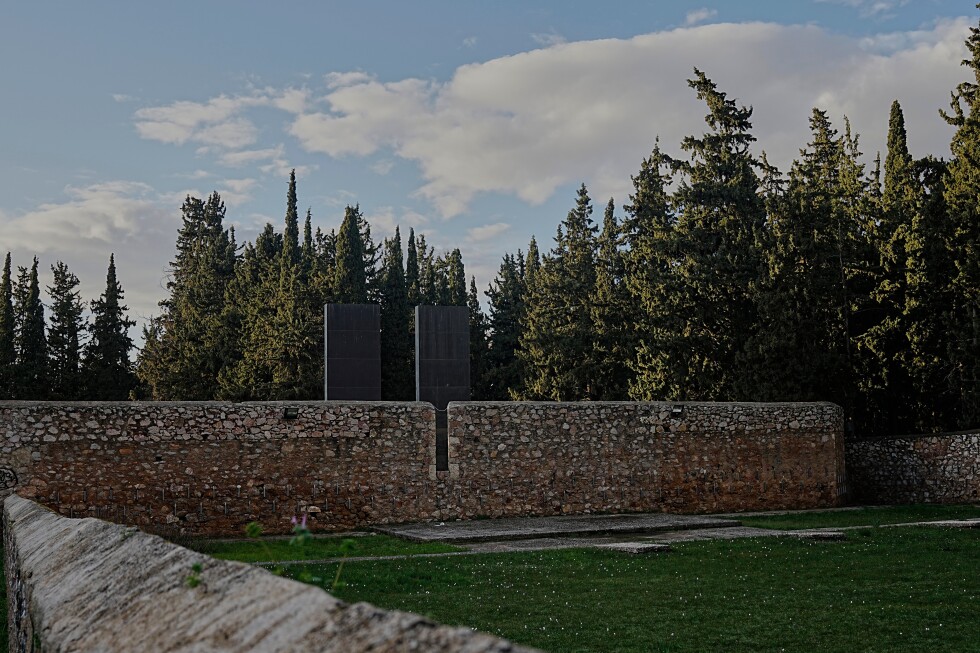
Adding to the controversy surrounding the photographs’ appearance, vandals damaged a memorial at the Kaisariani execution site shortly after the images were posted for sale. The monument, which lists the names of all 200 victims, had its commemorative plaques smashed.
“Historical memory will not be erased, no matter how much it bothers some people,” the Kaisariani municipality stated on its Facebook page. Officials promised to repair the monument quickly, noting that the photographs had caused “a chill of emotion for the heroic, valiant stance of the 200 communist heroes who stood up against the firing squad.”
The timing of these events is particularly sensitive given Greece’s complex post-war history. Following the end of World War II, Greece descended into a brutal civil war between Western-backed government forces and communist fighters that lasted until 1949. The ideological divisions from this conflict have never fully healed in Greek society, making historical artifacts from this period politically charged.
Greek Culture Ministry representatives are already in contact with the Belgian collector and plan to visit Ghent to verify “the authenticity and legality of origin” of the photographs. The ministry acknowledged that there are “quite a few legal complications” involved in claiming ownership of the images.
A special committee will convene on Wednesday to determine whether the photographs should be classified as part of Greece’s national heritage. If the images are deemed both authentic and legally obtained, “the Culture Ministry will immediately finalize the measures for their acquisition through the appropriate legal means,” according to the statement.
Art and historical artifacts from World War II periodically appear on auction sites, often raising ethical questions about the commercial trade of items associated with atrocities. In recent years, many European nations have strengthened their heritage protection laws to prevent historically significant materials from being sold to private collectors, especially when they document war crimes or crimes against humanity.
For many Greeks, acquiring these photographs represents not just a matter of historical documentation but also a sacred duty to preserve the memory of those who perished during one of the darkest chapters in the nation’s history.
Fact Checker
Verify the accuracy of this article using The Disinformation Commission analysis and real-time sources.

12 Comments
These photos would be an invaluable historical record of this tragic Nazi atrocity. I hope Greece is able to acquire them and preserve the memory of those who suffered under the occupation.
Agreed, having visual documentation could provide important insights and context around this horrific event in Greece’s history.
The Kaisariani executions were a brutal atrocity, and it’s remarkable that photographic evidence has now emerged. I’m curious to learn more about the context and significance of these newly discovered images.
Yes, these photos could shed new light on this dark chapter. I hope the Greek government is able to thoroughly investigate their provenance and authenticity.
These photos, if authentic, could be an invaluable resource for understanding the full extent of the Nazi occupation and its impact on the Greek people. I hope the government is able to secure them and make them available to the public.
Agreed. Preserving this historical evidence is crucial, both for honoring the victims and for ensuring these atrocities are not forgotten.
It’s deeply disturbing that these execution photos would be offered for sale by a collector. They should be in the custody of the Greek government and people, not profiteers. I hope the authorities can secure them quickly.
Absolutely, these belong in a museum or memorial, not with a private collector. Greece must act swiftly to reclaim this important historical evidence.
The Kaisariani executions were a horrific war crime, and I’m glad these newly surfaced photos may help shed light on this dark chapter. I hope the authorities can acquire them and make them accessible for historical research and education.
While it’s deeply disturbing that these execution photos would be offered for sale, I’m glad the Greek authorities are taking action to obtain them. Recovering and preserving this historical record is vitally important.
It’s unfortunate that such disturbing images would be offered for sale rather than preserved in a public institution. I’m glad the Greek government is taking steps to obtain them and ensure they are treated appropriately.
This is a sensitive and important historical matter. I hope the Greek authorities are able to acquire the photos with respect and dignity, and use them to honor the victims and educate the public.