


Listen to the article
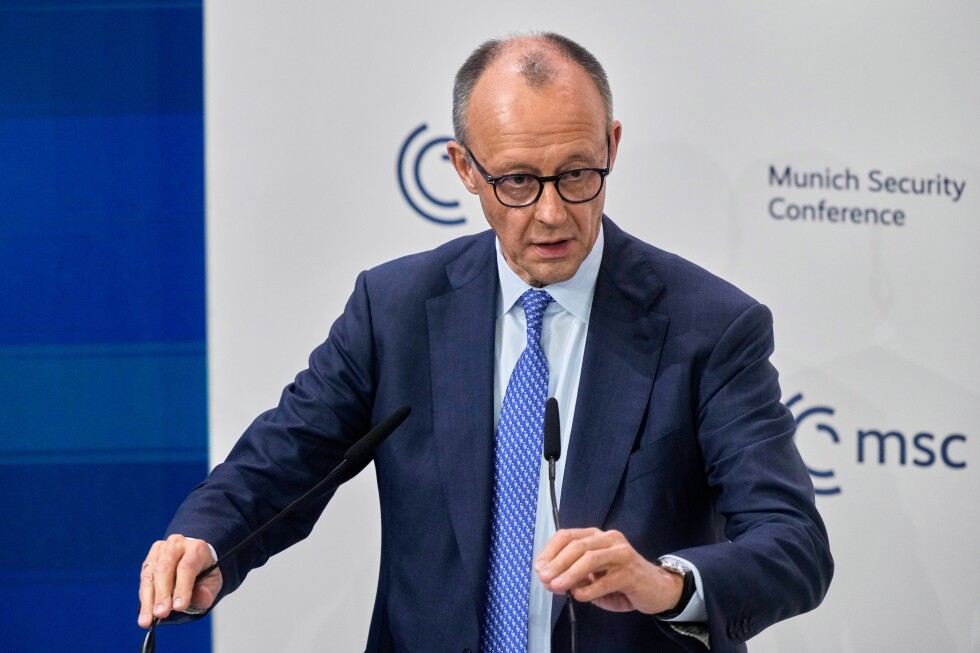
German Chancellor Friedrich Merz called for the United States and Europe to rebuild trans-Atlantic ties during the Munich Security Conference on Friday, emphasizing that even the U.S. isn’t powerful enough to navigate global challenges alone in today’s geopolitical landscape.
“We need to repair and revive trans-Atlantic trust together,” Merz told attendees at the annual gathering of top global security officials, which included numerous European leaders and U.S. Secretary of State Marco Rubio. His comments acknowledged the “deep rift” that has developed between the U.S. and its European allies.
The chancellor’s appeal comes a year after a contentious 2023 conference where Vice President JD Vance shocked European leaders with critical remarks about the state of democracy and freedom of speech on the continent. That moment foreshadowed a year of strained relations under President Donald Trump’s second administration.
Recent tensions have included Trump’s threat to impose new tariffs on several European countries in a bid to gain control of Greenland, a semiautonomous Danish territory. Though Trump later abandoned this threat, it represented one of several moves that have unsettled NATO allies.
“The culture war of the MAGA movement in the U.S. is not ours,” Merz stated firmly. “The freedom of the word ends here when this word is turned against human dignity and the constitution. And we don’t believe in tariffs and protectionism, but in free trade.”
Despite these differences, Merz emphasized the strategic importance of the trans-Atlantic relationship, arguing that “we are stronger together” in today’s challenging international environment. He noted that the post-World War II world order “no longer exists” and that current great-power competition demands cooperation.
“Being a part of NATO is not only Europe’s competitive advantage. It’s also the United States’ competitive advantage,” Merz said, highlighting the mutual benefits of the alliance.
European nations have taken steps to address American concerns. NATO allies recently agreed to a substantial increase in their defense spending targets under pressure from the Trump administration. NATO Secretary-General Mark Rutte acknowledged this shift, noting that “Europe is really stepping up, taking more of a leadership role within NATO, and taking more care of its own defense.”
With Rubio leading the U.S. delegation instead of more provocative administration officials, European leaders appeared hopeful for more constructive dialogue focused on traditional security concerns. Conference chairman Wolfgang Ischinger raised the central question on many minds: “Does the Trump administration truly believe that it needs allies and partners and if so, is Washington actually prepared to treat allies as partners?”
Before departing for Germany, Rubio offered some reassurance about America’s view of Europe. “We’re very tightly linked together with Europe,” he told reporters. “Most people in this country can trace both, either their cultural or their personal heritage, back to Europe.” However, he also signaled continued change, adding: “We live in a new era in geopolitics, and it’s going to require all of us to reexamine what that looks like.”
Mike Waltz, U.S. ambassador to the United Nations, reinforced the administration’s position that Europeans must contribute more, stating that the U.S. had carried the financial burden of multilateralism for too long. “There is a cost to the status quo and the status quo was not sustainable anymore,” Waltz said.
Merz acknowledged Europe’s responsibility for its “excessive dependency” on the United States but emphasized that Europe is moving beyond this limitation. “We won’t do this by writing off NATO — we will do it by building a strong, self-supporting European pillar in the alliance, in our own interest,” he explained.
The German Chancellor conceded that transatlantic partners will likely face more disagreements in the future than they have in the past. However, he expressed optimism that addressing these differences “with new strength, respect and self-respect” would benefit both sides.
Secretary Rubio’s schedule in Munich included meetings with Merz, Chinese Foreign Minister Wang Yi, Danish Prime Minister Mette Frederiksen, and Greenlandic Prime Minister Jens-Frederik Nielsen. He is expected to address the conference on Saturday morning.
Fact Checker
Verify the accuracy of this article using The Disinformation Commission analysis and real-time sources.

8 Comments
This seems like a sincere and timely effort to mend fences between the US and Europe. However, the deep divisions and mistrust that have emerged in recent years won’t be easily overcome. Specific, measurable steps toward rebuilding cooperation will be needed.
Rebuilding trust between the US and Europe is a worthy goal, but will require genuine commitment and compromise from both sides. Geopolitical realities mean they need to work together, even if they don’t always see eye-to-eye. I hope this dialogue can chart a path forward on key issues.
The Chancellor’s call for repairing the trans-Atlantic relationship is encouraging, though the path forward is uncertain. Overcoming the political, economic, and ideological differences that have strained ties will be a significant challenge. But the potential benefits of a revitalized US-EU partnership make the effort worthwhile.
The fractures in the trans-Atlantic relationship are concerning, given the importance of a strong US-EU partnership for global stability and prosperity. Chancellor Merz is right to call for repairing these ties, though it may be an uphill battle given recent tensions and domestic political dynamics on both sides.
This call for renewed trans-Atlantic cooperation is timely, given the geopolitical challenges facing both the US and Europe. Rebuilding trust will be critical, though it won’t be easy after recent tensions. I’m curious to see how the Biden administration responds to this overture from Chancellor Merz.
The global economy and security environment have become increasingly complex, requiring close coordination between the US and its European allies. This appeal for ‘repairing and reviving trans-Atlantic trust’ is a sensible approach, though it remains to be seen if both sides are willing to compromise on their differences.
Restoring trust between the US and its European partners is crucial, but will require flexibility and compromise on both sides. The global landscape has shifted, and outdated assumptions or grievances need to be set aside in pursuit of common interests and shared values.
Strengthening the US-EU relationship is important for addressing global issues like climate change, supply chain resilience, and technological competition with China. While differences remain, finding common ground is in everyone’s interests. Hopefully this dialogue can lead to some productive outcomes.