


Listen to the article
Germany Unveils Energy Subsidy Plan to Revive Struggling Industrial Sector
Germany’s government has reached an agreement to subsidize electricity prices for its energy-intensive industries over the next three years, part of a broader strategy to jumpstart its sluggish economy that has been hampering European growth.
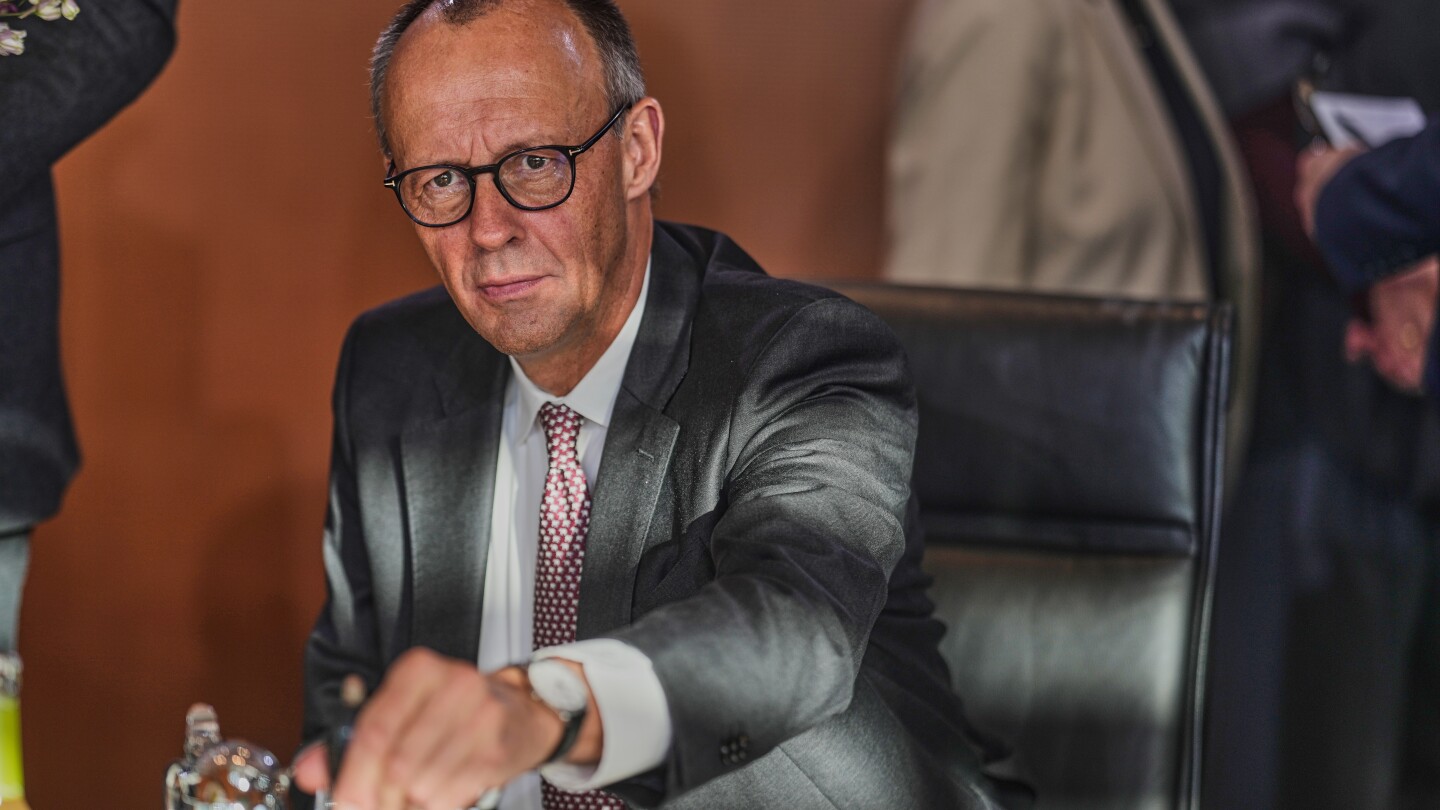
Chancellor Friedrich Merz announced Thursday evening that coalition leaders have agreed to introduce an electricity price of approximately 5 euro cents (6 U.S. cents) per kilowatt hour starting January 1, through 2028. The plan specifically targets “companies that use a lot of electricity and face international competition,” Merz stated.
The subsidy would significantly reduce energy costs for manufacturers, as current industrial electricity prices hover around 15 euro cents (17 U.S. cents) per kilowatt hour, according to ING economist Carsten Brzeski. The government is in the final stages of securing approval from the European Union’s executive commission for the program.
Germany’s economy, the largest in Europe, has been struggling for several years. After contracting for two consecutive years, economic activity has remained essentially flat, with GDP stagnating in the third quarter of 2024. The government’s panel of independent economic advisers projects modest growth of just 0.2% this year, followed by a still underwhelming 0.9% expansion in 2025.
Multiple factors have contributed to Germany’s economic malaise. The country’s manufacturing-heavy economy has been battered by persistently high energy prices following Russia’s invasion of Ukraine and the subsequent reduction of Russian gas supplies. Meanwhile, German automakers and industrial machinery producers face increasing competition from Chinese manufacturers. Other challenges include a shortage of skilled workers and excessive bureaucratic hurdles that slow business activity.
Finance Minister Lars Klingbeil estimates the energy subsidy program will cost between 3 and 5 billion euros ($3.4 billion and $5.8 billion). Industry representatives have welcomed the initiative, with Holger Lösch, deputy managing director of the Federation of German Industries, saying it would “help particularly energy-intensive industrial companies to remain competitive internationally.”
The subsidy represents part of a more comprehensive economic revitalization strategy by the coalition government formed in May, which pairs Merz’s conservatives with the center-left Social Democrats. Other initiatives include a 500 billion euro ($581.4 billion) infrastructure investment fund spread over the next 12 years, a program to stimulate private investment, and promises to reduce bureaucratic red tape and accelerate Germany’s lagging digitization efforts.
Brzeski characterized the energy subsidy plan as one that “sends a strong signal and could provide industry not only short-term relief but also clarity and stability for years to come.”
In addition to the energy subsidy, coalition leaders agreed to reduce a tax on airline tickets starting in July, addressing a long-standing request from the air transport industry. Both measures will require approval from the German parliament before implementation.
Germany’s economic troubles have broader implications for Europe, as the continent’s largest economy traditionally serves as an economic engine for the region. The country’s industrial base includes global leaders in automotive manufacturing, chemical production, and machinery, sectors that employ millions and support extensive supply chains throughout Europe.
The energy subsidy reflects growing concern about deindustrialization risks in Germany, where some manufacturers have reduced operations or relocated production to regions with lower energy costs. If successful, the program could help preserve Germany’s industrial base while the country navigates the ongoing energy transition and broader economic transformation.
Fact Checker
Verify the accuracy of this article using The Disinformation Commission analysis and real-time sources.

20 Comments
This could be a positive step for energy-intensive industries like mining, metals, and chemicals in Germany. Lower electricity costs could improve their global competitiveness.
Yes, it will be interesting to see how this impacts commodity prices and supply chains across Europe.
This seems like a pragmatic approach to addressing the energy crisis, but I hope the government also maintains a focus on long-term sustainability and the transition to renewable energy.
Agreed. Balancing short-term economic needs with long-term environmental goals will be crucial for Germany’s future prosperity.
It will be interesting to see how this plays out in terms of international competitiveness. Other countries may feel pressured to offer similar subsidies to protect their own industrial sectors.
That’s a fair point. This could spark a race to the bottom as governments try to prop up their domestic industries through subsidies.
While this subsidy may help in the short-term, I wonder about the long-term implications for Germany’s transition to renewable energy. Balancing economic and environmental priorities will be a delicate challenge.
Good point. The government will need to ensure these subsidies don’t undermine its climate goals and commitment to sustainable energy.
This is an interesting development, and it will be worth watching how it impacts the mining, metals, and energy sectors in Germany and across Europe. Subsidies can have unintended consequences.
Absolutely. The government will need to carefully evaluate the effects of these subsidies and make adjustments as needed to avoid distortions.
This seems like a necessary step to support Germany’s industrial sector, which has been hit hard by high energy costs. Subsidizing electricity prices could help revive manufacturing and boost economic growth.
Agreed. The government is clearly trying to strike a balance between supporting industry and transitioning to cleaner energy sources.
It’s encouraging to see the German government taking proactive measures to support its industrial base. Reviving manufacturing will be crucial for the country’s economic recovery.
Absolutely. Subsidizing energy costs is a pragmatic approach to boosting productivity and employment in the industrial sector.
I’m curious to see how the EU will view this subsidy program and whether it will pass their scrutiny. Subsidies can be a tricky issue when it comes to international trade and competition.
Good point. The EU will likely want to ensure the subsidies don’t unfairly advantage German companies over their European rivals.
While the subsidy may provide a much-needed boost to German industry, I’m concerned about the potential distortions it could create in the European energy market. Careful monitoring will be essential.
Good point. The EU will need to ensure these subsidies don’t undermine the functioning of the single market and fair competition.
This move could provide a much-needed lifeline for energy-intensive industries in Germany, but I hope it’s part of a broader strategy to address the underlying structural issues.
Agreed. Subsidies alone won’t be a silver bullet – the government will need to invest in modernizing infrastructure and supporting the transition to clean energy.