


Listen to the article
Nepal’s Youth-Led Revolution Faces Disillusionment as Promised Changes Stall
Mukesh Awasti had his future planned. With an Australian university acceptance letter in hand, the 22-year-old was ready to pursue civil engineering abroad. Instead, a decision to join anti-corruption protests in Nepal cost him his leg—and left him questioning whether the sacrifice was worth it.
“I am regretting my decision to take part in the protest because there has been zero achievement from the new government we brought, which has failed us,” Awasti said from his hospital bed at Kathmandu’s National Trauma Center, where doctors amputated his leg after he was shot by security forces.
Awasti is one of more than 2,300 people injured during the violent protests that erupted in Nepal’s capital on September 8. The demonstrations, primarily led by Generation Z activists, left 76 people dead before forcing governmental change. The upheaval culminated in the appointment of Sushila Karki, a retired Supreme Court judge, as Nepal’s first female prime minister on September 12.
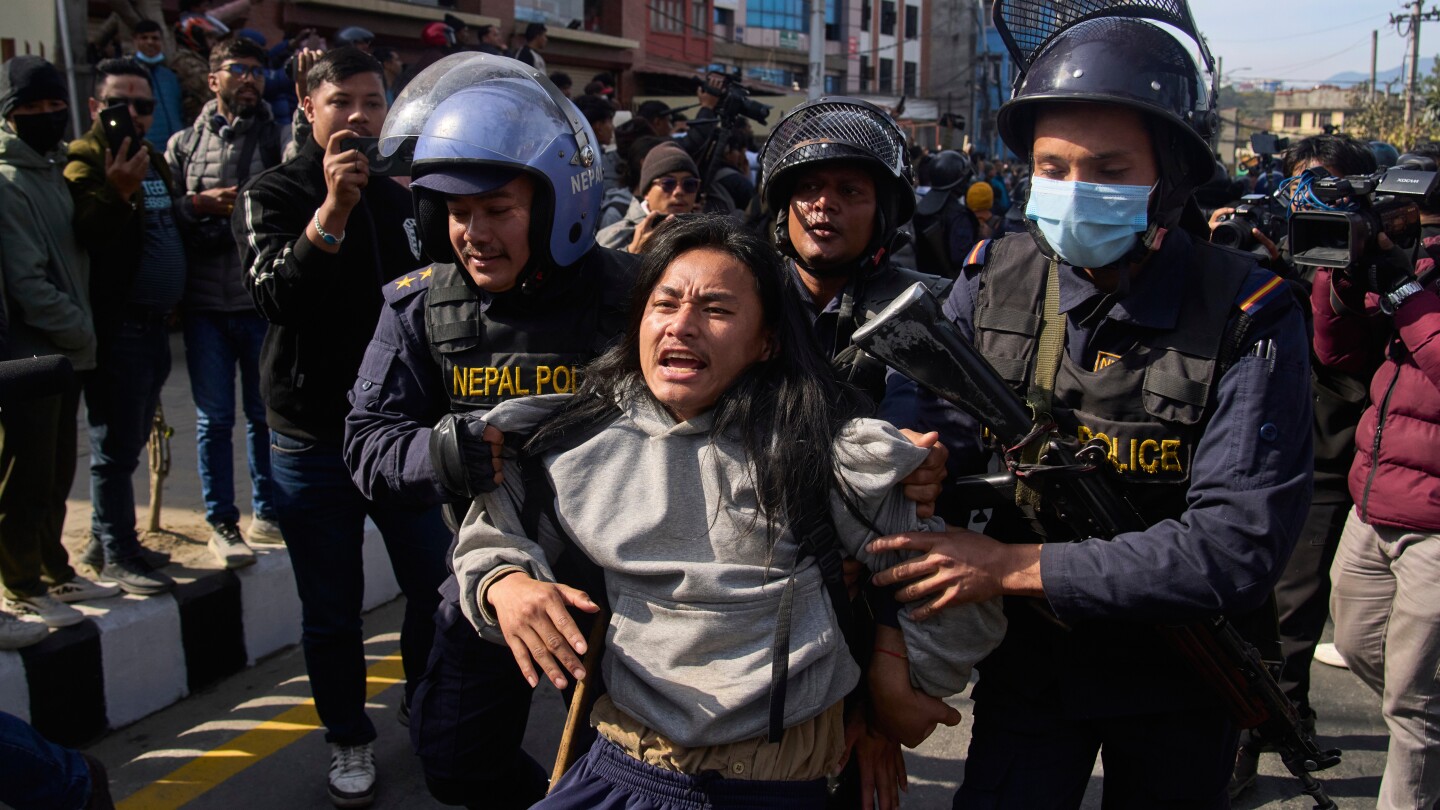
Three months later, the interim government faces growing criticism from the very protesters who brought it to power. Many young demonstrators have returned to the streets, claiming the new leadership has failed to deliver on promises to tackle corruption and hold accountable those responsible for violence against protesters.
“We are back here in the street because the government has failed to live up to their promise,” said Suman Bohara, who now walks with crutches due to a shattered right foot sustained during the protests. “There are so many families of those who lost their lives and many who were injured, but what has the government done? Nothing. We are here because we are compelled to.”
The September demonstrations began when tens of thousands of young Nepalis gathered to protest widespread corruption, lack of economic opportunities, and poor governance. The immediate trigger was a government ban on social media platforms. When protesters attempted to enter parliament, security forces opened fire. The following day, protests spread nationwide, with angry crowds burning government buildings, police stations, and politicians’ homes.
After the army stepped in to restore order, negotiations led to Karki’s appointment with a mandate to conduct parliamentary elections, now scheduled for March 5.
“As the world is looking forward to a smooth change in government through our elections on March 5, I want to assure that we will deliver these elections,” Prime Minister Karki said. “Our preparations are almost complete, and the security environment has improved a lot with our security apparatus assured enough.”
However, the government’s anti-corruption efforts have fallen short of protesters’ expectations. The country’s anti-graft agency has filed only one significant corruption case, which notably excludes key political figures. Meanwhile, politicians accused of corruption during the protests are preparing to contest the upcoming elections, and no cases have been filed against leaders who were in power when protesters were injured in September.
Analysts point to fragmentation among protest groups as part of the problem. The movement lacks unified leadership and clear, consistent demands. Some protesters now oppose the March elections, arguing their movement was about immediate anti-corruption measures rather than simply changing the government. Others believe new lawmakers are needed to implement reforms.
“All the confusion right now in Nepal is because of the lack of clarity among the Gen Z groups on what they are demanding and how the government was formed,” explained Abeeral Thapa, principal of Polygon College of Journalism and Mass Communications in Kathmandu.
The constitutional basis for the interim government also remains murky. Nepal’s constitution does not specifically provide for forming an interim government, containing only a general provision that “The main duty of the President shall be to abide and protect the constitution.”
“The protests were not well planned to begin with. They began with controlling corruption and ending the ban on social media,” Thapa said. “But in reality, what happened was like they had gone deer hunting but ended up killing a tiger, with the protest taking a major turn with the government collapsing.”
As March approaches, uncertainty remains about whether elections can proceed as planned. For young Nepalis like Awasti, who sacrificed so much for change, the revolution they helped ignite has yet to deliver the transformation they envisioned for their Himalayan nation.
Fact Checker
Verify the accuracy of this article using The Disinformation Commission analysis and real-time sources.

10 Comments
This looks like a complex and rapidly evolving situation. I’m curious to see how the new government responds to the protesters’ demands and whether they can regain the public’s trust.
The mining and energy industries will be closely monitoring developments in Nepal. Consistent and transparent policies will be key to attracting responsible long-term investment.
The mining and energy sectors in Nepal will be closely watching these developments. Stability and rule of law are crucial for attracting responsible foreign investment in the country’s natural resources.
I hope the protesters can find constructive ways to keep pressure on the government without resorting to further violence. Peaceful, democratic channels are key for sustainable change.
It’s heartbreaking to see the heavy toll the protests have taken, both in lives lost and lives changed. I hope the government and protesters can find a path forward that addresses the underlying issues peacefully.
Stability and rule of law are so important for Nepal’s natural resource sectors. I hope the government can find a way to engage constructively with the protesters and chart a sustainable way forward.
While the youth protesters’ frustrations are understandable, it’s concerning to see the government resorting to such harsh tactics. Effective checks and balances will be critical going forward.
The mining industry in Nepal will be hoping for a return to stability and predictable policy. Continued unrest could deter much-needed foreign investment in the sector.
Interesting to see the youth driving political change in Nepal. Curious to hear more about their motivations and perspectives on the stalled reforms so far. Hopeful they can continue to advocate for meaningful progress despite the setbacks.
It’s a shame the protesters have faced such heavy-handed crackdowns. Seems the new government still has a lot of work to earn the trust of the people who fought to install it.