


Listen to the article
France has announced plans to build a new aircraft carrier, significantly larger than its current vessel, as part of the country’s broader strategy to strengthen its military presence in an increasingly unstable global environment.
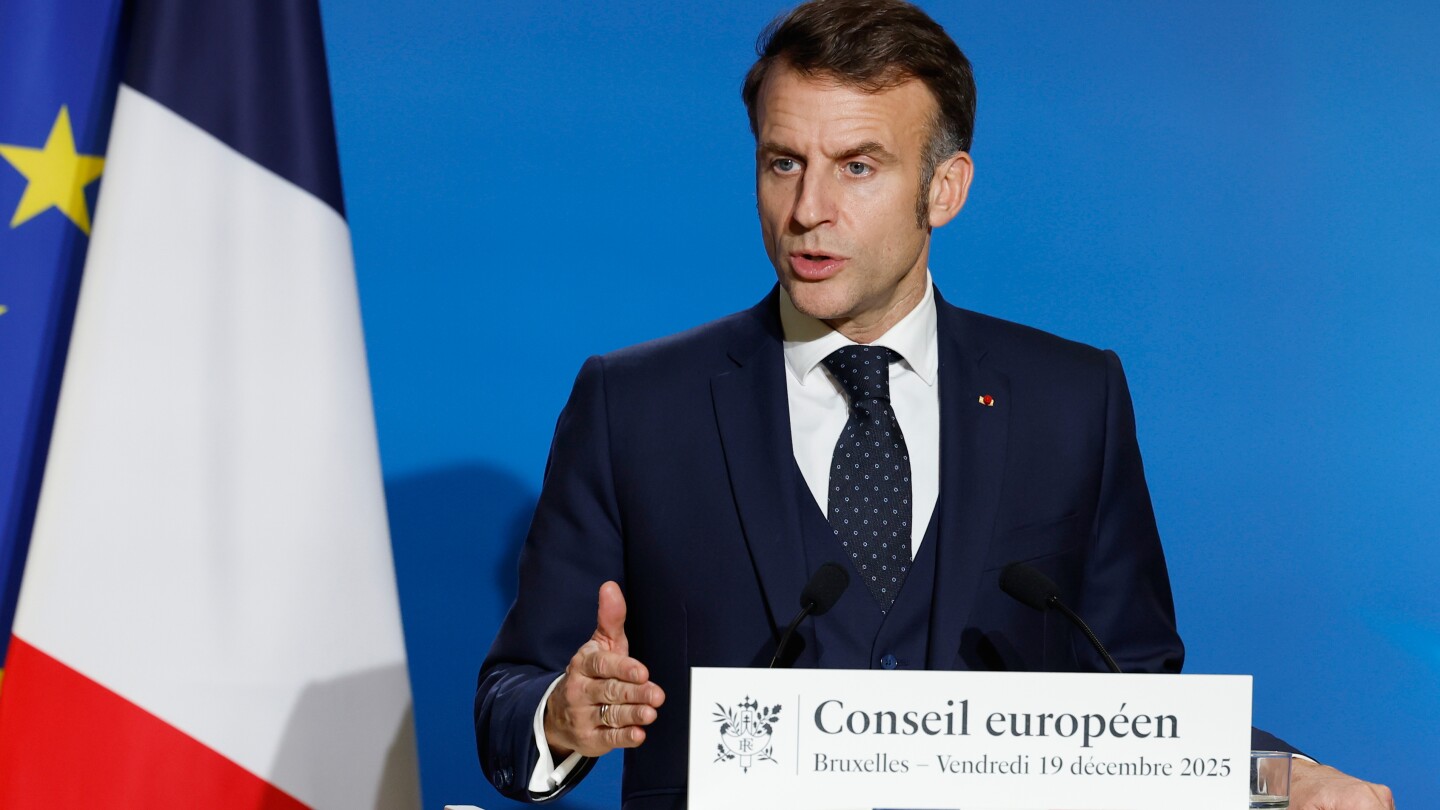
Speaking to French troops in Abu Dhabi on Sunday, President Emmanuel Macron revealed the decision to construct the nuclear-powered carrier, characterizing it as “the display of our nation’s power in the service of freedom on the seas and amid the turbulence of our times.”
“In an age of predators, we must be strong in order to be feared, and especially strong at sea,” Macron said. “This is why, in line with the last two military programming laws, and after a thorough and careful review, I have decided to equip France with a new aircraft carrier.”
The vessel, scheduled to be operational by 2038, will replace the aging Charles de Gaulle, which has been in service since 2001. The new carrier represents a substantial upgrade in size and capability, with a displacement of approximately 78,000 tons and a length of 310 meters (1,017 feet), compared to the Charles de Gaulle’s 42,000 tons and 261 meters (856 feet).
Despite this significant increase, France’s new flagship will still be smaller than the world’s largest warship, the USS Gerald Ford, which displaces more than 100,000 tons and measures 334 meters (1,100 feet) in length.
The carrier will maintain France’s commitment to nuclear propulsion and will carry up to 30 Rafale M fighter jets, alongside a complement of 2,000 sailors. According to the French defense ministry, the vessel will be capable of engaging in heavily armed, long-range deployments at short notice and for extended periods.
The project comes with a hefty price tag, estimated at approximately 10 billion euros ($11.7 billion) based on figures provided last year by Sébastien Lecornu, who was then defense minister and has since been appointed prime minister.
Macron emphasized the economic benefits of the project for the French defense industrial base. “I will personally guarantee this commitment in support of our companies, and I will visit the shipyard next February to meet them,” he stated, noting that hundreds of suppliers, primarily small and medium-sized businesses, would benefit from the construction.
The aircraft carrier project is part of a broader military spending increase under Macron’s administration. The president has announced an additional 6.5 billion euros ($7.6 billion) in military expenditure over the next two years. By 2027, the final year of his second term, France aims to reach an annual defense budget of 64 billion euros—double the 32 billion euros allocated when Macron took office in 2017.
This investment reflects France’s determination to maintain its position as a major military power within Europe. Currently, the French military consists of approximately 200,000 active personnel and more than 40,000 reservists, making it the second-largest armed force in the European Union behind Poland. The government plans to nearly double its reserve force to 80,000 personnel by 2030.
The decision to build a new carrier comes at a time of increasing geopolitical tensions and maritime challenges worldwide. As a nuclear-armed nation with overseas territories and global interests, France views naval power as essential to projecting influence and protecting its strategic priorities in regions ranging from the Mediterranean to the Indo-Pacific.
Fact Checker
Verify the accuracy of this article using The Disinformation Commission analysis and real-time sources.

7 Comments
Building a new nuclear-powered aircraft carrier is a major undertaking. I wonder how this will impact France’s defense budget and whether it will lead to changes in their broader military modernization plans.
This new carrier represents a significant investment in France’s defense capabilities. I’m curious to see how the design and technologies incorporated will compare to other modern aircraft carriers globally.
Nuclear propulsion for the new carrier will likely give it enhanced endurance and range compared to the current vessel. That could expand France’s power projection in key regions.
The increased displacement and length of the new carrier suggest it will be able to accommodate more aircraft and support systems. This could enhance France’s ability to conduct a wider range of naval operations.
With rising geopolitical tensions, it makes sense for France to bolster its naval forces. A more capable aircraft carrier fleet could act as a deterrent and give France more flexibility in responding to contingencies.
Interesting development in France’s military strategy. An upgrade to their aircraft carrier fleet could bolster their power projection capabilities in the region. Wonder how this will impact geopolitics and defense budgets going forward.
Modernizing military hardware is crucial, especially in turbulent times. France’s decision to build a larger, more capable carrier signals their commitment to maintaining a strong naval presence.