


Listen to the article
Indonesian Court Opens Trial of Gojek Co-founder in $125 Billion Corruption Case
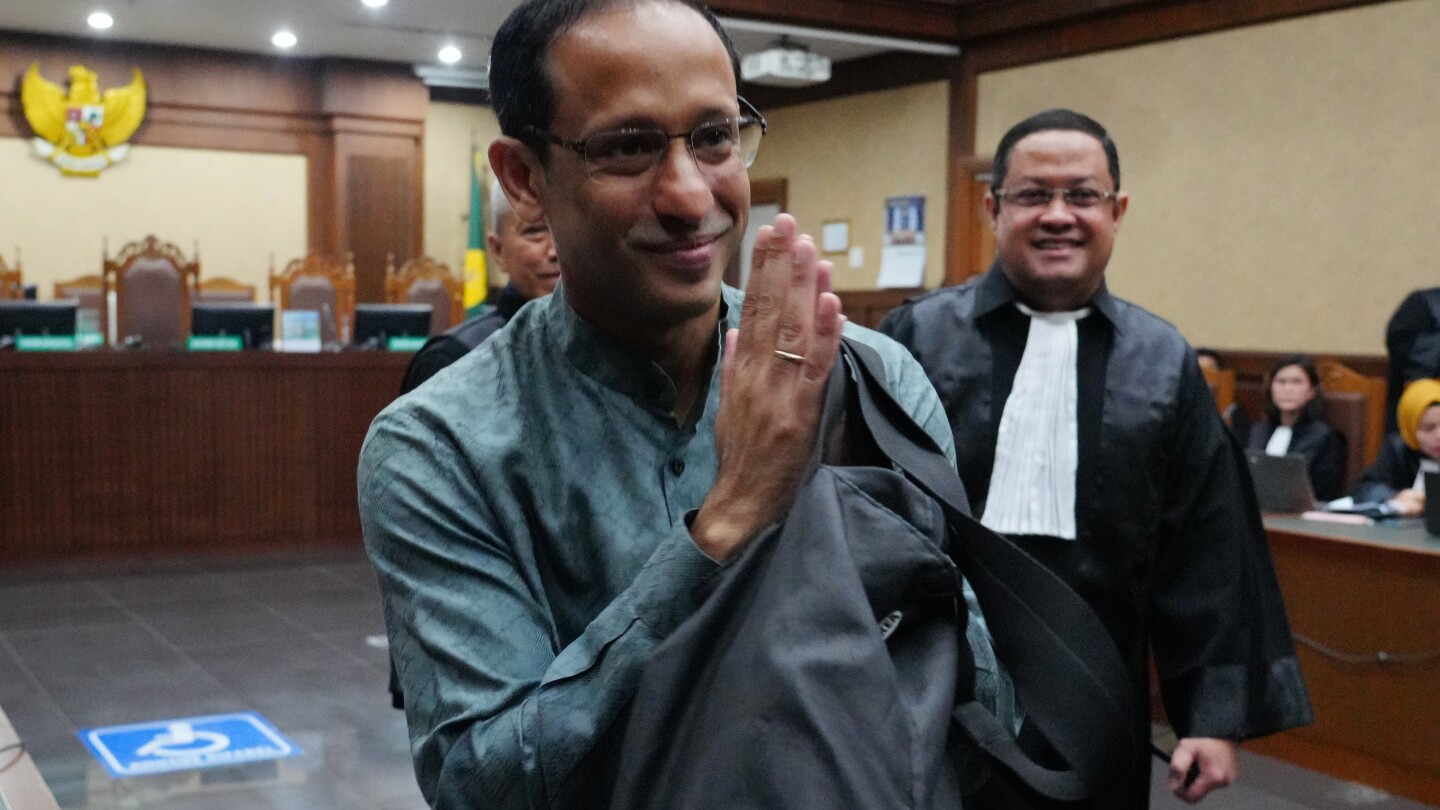
An Indonesian court on Monday began the trial of Nadiem Anwar Makarim, co-founder of the country’s prominent ride-hailing and payments company Gojek, who stands accused of corruption related to a government program to supply Google Chromebook laptops to schools across the nation.
Makarim, 41, who served as Indonesia’s education, culture, research and technology minister from 2019 to 2024, was arrested on September 7 during an investigation by the Jakarta attorney general’s office. The case involves an alleged $125 billion corruption scandal connected to the “digitalization of schools” initiative, which aimed to provide digital devices and infrastructure to schools in remote areas of the Southeast Asian archipelago.
According to prosecutors, Makarim allegedly showed preferential treatment toward Google’s Chromebook laptops despite a ministry research team’s refusal to recommend the devices, citing their ineffectiveness in regions with limited or no internet access. The indictment claims that Makarim directed the nationwide procurement in 2020-2021 “entirely for personal business interests.”
Lead prosecutor Muhammad Fadli Paramajeng told a three-judge panel at Jakarta’s Corruption Court that “the procurement ignored proper pricing benchmarks and technical needs, especially for remote or under-resourced regions.” The prosecution alleges that Makarim pressured Google to invest in PT Aplikasi Karya Anak Bangsa (PT AKAB), Gojek’s parent company, and personally received approximately 809 billion rupiah ($48.2 million) in connection with the program.
Prosecutors further claim that the purchase of more than 1.2 million Chromebooks was strategically designed to strengthen Google’s dominance in Indonesia’s educational technology ecosystem. This allegedly led to subsequent Google investments of approximately $787 million in PT AKAB through Google Asia Pacific.
The case represents a dramatic fall for one of Indonesia’s most celebrated tech entrepreneurs. Makarim, a Harvard University graduate, co-founded Gojek in 2009 and built it into Indonesia’s first “unicorn” startup, valued at over $10 billion when he stepped down in 2019 to join former President Joko Widodo’s cabinet.
The prosecution contends that Makarim’s resignation from PT AKAB and Gojek was a “strategic concealment” intended to mask conflicts of interest. They allege that while serving as education minister, he appointed close associates as directors and “beneficial owners” of his companies, allowing him to maintain indirect control over corporate decisions.
If convicted under Indonesia’s 2001 Corruption Law, Makarim faces potential life imprisonment for causing state losses and misusing public funds, underscoring the severity of corruption allegations in Indonesia’s justice system.
Makarim has consistently denied all allegations against him, maintaining that he did not personally receive any funds from the Chromebook procurement or related services. His defense team argues that Google’s investment in his companies largely predated his ministerial appointment and represented routine corporate activity unrelated to the laptop procurement deal.
“The defendant was not involved in the procurement process, as his role was limited solely to formulating policy,” defense lawyer Ari Yusuf Amir told the court. He characterized the indictment as “unclear, inaccurate and incomplete,” arguing that it wrongly equated Makarim’s ministerial authority with the activities of other government officials responsible for implementation.
The defense further contends that Makarim divested from PT AKAB upon taking office, with his personal wealth reportedly declining by more than 50% during his ministerial tenure. They maintain that procurement decisions were made by technical teams and officials, not by the minister himself.
Two former education ministry officials and a former tech consultant have also been charged in connection with the case. Another staff member wanted by authorities remains at large.
The trial continues to attract significant attention in Indonesia, where it represents one of the highest-profile corruption cases involving a former cabinet minister and tech industry leader in recent years.
Fact Checker
Verify the accuracy of this article using The Disinformation Commission analysis and real-time sources.

12 Comments
The scale of the alleged corruption, if true, is quite staggering. $125 billion is a massive amount of public funds. I’ll be curious to see how the trial unfolds and what the evidence shows.
Absolutely, the sheer size of the alleged corruption scandal makes this a very high-stakes case. Rigorous investigation and fair proceedings are crucial.
This seems like a complex case with many moving parts. I hope the trial is able to uncover the full truth and determine if any wrongdoing occurred. Proper oversight of public funds is critical.
You raise a good point. These types of cases can be tricky to navigate, but it’s important the justice system gets to the bottom of it.
Interesting case involving alleged corruption in a government tech procurement program. I’m curious to learn more about the specifics and whether there is evidence of preferential treatment as alleged.
Corruption in government procurement processes is a serious issue that needs to be thoroughly investigated. Transparency and accountability are crucial.
The allegations of preferential treatment for Google’s Chromebooks are concerning. I wonder what the ministry’s reasoning was for not recommending those devices initially. More details on the decision-making process would be helpful.
Agreed, the reasoning behind the ministry’s initial refusal to recommend the Chromebooks is an important part of the story. Transparency around procurement decisions is crucial.
As someone interested in the tech industry, I’ll be following this case closely. Corruption can undermine public trust and hamper technological progress, so I hope the truth comes to light.
Well said. Upholding integrity in government-private sector partnerships is crucial for driving positive change through technology.
This case highlights the need for robust oversight and checks and balances in government procurement processes. Hopefully the trial will shed light on any potential wrongdoing and lead to stronger safeguards moving forward.
I agree, ensuring transparency and accountability in public procurement is essential for maintaining public trust and securing the best value for taxpayer money.