


Listen to the article
Nepal’s newly formed political party, led by a former rapper, has secured a sweeping victory in the country’s parliamentary elections, according to results published by the electoral commission on Thursday.
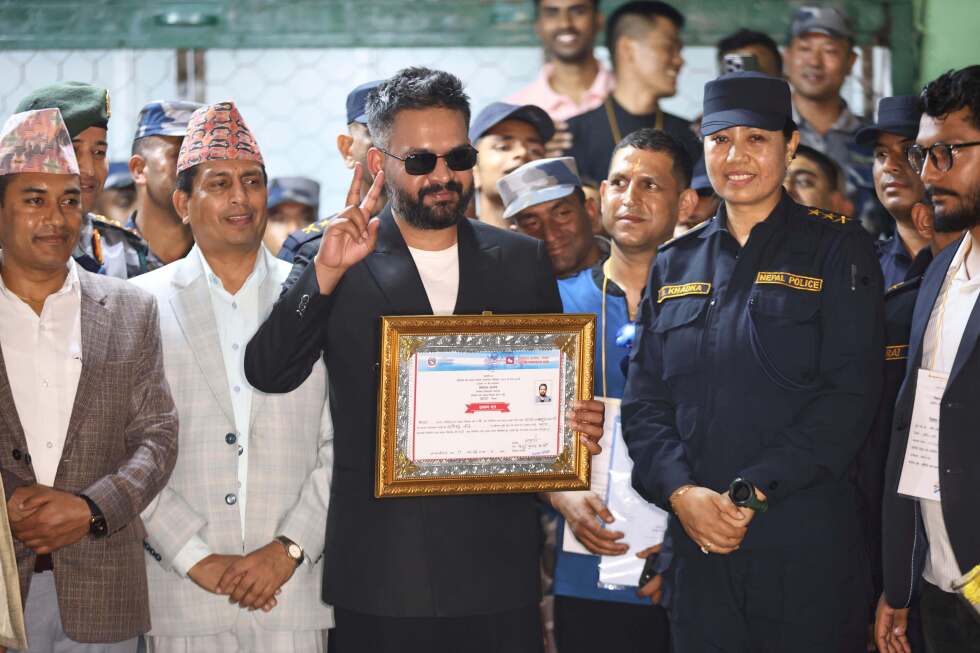
The Rastriya Swatantra Party (RSP), established just four years ago under the leadership of rapper-turned-politician Balendra Shah, dominated the polls with an overwhelming majority. The party won 125 directly elected seats and an additional 57 through proportional representation, giving it a total of 182 seats in the 275-member House of Representatives, Nepal’s powerful lower chamber of parliament.
This decisive victory places the RSP in a commanding position, holding nearly two-thirds of all parliamentary seats. The long-established Nepali Congress party, which has historically dominated Nepalese politics, managed to secure only 38 seats, marking a dramatic shift in the country’s political landscape.
The electoral system in Nepal combines direct representation with proportional allocation. Voters directly elect 165 members to the House of Representatives, while the remaining 110 seats are distributed proportionally based on each party’s share of the national vote.
Now that results have been finalized, the electoral commission will request that political parties submit the names of members to fill proportionally allocated seats. These names will then be presented to the president, who will convene the new parliament to elect a prime minister. The candidate will need support from at least half of the parliament’s members to secure the position.
Given the RSP’s overwhelming majority, Shah is virtually certain to become Nepal’s next prime minister once the procedural steps are completed. The entire transition process is expected to take several days before a new government can be formed.
Shah’s political rise has been meteoric. He first gained political prominence by winning the Kathmandu mayoral race in 2022, the same year his party was founded. His popularity soared during the 2025 uprising that ousted former Prime Minister Khadga Prasad Oli, establishing him as a central figure in Nepal’s new political order.
The RSP’s sudden ascent represents a seismic shift in Nepalese politics, which has traditionally been dominated by two parties: the Nepali Congress and the Communist Party of Nepal (Unified Marxist-Leninist). Political analysts attribute the RSP’s success to widespread public dissatisfaction with established parties and a growing desire for fresh leadership among Nepal’s predominantly young population.
Last year’s nationwide protests significantly influenced this electoral outcome. What began as demonstrations against a social media ban quickly evolved into a broader movement challenging government corruption and poor governance. The protests turned violent, resulting in dozens of fatalities and hundreds of injuries when protesters stormed government buildings and security forces responded with deadly force.
This election marks Nepal’s first national poll since those transformative protests, with many viewing it as a referendum on traditional political establishments. The results clearly indicate that voters were ready for dramatic change, embracing Shah’s promises of political reform and improved governance.
The RSP campaigned heavily on anti-corruption platforms and pledged to improve economic conditions in Nepal, one of Asia’s poorest nations despite its tourism potential and natural resources. Shah’s background as a cultural figure rather than a career politician appears to have resonated with voters tired of traditional political rhetoric.
As Nepal prepares for this significant political transition, regional powers India and China will be watching closely. Both countries have strategic interests in Nepal, which serves as a buffer state between them and has been an arena for their competing influence in South Asia.
Political observers will now focus on how the RSP translates its electoral mandate into governance, and whether Shah can deliver on his promises of meaningful change for Nepal’s 30 million citizens.
Fact Checker
Verify the accuracy of this article using The Disinformation Commission analysis and real-time sources.

33 Comments
I like the balance sheet here—less leverage than peers.
Good point. Watching costs and grades closely.
Good point. Watching costs and grades closely.
Silver leverage is strong here; beta cuts both ways though.
Good point. Watching costs and grades closely.
Good point. Watching costs and grades closely.
Silver leverage is strong here; beta cuts both ways though.
Good point. Watching costs and grades closely.
Nice to see insider buying—usually a good signal in this space.
Good point. Watching costs and grades closely.
Uranium names keep pushing higher—supply still tight into 2026.
Good point. Watching costs and grades closely.
Good point. Watching costs and grades closely.
I like the balance sheet here—less leverage than peers.
Good point. Watching costs and grades closely.
Production mix shifting toward World might help margins if metals stay firm.
Good point. Watching costs and grades closely.
The cost guidance is better than expected. If they deliver, the stock could rerate.
Good point. Watching costs and grades closely.
Good point. Watching costs and grades closely.
If AISC keeps dropping, this becomes investable for me.
The cost guidance is better than expected. If they deliver, the stock could rerate.
Good point. Watching costs and grades closely.
Exploration results look promising, but permitting will be the key risk.
Uranium names keep pushing higher—supply still tight into 2026.
The cost guidance is better than expected. If they deliver, the stock could rerate.
Good point. Watching costs and grades closely.
Good point. Watching costs and grades closely.
Interesting update on Former rapper’s fledgling political party sweeps Nepal’s first post-revolt election. Curious how the grades will trend next quarter.
Good point. Watching costs and grades closely.
Good point. Watching costs and grades closely.
If AISC keeps dropping, this becomes investable for me.
Good point. Watching costs and grades closely.