


Listen to the article
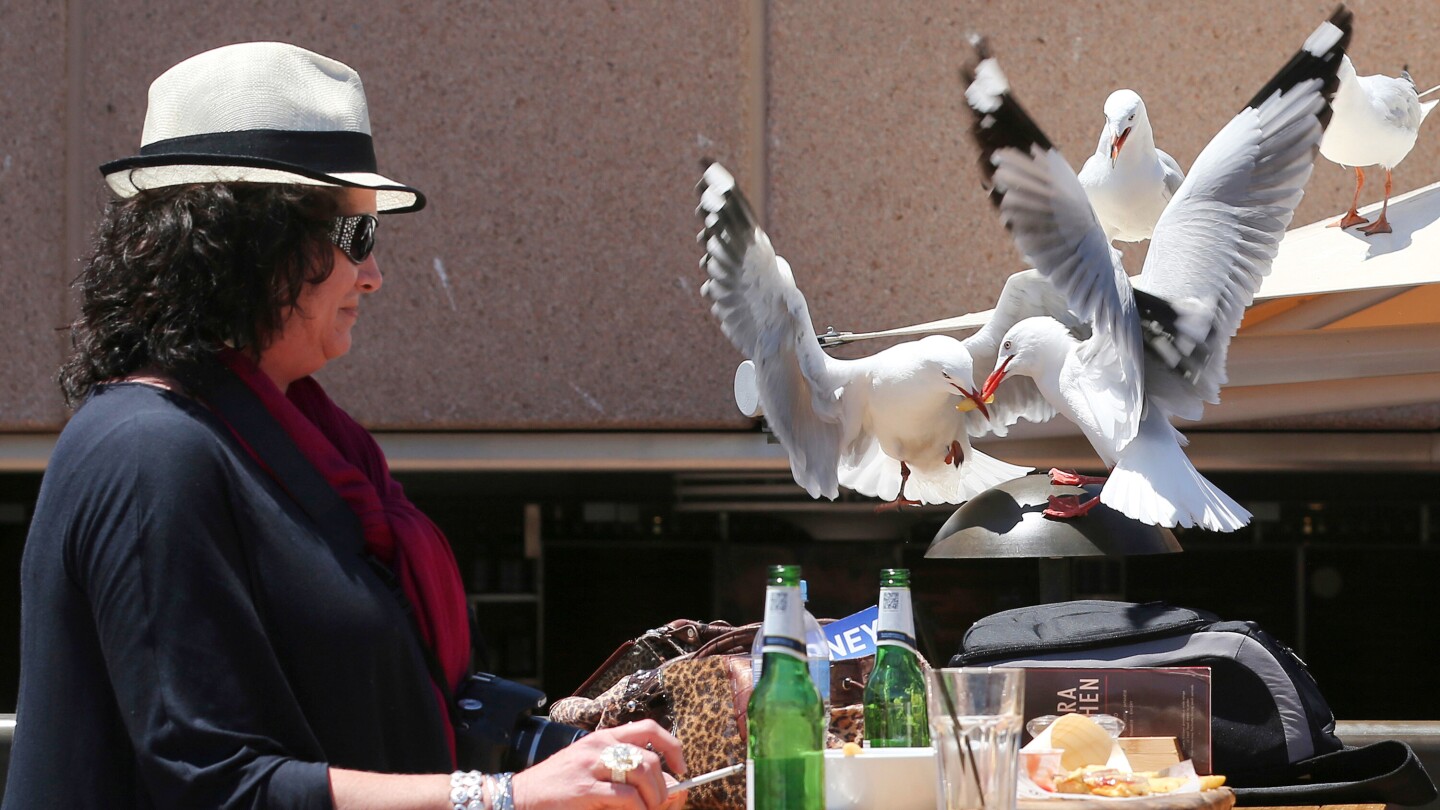
Researchers have discovered that raising your voice is more effective at deterring seagulls from stealing food than simply speaking to them, according to a study published Wednesday in the peer-reviewed journal Biology Letters.
Scientists from the University of Exeter’s Center for Ecology and Conservation conducted experiments along England’s southwest coast to test how European herring gulls respond to different human vocalizations. The research builds on previous findings that making eye contact or approaching the birds can discourage their food-snatching behavior.
“Talking might stop them in their tracks, but shouting is more effective at making them fly away,” explained Neeltje Boogert, one of the study’s researchers. The team discovered that gulls appear to distinguish between speaking and shouting based on acoustic qualities rather than volume alone.
The experiment, conducted across multiple coastal towns, involved placing french fries in containers and exposing 61 different gulls to three sound recordings: a robin’s song, a male voice calmly saying “No, stay away, that’s my food,” and the same voice shouting those identical words. Crucially, all recordings were played at the same volume to isolate the effect of vocal delivery rather than loudness.
Results showed clear differences in the birds’ responses. When exposed to the speaking voice, gulls displayed signs of vigilance, reduced their pecking at the food, and typically walked away. However, when confronted with the shouting voice, they were much more likely to fly away entirely—indicating a stronger aversion response.
“Normally when someone is shouting, it’s scary because it’s a loud noise, but in this case all the noises were the same volume, and it was just the way the words were being said that was different,” Boogert noted. “So it seems that gulls pay attention to the way we say things, which we don’t think has been seen before in any wild species.”
The findings have practical applications for coastal communities and tourists who regularly contend with food-stealing gulls. Seaside towns throughout the UK and other countries have long struggled with aggressive seagull behavior, particularly during summer months when outdoor dining increases and the birds become bolder in their pursuit of human food.
The research team emphasized that the study was designed to provide non-harmful methods for deterring gulls, which are classified as a species of conservation concern in the United Kingdom despite their sometimes problematic interactions with humans. Population declines in recent decades have led to increased protection for these coastal birds, making effective yet harmless deterrent methods particularly valuable.
Interestingly, the researchers chose to use male voices in their recordings based on previous data suggesting men commit more crimes against wildlife than women. The team acknowledged this limitation in their study, noting that further research could investigate whether gulls respond differently to female voices.
“It is possible that herring gulls can discriminate between genders and are more scared of one than the other,” the authors wrote in their publication.
This research contributes to a growing body of work examining the complex interactions between humans and urban wildlife. As more wild species adapt to human-dominated environments, understanding their behavioral responses to various human cues becomes increasingly important for managing conflicts while protecting vulnerable populations.
For beachgoers concerned about protecting their seaside meals this summer, the message from science is clear: a firm, shouted warning is likely your best defense against hungry gulls—no physical intervention required.
Fact Checker
Verify the accuracy of this article using The Disinformation Commission analysis and real-time sources.

9 Comments
Fascinating research on gull behavior. I wonder if the same tactic would work for other pesky birds, like pigeons or crows, that are notorious for stealing food. It could be a useful technique to have in one’s arsenal when dining al fresco.
I’ve had my fair share of encounters with food-snatching seagulls, and I can attest that shouting seems to work better than just talking to them. The acoustic qualities must play a big role in signaling that the human is serious about defending their food.
This study provides a good practical tip for dealing with pesky seagulls. I wonder if the effectiveness of shouting is universal across different gull species or if there are some regional variations. It would be interesting to see if the findings hold true in other coastal areas.
This is a good reminder that sometimes a more assertive approach is needed when dealing with determined wildlife. I appreciate the researchers taking the time to study this common nuisance behavior and providing practical advice for the public.
As someone who lives near the coast, I can relate to the frustration of seagulls snatching food. This study provides a simple but effective solution. I’ll have to give it a try next time I’m out enjoying a seaside meal.
The researchers make a good point about gulls being able to distinguish between speaking and shouting. I imagine it’s an evolutionary adaptation to help them identify potential threats. Definitely worth trying a loud, firm voice next time a seagull tries to steal my lunch at the beach.
I’ve had my fair share of seagull encounters, and I can confirm that shouting is definitely more effective than simply talking to them. It’s interesting to learn that the birds can actually distinguish the acoustic qualities rather than just volume.
As someone who frequently enjoys outdoor meals near the coast, I’m glad to have this practical advice from the researchers. Shouting does seem like a more reliable way to deter seagulls than gentle requests. I’ll give it a try next time I’m faced with a food-snatching gull.
Interesting research on deterring seagulls. I can see how a loud, commanding voice would be more effective than a calm request. Gulls can be quite persistent when it comes to stealing food, so this could be a useful tactic for beachgoers.