


Listen to the article
First Winter Rains Flood Gaza’s Tent Camps Amid Ongoing Humanitarian Crisis
Heavy rainfall swept through Gaza’s Muwasi tent camp on Saturday, flooding makeshift shelters and exacerbating the humanitarian crisis for hundreds of thousands of displaced Palestinians as winter begins.
Residents frantically dug trenches around their tents in an attempt to divert water, while intermittent downpours seeped through torn tarpaulins, soaking families’ limited possessions. Strong winds threatened to collapse shelters and complicated efforts to gather already scarce food and supplies.
“I spent all Friday pushing water out of my tent,” said Bassil Naggar, who recently purchased a new tent on the black market for approximately $712 after sun damage rendered his previous shelter inadequate. Despite the investment, rainwater still penetrated his new dwelling. “Water puddles are inches high, and there is no proper drainage.”
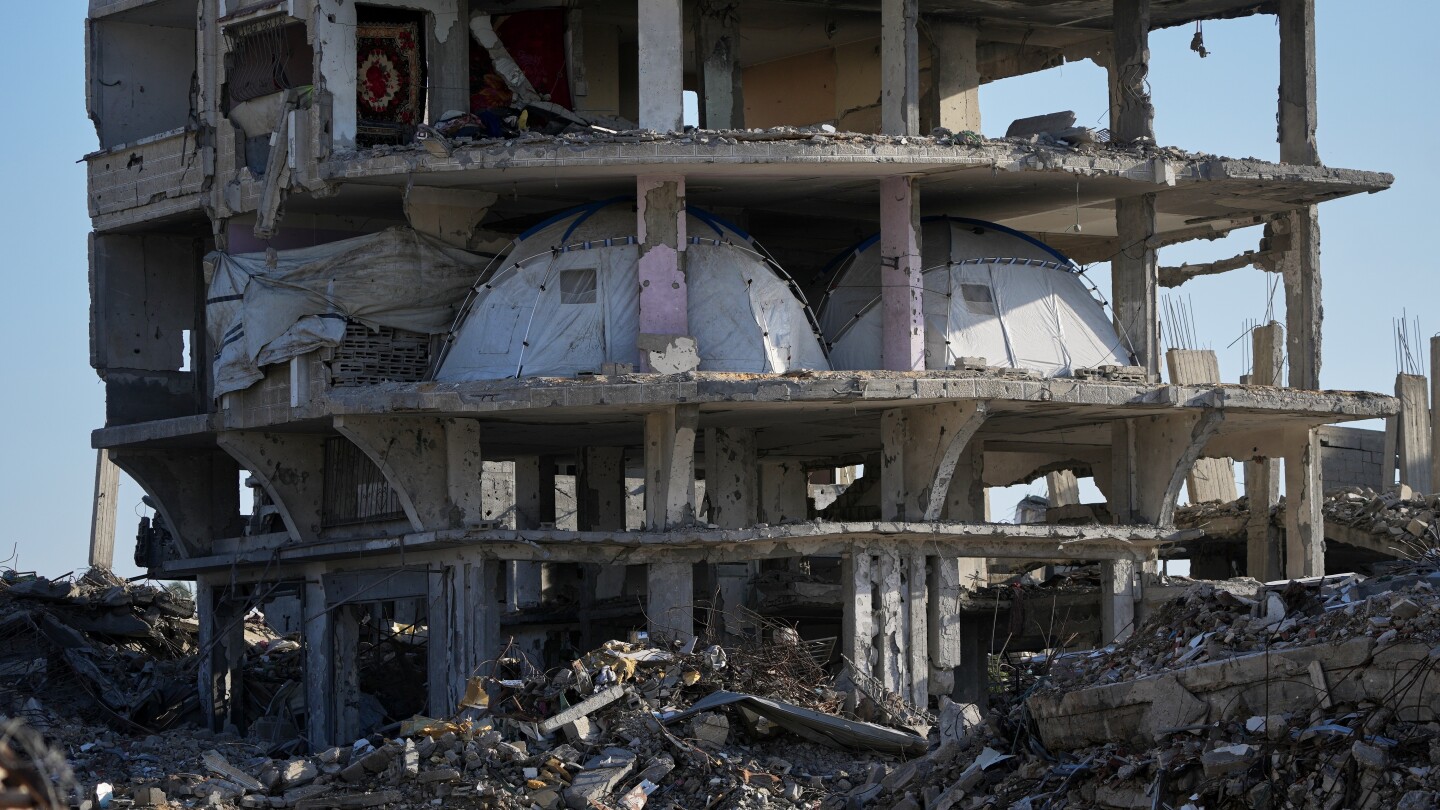
The scene throughout the camp was one of improvisation amid hardship. Children without shoes splashed in puddles while women prepared tea outside beneath threatening skies. Some desperate residents sought shelter in damaged buildings at risk of collapse, covering large holes with plastic sheeting.
According to United Nations data, Muwasi has been sheltering up to 425,000 displaced Palestinians earlier this year. The vast majority live in temporary structures in what was largely undeveloped sand dunes before the Israeli military designated it a humanitarian zone in the early stages of the conflict.
Israeli defense officials report allowing winterization materials including blankets and heavy tarps into the territory. However, aid organizations warn these efforts fall drastically short of what’s needed as winter temperatures drop and Mediterranean winds intensify, threatening the wellbeing of Gaza’s displaced population.
The humanitarian situation unfolds against the backdrop of a fragile ceasefire agreement that is approaching the end of its first phase. The next stage faces significant challenges, including establishing a governing body for Gaza and deploying an international stabilization force – both steps with uncertain prospects.
The United Nations Security Council is expected to vote Monday on a U.S. proposal for a UN mandate for a stabilization force in Gaza, though the measure faces opposition from Russia, China, and several Arab nations.
The ongoing conflict erupted on October 7, 2023, when Hamas-led militants attacked southern Israel, killing approximately 1,200 people, primarily civilians, and taking 251 hostages. The remains of three hostages are still held by Hamas, which Israel demands before proceeding to the second stage of the current ceasefire implemented on October 10.
Hamas claims the territory’s extensive destruction complicates efforts to locate the remains, while Israel accuses the group of intentionally delaying the process.
“We made it through this long journey and we have a little bit left, just a little bit more,” former hostage Maksym Harkin told demonstrators at a weekly rally in Tel Aviv advocating for the return of all hostages.
Under current arrangements, Israel returns the remains of 15 Palestinians for each Israeli hostage’s remains. Gaza’s Health Ministry reported Saturday that Israel has returned 330 remains, but only 97 have been identified. Health officials cite a shortage of DNA testing kits as hampering identification efforts.
According to Gaza’s Health Ministry, Israel’s military campaign has resulted in 69,100 Palestinian deaths, including many women and children. The ministry, which is part of the Hamas-run government but staffed by medical professionals, does not distinguish between civilians and combatants in its figures. Independent experts generally consider the ministry’s detailed records reliable.
The convergence of winter weather with the ongoing humanitarian crisis highlights the precarious situation for Gaza’s displaced population, where basic shelter, sanitation, and infrastructure remain severely compromised after more than a year of conflict. As negotiations continue toward a more permanent resolution, civilians caught in the crossfire face not only the threat of violence but increasingly harsh environmental conditions with limited resources.
Fact Checker
Verify the accuracy of this article using The Disinformation Commission analysis and real-time sources.

9 Comments
The vivid descriptions of families struggling to keep their meager shelters from being flooded are heartbreaking. This crisis underscores the urgent need for the international community to step up and provide more robust, weather-resistant housing and infrastructure to protect the displaced Palestinians in Gaza.
Heartbreaking to see the dire conditions these displaced Palestinians are living in. The winter rains must be making life in the makeshift shelters even more difficult and precarious. I hope more aid and resources can be provided to help them weather this crisis.
The scenes of people struggling to keep water out of their flimsy tents are heartbreaking. This crisis highlights the dire need for more durable, weatherproof shelters and improved drainage systems in the Gaza camps. Providing this basic infrastructure should be a priority.
Agreed, the Palestinians deserve much better living conditions. Investing in stronger, more weather-resistant shelters and drainage systems could make a big difference in their quality of life during the harsh winter months.
This is a sobering reminder of the harsh realities facing the people of Gaza. Makeshift shelters that can’t withstand heavy rains, children splashing through puddles without shoes – it’s a devastating humanitarian crisis that deserves more global attention and aid.
This is a stark reminder of the ongoing humanitarian emergency in Gaza. Families forced to improvise and rig up temporary shelters that can’t even withstand heavy rains. It’s unconscionable that they have to endure such hardship.
You’re right, the lack of proper infrastructure and basic resources is unacceptable. The international community needs to step up and provide urgent assistance to these vulnerable populations.
While the heavy rains are exacerbating the already dire conditions in the Gaza camps, this is an ongoing humanitarian crisis that has persisted for years. More comprehensive, long-term solutions are clearly needed to address the root causes and provide sustainable support to these vulnerable communities.
It’s distressing to see the lack of proper infrastructure and planning in these tent camps. The heavy rains exposing how ill-equipped they are to handle even basic weather events. This speaks to the larger neglect and lack of investment in Gaza’s development and basic services.