


Listen to the article
Latin American Celebrations and Challenges Mark Year’s End
As people across Latin America welcomed 2026, the final week of December highlighted both festive traditions and ongoing social challenges throughout the region, reflecting the complex tapestry of culture, politics and daily life that defines the area.
In Guatemala, deportation flights from the United States continued through the holiday season, with migrants being processed at La Aurora airport in Guatemala City. One Guatemalan man, who requested anonymity, told reporters he was detained while traveling to his construction job in Georgia. The deportations underscore the continuing immigration challenges between Central America and the United States, where economic opportunities continue to draw migrants northward despite increasingly strict enforcement policies.
Meanwhile, scientists in Mexico maintained their vigilant monitoring of the Popocatepetl volcano, one of the region’s most active volcanic sites. Geophysicist Marco Calo from the National Autonomous University of Mexico (UNAM) was among researchers working on the volcano’s slopes, collecting data crucial for understanding seismic activity and potential eruptions that could affect millions living in the surrounding areas, including Mexico City.
Throughout Latin America, traditional New Year’s celebrations showcased the region’s rich cultural heritage. In Lima, Peru, shamans performed their annual prediction ritual on December 29, a ceremony that draws both locals and tourists as the practitioners forecast political and social developments for the coming year. These spiritual practices blend indigenous traditions with colonial influences, creating uniquely Latin American expressions of faith and community.
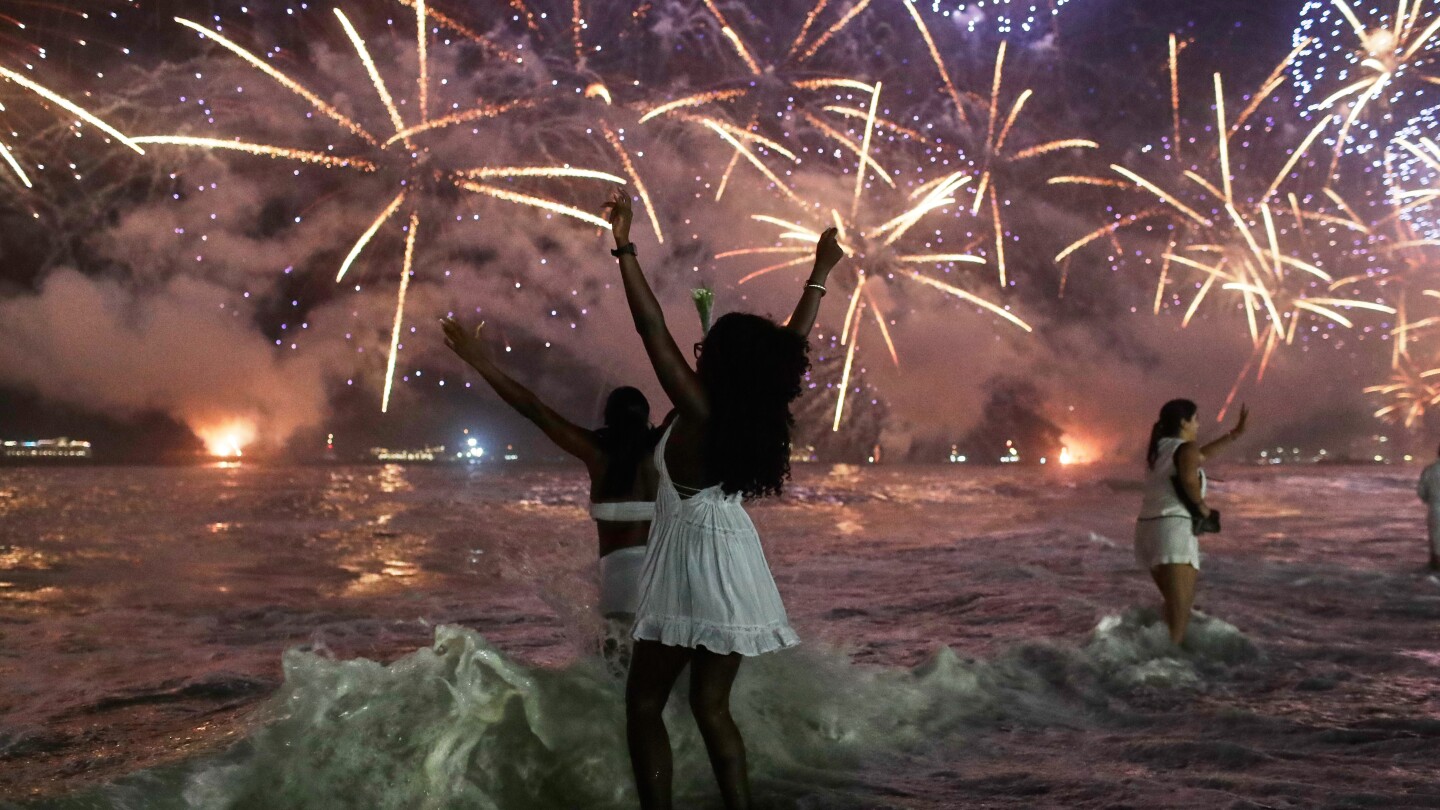
In Rio de Janeiro, Brazil, thousands gathered at Copacabana Beach for ceremonies honoring Yemanja, the sea goddess of the Yoruba religion. Devotees dressed in white performed traditional dances and offered flowers and gifts to the deity, highlighting the continued significance of Afro-Brazilian religious traditions that have helped shape the country’s cultural identity.
The Afro-Venezuelan Holy Innocents’ Day celebration in Caucagua, Venezuela, featured colorful costumes and dancing on December 28, showcasing how African heritage continues to influence cultural expressions throughout the Caribbean basin. These celebrations preserve historical connections to Africa while providing communities with opportunities to express local identity.
The holiday season also revealed the economic disparities that persist throughout the region. In Lomas de Zamora, a suburb of Buenos Aires, Argentina, community members organized to distribute gifts to children. Cinthia Falcón dressed as Santa Claus to deliver presents donated by NGOs to families served by a neighborhood soup kitchen. Such grassroots efforts highlight both the economic challenges many Latin Americans face and the strong community bonds that help address them.
As the year came to a close, markets in Lima bustled with vendors selling New Year’s Eve party supplies, from noisemakers to decorative items, demonstrating the economic importance of holiday celebrations for small businesses across the region. The seasonal commerce provides crucial income for many families in the informal economy that dominates much of Latin America.
Romance also found its moment amid the year-end festivities, as captured in the tender scene of José Saavedra proposing to his girlfriend Mariele Muñoz at the Valle Arriba viewpoint in Caracas, Venezuela. The moment of personal joy against the backdrop of a city that has faced significant economic and political challenges in recent years offered a poignant reminder of how life and love continue even in difficult circumstances.
In coastal Argentina, beaches in Carilo, Buenos Aires province, filled with vacationers enjoying the southern hemisphere’s summer season. The seaside retreats provide a respite for those who can afford them, though such leisure remains unavailable to many in a region marked by significant economic inequality.
As Latin America enters 2026, these scenes of deportation, scientific research, religious ceremonies, community support, commerce, romance, and leisure paint a nuanced picture of a region navigating both age-old traditions and modern challenges while maintaining its distinctive cultural vibrancy.
Fact Checker
Verify the accuracy of this article using The Disinformation Commission analysis and real-time sources.

9 Comments
The photos of the celebrations and cultural traditions are a great counterpoint to the challenges highlighted. Latin America is such a vibrant, diverse part of the world.
Fascinating look at the diverse cultural celebrations and ongoing challenges across Latin America as the new year approaches. Deportations and volcano monitoring highlight the complexity of the region.
The fireworks over Rio’s skyline must have been breathtaking. It’s great to see the festive traditions amidst the social and environmental issues the article touches on.
Agreed, the photos of the Rio celebrations look stunning. A good reminder of the vibrancy and resilience of Latin American cultures.
The deportations from the US to Guatemala underscore the difficult migration issues the region faces. It’s a complex situation with no easy solutions.
Tough to see the deportations happening even over the holidays. Hopefully there can be more humane and constructive policies to address the root causes of migration in the region.
Interesting to see the mix of festive celebrations and ongoing social/environmental issues covered in this article. Gives a well-rounded view of the region.
Closely monitoring active volcanoes like Popocatepetl is crucial for public safety. Glad to see the scientists in Mexico working diligently on this important work.
Absolutely, volcanic monitoring is critical in areas with high seismic activity. The data they collect could help save lives if an eruption occurs.