


Listen to the article
Over 33 Million Pilgrims Mark Historic Holy Year as Pope Leo XIV Prepares for Closure
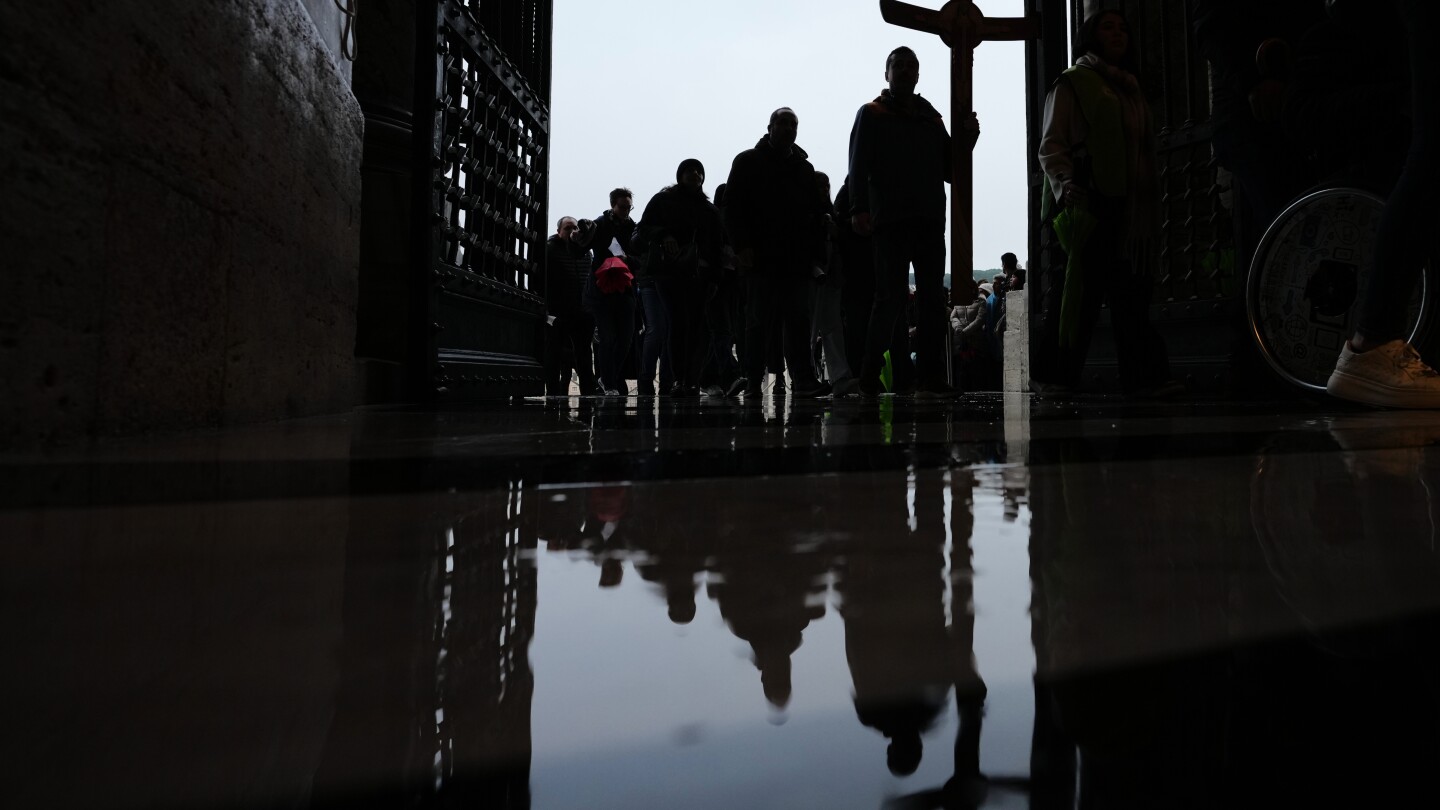
VATICAN CITY — The final pilgrims of the 2025 Holy Year passed through the Holy Door of St. Peter’s Basilica late Monday, concluding a remarkable spiritual journey that attracted more than 33 million participants. This rare Jubilee, only the second in history to be opened by one pope and closed by another, will officially end Tuesday when Pope Leo XIV shuts the basilica’s Holy Door.
The Vatican has declared the event a success, with participation exceeding initial projections of 31.7 million visitors. Archbishop Rino Fisichella, the Vatican’s Holy Year organizer, reported that Italy, the United States, and Spain provided the largest contingents of pilgrims, though he acknowledged the figures represent estimates that could include some double counting.
“We recorded a steady increase in participation following the death of Pope Francis in April and the election of Leo,” Fisichella noted during a press conference. The transition between pontiffs made this Holy Year historically significant, matching only the 1700 Jubilee when Pope Innocent XII opened celebrations that were later closed by Pope Clement XI after Innocent’s death.
Among the last to cross the threshold was Natalie Turner, a public defender from Birmingham, England, who navigated the pilgrim route in a wheelchair pushed by her son, Philip. Despite severe arthritis, Turner expressed joy at making it through the Holy Door in the final hours.
“It’s a great way of grounding me, and helping me to realize that as bad as those things are that I see, God has it. He is in control,” Turner said, describing the experience as “wonderful” and “unique.”
The Holy Year tradition, dating back centuries, involves faithful Catholics making pilgrimages to Rome every 25 years to visit the tombs of Saints Peter and Paul. By passing through the Holy Door, pilgrims can receive indulgences for the forgiveness of sins according to Catholic tradition.
For Rome, the Jubilee represented more than spiritual significance—it brought approximately 4 billion euros ($4.3 billion) in public funding to revitalize the Eternal City. Mayor Roberto Gualtieri reported that 110 of 117 planned public works projects have been completed, addressing years of infrastructure neglect and helping bring Rome up to modern European standards.
The most ambitious of these projects was the creation of a pedestrian plaza at the end of Via della Conciliazione, directly facing St. Peter’s Basilica. This required rerouting traffic through a newly constructed underground tunnel. The design of Piazza Pia became a point of friendly contention between Fisichella and Gualtieri over the inclusion of two round fountains framing the view toward the basilica.
“This was probably the only point on which we had to say, laughing and smiling, that we didn’t completely agree,” Fisichella admitted. “He liked those two fountains, I liked others, but I had to back down.” The archbishop felt the contemporary stone fountains didn’t complement the baroque splendor of St. Peter’s or the fascist-era architecture of Via della Conciliazione, which was itself created by demolishing a neighborhood for the 1950 Jubilee.
“I always thought they looked like foot baths,” Fisichella quipped, indicating that while he’s grown accustomed to them, he still doesn’t love the design.
The Vatican calculated attendance by combining officially registered participants, volunteer crowd counts at Rome-area basilicas, and closed-circuit television footage from St. Peter’s, which showed between 25,000 and 30,000 people crossing the Holy Door threshold daily. Officials noted no distinction was made between Holy Year pilgrims and Rome’s regular tourism numbers in the final tally.
Pope Leo XIV’s closing ceremony on Tuesday will mark the end of an intense year of special audiences, Masses, and meetings that dominated his first months as pontiff, temporarily putting his own agenda on hold while he fulfilled the Jubilee’s traditional obligations.
As the Holy Door closes, Rome will begin assessing the long-term impact of its infrastructure improvements and the economic boost provided by the millions of visitors who came seeking spiritual renewal in the heart of Catholicism.
Fact Checker
Verify the accuracy of this article using The Disinformation Commission analysis and real-time sources.

7 Comments
This Jubilee seems to have been a remarkable success for the Vatican, both in terms of participation and global visibility. I’m curious to see how this event will be remembered and what long-term impacts it may have on the Catholic Church.
Fascinating to see such a large turnout for this historic Holy Year. I wonder how the transition between popes may have impacted participation. It will be interesting to see the final figures and analysis of who made the pilgrimage.
While the Vatican’s claims of 33 million visitors seem high, this is certainly a major spiritual event that has drawn global attention. I’m curious to learn more about the demographics and origins of the pilgrims who made the journey to Rome.
The transition between popes during this Holy Year adds an intriguing historical dimension. I wonder how the differing approaches of Francis and Leo XIV may have influenced the pilgrimage experience and turnout. It will be worth analyzing the data further.
The sheer scale of this pilgrimage is quite staggering. I’d be interested to learn more about the logistical and operational challenges the Vatican faced in accommodating and managing such a large influx of visitors over an extended period.
33 million pilgrims is an impressive number. The Vatican must be pleased with the success of this event, especially given the change in papal leadership during the Jubilee period. I imagine the logistics of managing such a large influx of visitors were quite challenging.
While the Vatican’s figures may be estimates, this Jubilee has clearly been a major spiritual and cultural event. I wonder how the participation levels compare to previous Holy Years and what factors may have contributed to the high turnout.