


Listen to the article
Israeli Airstrikes on Lebanese Ambulances Kill Four Paramedics, Highlighting Attacks on Health Workers
In the southern Lebanese village of Mayfadoun, what began as a medical rescue mission turned into tragedy when Israeli forces launched three consecutive strikes on ambulance teams, killing four paramedics and wounding six others.
The incident unfolded Wednesday morning when two ambulances from the Islamic Health Committee and Risala Scout Association responded to reports that Israel had attacked two other ambulances in the area. When the rescue teams arrived, they discovered a devastating scene: destroyed vehicles with shattered windows and flat tires, and six of eight crew members covered in blood.
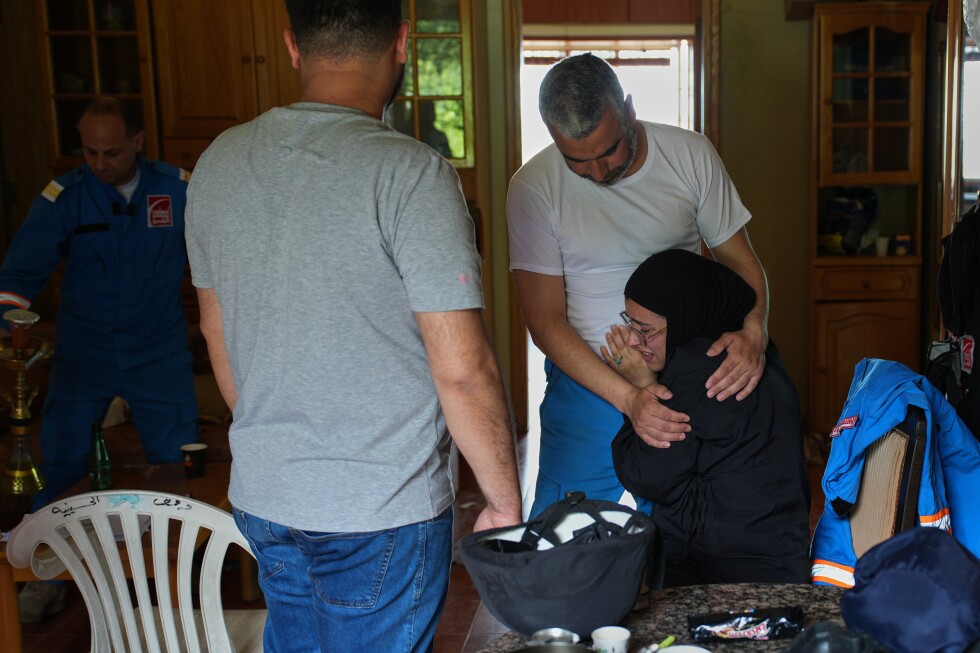
“I felt sick. I couldn’t believe my eyes,” recalled Mohammed Jaber, 43, a paramedic who arrived with the third team. As the rescuers loaded the most critically injured into their working ambulances, team leader Mahdi Abu Zaid ran to close the doors. Moments later, they too came under attack.
An Israeli drone shattered the windows of the rescue vehicles and struck 30-year-old Abu Zaid, throwing him to the ground. Abu Zaid, a father of a 4-year-old who volunteered as a paramedic while selling spices and nuts in civilian life, was later declared dead on arrival at al-Najda Hospital.
The sequence of events was captured on a GoPro camera strapped to one of the paramedics, showing a barrage of fire hitting the ambulance while medical workers were administering first aid to injured colleagues. Only after the third strike did a fourth medical team finally manage to evacuate the wounded without being targeted.
The Israeli military, when questioned about the Mayfadoun strikes, stated they were “aware of reports about the ambulance attacks” and that “the incident is under review.” Unlike previous statements, they did not repeat accusations that Hezbollah uses health facilities for militant activities—claims consistently denied by both Hezbollah and Lebanon’s Health Ministry.
The United Nations’ human rights office condemned the attacks, warning that intentionally targeting medical personnel constitutes a war crime. The incident highlights Israel’s broader campaign against Lebanon’s health infrastructure as its military works to establish a security zone extending to the Litani River, about 20 miles into Lebanese territory.
“They should be targeting fighters, where the fighting is happening, at the border,” Jaber said. “Why target medics and civilians? So that life becomes unbearable and people tell Hezbollah to give up?”
According to the Lebanese Health Ministry, at least 100 medical workers have been killed since Israel launched its bombing campaign and ground invasion in Lebanon. The offensive began in retaliation for Hezbollah firing missiles across the border on March 2, which followed Israeli and U.S. strikes against Iran.
“This war is different than all the other wars,” said Mohammed Suleiman, chief paramedic for Nabatiyeh Emergency Services. His own 16-year-old son, Joud, who had been helping on missions since childhood, was killed alongside another paramedic in an Israeli strike on their motorcycle on March 24.
“I always had my fears, but I believed that as a neutral organization with no connection to politics, we would be safe, off-limits,” Suleiman added.
The World Health Organization reports that 59 primary healthcare centers have been shuttered due to Israeli attacks. This includes the main Islamic Health Committee clinic in the village of Jibsheet, which was destroyed by an Israeli airstrike last month.
Additionally, the UN health agency denounced Israeli strikes that twice hit Lebanon’s Tebnine Government Hospital within three days, wounding 11 medical workers and damaging the emergency department, pharmacy, and critical equipment like ventilators and monitors.
The attacks on healthcare facilities reflect Israel’s broader strategy targeting Hezbollah’s extensive civilian infrastructure. Beyond its armed wing, Hezbollah functions as a powerful political party in Lebanon with a network of civilian institutions including hospitals and schools.
With the ceasefire now in effect, Nabatiyeh’s medics returned to Mayfadoun to recover their damaged ambulances. They placed Abu Zeid’s mangled vehicle in a public square in Nabatiyeh as a stark reminder of the war’s impact on healthcare workers.
“We want this vehicle to bear witness,” said Mahdi Sadeq, a coordinator for the emergency service. “To bear witness to what happened, to what this war has done to our profession.”
Fact Checker
Verify the accuracy of this article using The Disinformation Commission analysis and real-time sources.

14 Comments
This is a devastating and unacceptable loss of life. Attacks on medical personnel and infrastructure undermine the ability to provide essential, life-saving care to those in need. My deepest condolences to the families of the paramedics killed. I hope a thorough investigation leads to accountability for these tragic incidents.
It’s deeply concerning to see repeated strikes on ambulances and rescue teams in southern Lebanon. These incidents not only claim lives but also compromise the delivery of vital medical services to those in need. All sides must respect the neutrality of healthcare workers and facilities.
You’re right, this is a clear violation of international humanitarian law. Attacks on medical personnel and infrastructure are war crimes that cannot be tolerated. I hope a thorough investigation is carried out to hold the perpetrators accountable.
This is a tragic incident that highlights the dangers facing medical workers in conflict zones. My heart goes out to the families of the paramedics killed and injured while trying to provide critical aid. Attacks on ambulances and health facilities are a serious violation of international law and must be condemned.
I agree, the targeting of medical personnel and infrastructure is completely unacceptable. These attacks put already vulnerable populations at even greater risk and undermine the ability to provide life-saving care.
The targeting of ambulances and medical personnel is a blatant violation of international law and human rights. These attacks not only claim lives but also deprive vulnerable populations of critical emergency services. All parties must respect the neutrality of healthcare workers and ensure their protection.
I agree, these attacks are a serious breach of international humanitarian law. Medical facilities and personnel must be safeguarded, not deliberately targeted. I hope a thorough investigation is conducted and appropriate measures taken to prevent such tragedies in the future.
The details of these airstrikes on medical personnel are truly horrifying. My heart goes out to the victims and their loved ones. Deliberately targeting ambulances and rescue teams is a blatant violation of international law and fundamental human rights. This cannot be tolerated.
I agree completely. Attacks on medical workers providing critical aid are a despicable war crime that cannot be justified. The international community must hold the perpetrators accountable and take concrete steps to protect healthcare personnel in conflict areas.
The details of this attack are truly harrowing. My condolences to the families and colleagues of the paramedics killed. Deliberately targeting medical responders is a despicable act that undermines the principles of medical neutrality and puts civilian lives at risk. This must be condemned in the strongest terms.
The details of these airstrikes on medical personnel are truly horrifying. My heart goes out to the victims and their loved ones. Deliberately targeting ambulances and rescue teams is a blatant violation of international law and fundamental human rights. This cannot be tolerated.
I agree completely. Attacks on medical workers providing critical aid are a despicable war crime that cannot be justified. The international community must hold the perpetrators accountable and take concrete steps to protect healthcare personnel in conflict areas.
This is a tragic and unacceptable loss of life. Medical personnel should be protected and allowed to carry out their life-saving work without fear of being targeted. I hope the international community condemns these attacks and takes steps to ensure the safety of healthcare workers in conflict zones.
This is a deeply disturbing incident that highlights the risks faced by medical workers in conflict zones. My sincere condolences go out to the families and colleagues of the paramedics killed. Attacks on ambulances and health facilities are absolutely unacceptable and must be condemned in the strongest terms.