


Listen to the article
European Union foreign policy chief Kaja Kallas firmly rejected proposals for a European army on Monday, describing such an initiative as “extremely dangerous” at a time when the bloc is reassessing its security framework amid shifting U.S. priorities.
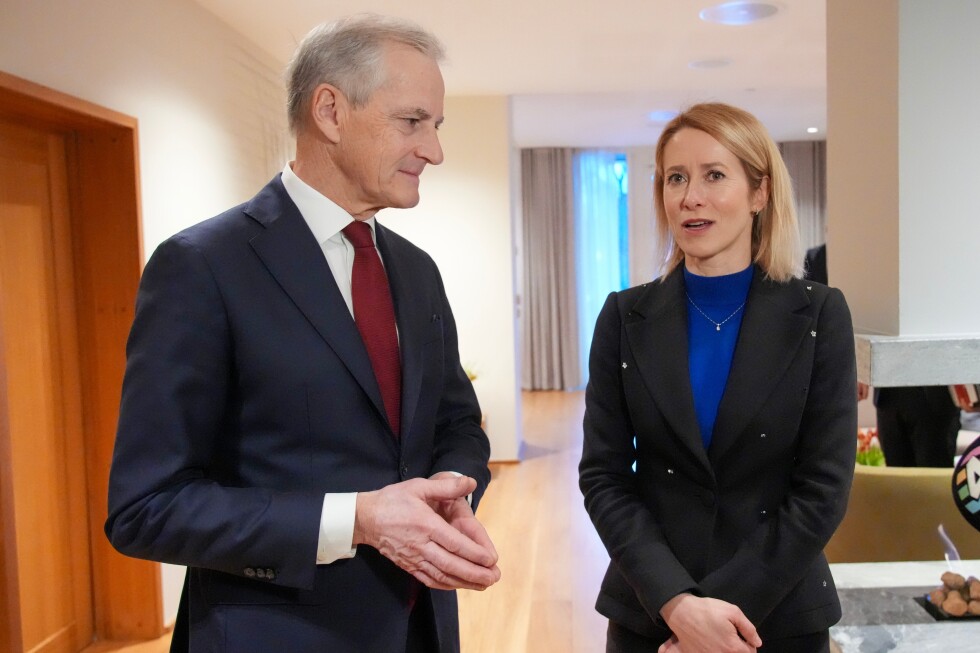
Speaking at a security conference in Norway, Kallas addressed growing concerns about European defense autonomy with practical skepticism. “Those who say that we need a European army, maybe those people haven’t really thought this through practically,” she said. “If you are already part of NATO then you can’t create a separate army.”
The debate over European military independence has intensified following recent tensions within NATO, particularly after U.S. President Donald Trump’s controversial statements about potentially annexing Greenland, a semiautonomous territory belonging to Denmark, a NATO ally.
Kallas emphasized the critical importance of clear military command structures during crises. “The most important military asset during a crisis is the chain of command — who gives orders to whom,” she explained. “And if you have, like the European army and then you have the NATO (one), then, you know, the ball just falls between the chairs. And this is extremely, extremely dangerous.”
NATO’s operational structure currently places all military operations under the Supreme Allied Commander, traditionally a high-ranking U.S. officer. This position is presently held by U.S. Air Force Lt. Gen. Alexus Grynkewich, underscoring America’s central role in the alliance’s command structure.
Norwegian Prime Minister Jonas Gahr Støre aligned with Kallas’ position during the conference, defending NATO’s existing framework despite its complexities. “NATO is there with the decision-making process among allies, which is in itself complex, but it is trained to work,” Støre remarked. He explicitly rejected the European army concept, stating that “it is not a road we should travel.” Norway, while not an EU member, maintains strong defense ties with both the EU and NATO.
The debate comes at a critical juncture for transatlantic security relations. Just last week, NATO Secretary-General Mark Rutte delivered a sobering assessment to EU lawmakers in Brussels, declaring that Europe lacks the capability to defend itself without U.S. military support. Rutte, the former Dutch prime minister who recently assumed NATO’s top civilian position, emphasized the financial realities of European defense independence.
“If anyone thinks here… that the European Union or Europe as a whole can defend itself without the U.S., keep on dreaming. You can’t,” Rutte stated bluntly. He suggested that European nations would need to more than double their current military spending targets to achieve meaningful defense autonomy.
Rutte’s comments reflect growing concerns about European security vulnerabilities at a time of heightened geopolitical tensions, particularly regarding Russia’s continued aggression in Ukraine and growing uncertainties about the future of U.S. commitment to European defense.
The debate over a European army has periodically resurfaced in EU policy circles, especially during moments of transatlantic tension. Proponents argue it would provide the bloc with strategic autonomy, while critics, including Kallas and NATO leadership, warn of dangerous duplications and potential conflicts with NATO’s established command structures.
As Europe faces complex security challenges on multiple fronts—from its eastern borders to the Mediterranean and beyond—the question of how to strengthen European defense capabilities while maintaining the NATO alliance remains a central dilemma for EU policymakers.
For now, the message from key European security figures appears clear: strengthening European defense should occur within, not parallel to, the existing NATO framework, with the transatlantic partnership remaining the cornerstone of European security architecture.
Fact Checker
Verify the accuracy of this article using The Disinformation Commission analysis and real-time sources.

11 Comments
Kallas makes a fair point about the risks of a separate EU army. Practical coordination with NATO would be crucial, and the command structure implications need to be thoroughly worked out. A thoughtful, cautious approach is warranted.
The EU’s foreign policy chief raises valid concerns about the feasibility of a Europe-wide army. Harmonizing defense capabilities across the EU is important, but not at the expense of undermining existing NATO structures and command.
Agreed, a standalone EU army could create more problems than solutions. The focus should be on strengthening European defense within the NATO framework.
Kallas makes a fair point – a separate European army on top of NATO membership could be unwieldy. Harmonizing defense capabilities across the EU is a worthy goal, but the logistics need to be carefully thought through.
Exactly, trying to build a parallel military structure on top of existing alliances seems risky. Better to focus on strengthening European defense capabilities within the NATO framework.
Interesting perspective from the EU’s foreign policy chief. A unified European army could certainly complicate existing military structures and command. Practical coordination and clear chains of command are crucial during crises.
I agree, having overlapping military structures could create more confusion than unity. NATO membership is an important consideration as well.
Kallas makes some good points about the potential downsides of a Europe-wide army. Practical coordination and clear command structures are critical, especially given the EU’s existing NATO commitments. This is a complex issue that requires careful consideration.
Kallas raises valid concerns about the practicality of a Europe-wide army. Maintaining a clear chain of command during crises is absolutely essential. This is a nuanced issue that requires careful consideration of existing alliances.
Agreed, a Europe-wide army could create more problems than it solves if it’s not seamlessly integrated with NATO. Streamlining command structures should be the priority.
This debate highlights the complexities of European defense policy. Kallas’ skepticism about a standalone EU army is understandable, given the potential for conflicts with NATO command structures. Coordination will be critical.