


Listen to the article
Tourism Guides Protest Restrictions at Sicily’s Mount Etna Following Eruptions
Tour guides at Sicily’s iconic Mount Etna have launched their first strike in decades, protesting new restrictions they claim undermine their profession and limit tourists’ access to the volcano’s spectacular lava flows.
The dispute erupted after authorities in Catania implemented tighter regulations following a series of eruptions that began on Christmas Eve. Dozens of guides gathered Wednesday at Mount Etna’s lava flow gate to demonstrate against measures they consider excessive and unnecessary.
“These measures effectively nullify the role of guides, stripping them of their skills, function, and professional responsibility,” the guides’ regional board stated in their official complaint.
Under the new regulations, excursions can approach no closer than 200 meters (660 feet) from active lava flows and must conclude by dusk – precisely when many visitors hope to witness the dramatic nighttime glow of molten rock. Additionally, authorities are strictly enforcing a previously established limit of 10 people per tour group, even deploying drones to monitor compliance.
Mount Etna, Europe’s largest and most active volcano, stands 3,350 meters (almost 10,990 feet) tall and spans 35 kilometers (21.7 miles) across, dominating the Sicilian landscape. The natural wonder attracts thousands of tourists annually, from serious hikers and backpackers to casual observers who admire its majesty from a distance, particularly from the Ionian Sea.
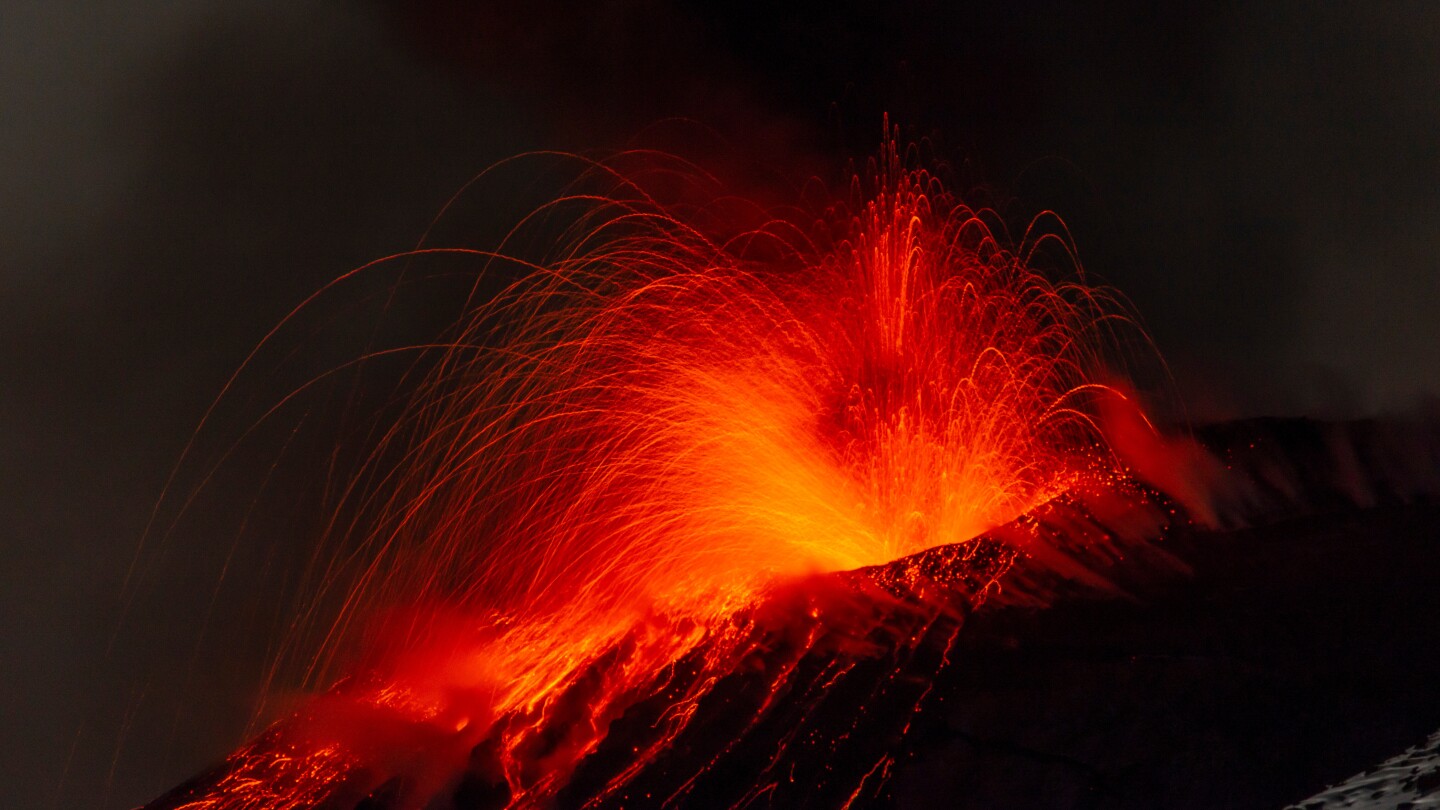
The volcano’s recent activity began Christmas Eve when a new eruption sent lava flowing down its slopes. According to local authorities, the most advanced lava front reached an elevation of 1,360 meters (4,460 feet) before stopping after traveling approximately 3.4 kilometers (about 2 miles). Volcanologists have confirmed that while the eruption continues, the lava fronts are cooling and no longer advancing, posing no danger to nearby residential areas.
Last June, a more dramatic eruption forced tourists to flee when a massive plume of high-temperature gases, ash and rock billowed several kilometers into the air. The current safety measures appear to be a response to such potentially dangerous situations.
“This is a lava flow that is descending very slowly on an area that is now also flat or semi-flat,” explained Dario Teri, a 43-year-old member of Sicily’s association of alpine and volcano guides who participated in the protest. The guides contend that with proper professional oversight, tourists can safely view the current lava flows from closer distances, as they have done for years.
The strike has already disappointed visitors like Claudia Mancini, a 32-year-old tourist from Palermo, who arrived hoping to join a guided excursion. “Unfortunately, we got the bad news of the cancelling of all activity,” Mancini said, expressing sympathy for the guides’ position in a situation that “is not making anyone happy.”
Tourism is a vital economic driver for Sicily, and Mount Etna represents one of the island’s premier attractions. The dispute highlights the delicate balance between safety concerns and tourism access at natural wonders that can be both spectacular and potentially dangerous.
The guides plan to continue their strike in the coming days but hope to reach a compromise with authorities that preserves both visitor safety and their professional role in facilitating meaningful, educational experiences at one of Italy’s most remarkable natural wonders.
For now, tourists have fewer options to experience Europe’s most impressive volcano up close, especially during the dramatic evening hours when lava flows are most visible against the darkening sky.
Fact Checker
Verify the accuracy of this article using The Disinformation Commission analysis and real-time sources.

9 Comments
The dispute over access to Mount Etna’s lava flows highlights the challenges of balancing public safety with commercial interests. While the tour guides’ complaints are understandable, the new restrictions seem prudent given the volcano’s recent activity. Finding the right compromise will require open dialogue and a willingness to compromise on both sides.
Volcanoes are inherently unpredictable, so it’s good to see the authorities taking a cautious approach with Mount Etna. The tour guides make a fair point about preserving their livelihoods, but public safety has to be the top priority. I hope they can find a way to continue offering experiences that are both thrilling and secure.
Mount Etna is a natural wonder, but also a powerful and dangerous force of nature. The new access restrictions, while frustrating for tour guides, seem like a reasonable response to the ongoing volcanic activity. Hopefully the stakeholders can work together to find a mutually acceptable solution that keeps visitors safe while still allowing them to experience the volcano’s grandeur.
It’s a tricky balance – allowing people to witness the awe-inspiring spectacle of an active volcano, while also ensuring their safety. The tour guides raise valid concerns about the impact on their businesses, but the authorities have a responsibility to mitigate the risks. I’m curious to see if a compromise can be reached that satisfies both sides.
Mount Etna is truly a natural wonder, but safety must come first. It’s understandable that the tour guides are frustrated by the new restrictions, but monitoring active lava flows is crucial to protect both visitors and workers. Perhaps a compromise can be reached that balances access with responsible risk management.
I agree, finding the right balance is key. Hopefully the guides and authorities can work together to find a solution that allows people to experience the volcano safely.
Erupting volcanoes are always a delicate situation. While the tour guides’ concerns are valid, the new regulations seem prudent given the increased activity at Mount Etna. Visitor safety should be the top priority, even if it means slightly more limited access for tourists.
That’s a fair point. Protecting people should come before maximizing tourism opportunities, especially with such a dynamic and potentially dangerous natural phenomenon.
It’s fascinating to see the interplay between tourism, safety, and natural disasters like this Mount Etna eruption. The tour guides make a compelling case, but the authorities also have a duty to mitigate risks. I’m curious to see if they can find a middle ground that satisfies all stakeholders.