


Listen to the article
European Security Advisers Gather in Kyiv as Peace Talks Intensify
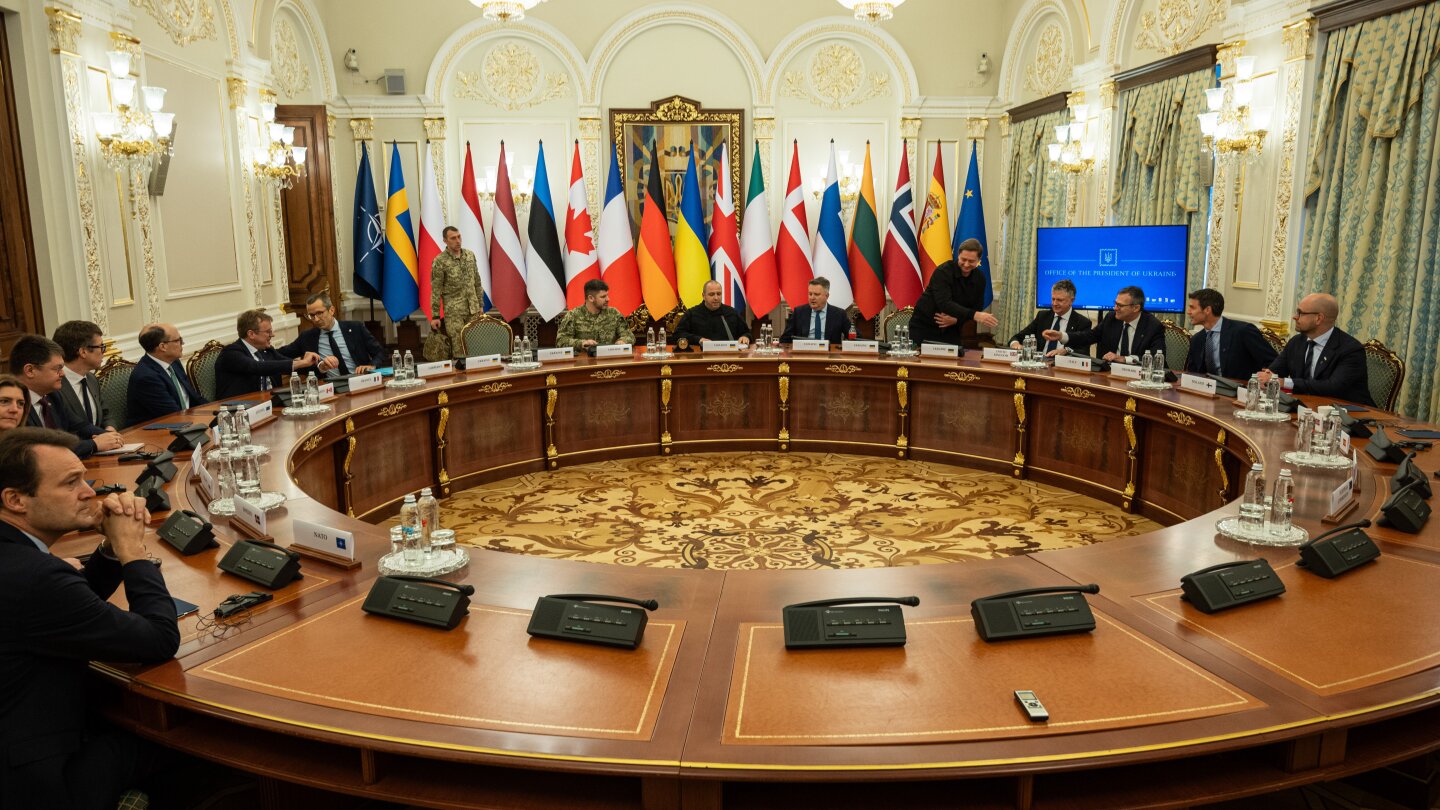
European national security advisers convened in Kyiv on Saturday to discuss peace proposals for Ukraine, marking a significant step in diplomatic efforts to end the conflict that has raged for nearly four years. The meeting comes ahead of a crucial summit between Ukrainian President Volodymyr Zelenskyy and European leaders scheduled for next week in Paris.
Ukraine’s chief negotiator, Rustem Umerov, outlined the day’s agenda on social media platform X, emphasizing that representatives from Canada and NATO were joining European officials. “A busy working day lies ahead: security and economic issues, work on framework documents, coordination of further steps with partners,” Umerov stated.
The talks are part of a broader initiative involving what Zelenskyy has called the “Coalition of the Willing” – approximately 30 countries supporting Ukraine’s efforts to end the war with Russia on terms acceptable to Kyiv. This coalition will convene at the leadership level on Tuesday in Paris, signaling the increasing diplomatic momentum.
Security guarantees form a critical component of the ongoing discussions. According to Ukrainian negotiator Oleksandr Bevz, Ukraine is coordinating plans with European partners that would establish a multilayered defense structure. This would position Ukrainian forces as the first line of defense, backed by European-led troops deployed within Ukraine’s territory, with the United States providing additional “backstop” support.
On the economic front, Deputy Prime Minister Taras Kachka announced that international partners have reached consensus on an $800 billion support package for Ukraine over the next decade. This comprehensive package, developed based on calculations from the World Bank, International Monetary Fund, and European Union, addresses multiple needs: damage compensation, reconstruction, economic stability, and a $200 billion growth “booster” tied to Ukraine’s EU accession reforms.
Economy Minister Oleksii Sobolev indicated that while specific funding sources have yet to be identified, approximately $500 billion is expected to come from public grants and concessional loans. Officials plan to finalize these details within the next two weeks, highlighting the urgency of securing long-term economic support for Ukraine’s recovery.
The diplomatic push occurs amid ongoing leadership changes in Ukraine’s government. President Zelenskyy proposed Defense Minister Denys Shmyhal to serve as energy minister and first deputy prime minister. This follows Friday’s significant appointment of General Kyrylo Budanov, the head of Ukraine’s military intelligence, as Zelenskyy’s new chief of staff – a move the president described as part of an effort to sharpen focus on security, defense development, and diplomacy.
These high-level diplomatic and governmental developments unfold against the backdrop of continued Russian attacks on Ukrainian territory. In Kharkiv, Ukraine’s second-largest city, the death toll from Friday’s Russian missile strike rose to two, including a 3-year-old boy, according to regional head Oleh Syniehubov.
Overnight Russian drone attacks targeted critical infrastructure in the Mykolaiv region, leaving some communities without electricity. Regional head Vitalii Kim reported that engineers worked through the night to restore power, with no casualties reported from these latest strikes.
The escalation in diplomatic activity represents one of the most concerted international efforts to date in seeking a resolution to the conflict, which has caused extensive destruction across Ukraine and resulted in thousands of casualties. As Tuesday’s Paris summit approaches, all eyes will be on whether these discussions can produce tangible progress toward a sustainable peace framework.
Fact Checker
Verify the accuracy of this article using The Disinformation Commission analysis and real-time sources.

20 Comments
It’s good to see the broader international community getting involved, but Russia may be wary of perceived Western dominance. Balancing the interests of all parties will be a delicate task.
Exactly. Russia will want to maintain influence and avoid appearing subordinate to Western interests. Finding the right balance of power and control will be crucial.
Diplomacy is the only path to a sustainable peace, but the challenges are immense. I hope the parties can set aside their differences and focus on the greater good of the Ukrainian people.
Well said. At the end of the day, the Ukrainian people have suffered the most and deserve a durable peace agreement that improves their lives.
These peace talks are a positive step, but the road ahead remains long and fraught with challenges. I hope the parties can put aside their differences and focus on what’s best for the Ukrainian people.
You’re right, the ultimate goal should be a sustainable peace that improves the lives of Ukrainians. Compromise and goodwill from all sides will be essential to achieve that.
The ‘Coalition of the Willing’ is an interesting concept – having broader international support could strengthen Ukraine’s negotiating position. But Russia may be wary of perceived Western influence.
You raise a good point. Russia will want to ensure any peace deal doesn’t give too much influence to NATO or other Western powers. Finding the right balance will be challenging.
Economic issues will be crucial too, beyond just security guarantees. Rebuilding Ukraine’s economy and infrastructure after the war will require substantial investment and support.
Absolutely. The economic aspects can’t be overlooked. Determining how to fund Ukraine’s reconstruction will be a key part of the negotiations.
Interesting to see the diplomatic efforts ramping up to find a peaceful resolution to the Ukraine conflict. I wonder what security guarantees are being discussed and if they can satisfy both Russia and Ukraine.
Security guarantees will be critical to any lasting peace agreement. Both sides will need assurances that their core concerns are addressed.
The inclusion of NATO representatives in these talks is significant. It suggests a more coordinated Western approach, but could also raise tensions with Russia. Navigating this dynamic will be crucial.
Absolutely. Russia will want to ensure its security interests are not overridden by a perceived Western agenda. Balancing all the stakeholders’ needs will be a delicate diplomatic dance.
Glad to see progress on the diplomatic front, but the path to a lasting peace deal still seems very difficult. I hope the parties can find creative solutions to the complex issues at hand.
You’re right, the challenges are immense. Creativity and compromise will be essential for any agreement that sticks. The next few weeks could be pivotal.
This is an important moment, but I remain cautiously optimistic. The details of any security guarantees and economic support will be heavily scrutinized by all sides.
Agreed. The devil will be in the details. Both Russia and Ukraine will want assurances that protect their core interests.
This meeting of European security advisers seems like an important step towards a potential ceasefire and political settlement. I hope the parties can find common ground, even if it’s a difficult compromise.
Compromise will be essential, as neither side is likely to get everything they want. But a sustainable peace deal requires both parties to make concessions.