


Listen to the article
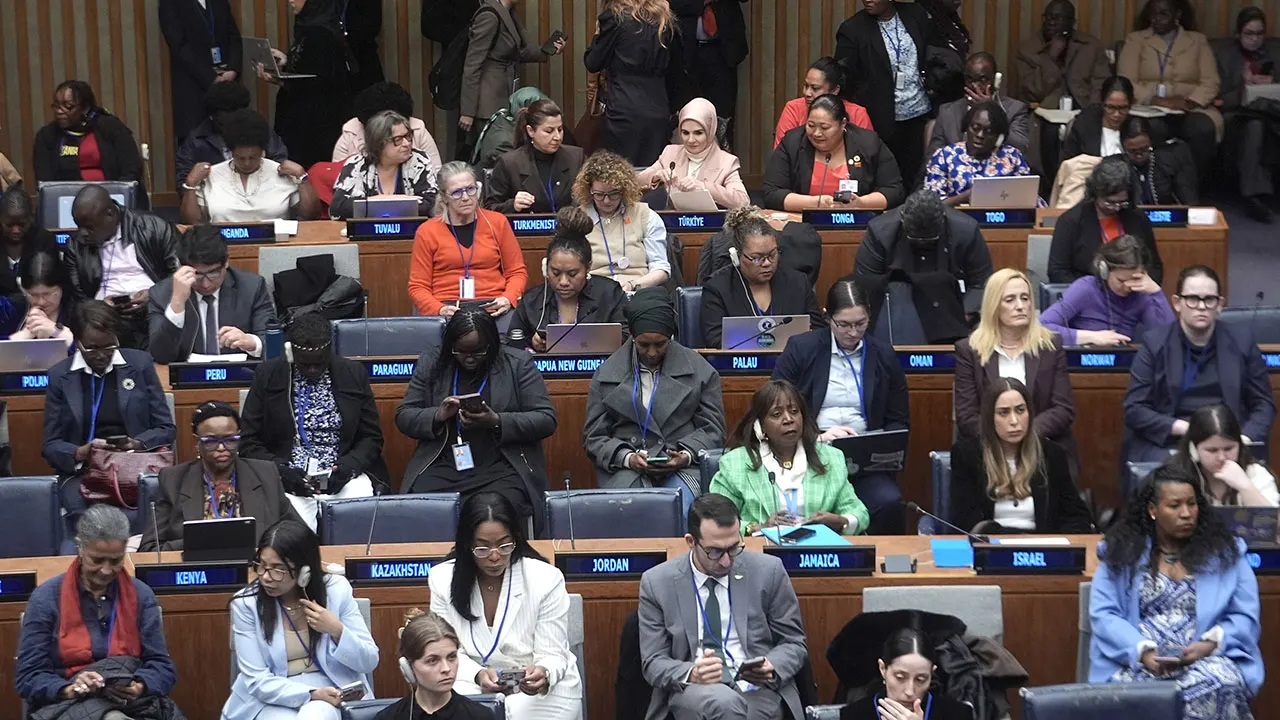
The United States found itself isolated at the United Nations in early March when a European-led procedural move blocked a vote on defining gender in biological terms during a key forum on women’s rights. At the conclusion of the U.N. Commission on the Status of Women (CSW), the U.S. stood alone in opposing the body’s annual “Agreed Conclusions,” citing concerns about language that moves away from biological definitions of women and girls.
The dispute centered on how the United Nations defines “gender.” Current U.N. frameworks, based on the 1995 Beijing Declaration, do not provide a fixed definition and instead rely on evolving interpretations connected to broader concepts of gender identity, according to European Union officials.
Seeking clarity, the U.S. introduced a resolution titled “Protection of women and girls through appropriate terminology,” which aimed to establish a more concrete definition of gender across U.N. policy. The draft resolution stated that the term “gender” should be interpreted “according to its ordinary, generally accepted usage, as referring to men and women.”
However, the proposal never reached a formal vote. Belgium, speaking on behalf of the European Union, introduced a “no action motion” – a procedural tool that blocks debate and prevents a proposal from being considered. The motion passed, effectively halting the U.S. resolution before it could reach the floor.
The stakes of such definitional debates extend beyond semantics. U.N. language shapes global standards tied to development funding, humanitarian programs, education policy, and anti-discrimination frameworks around the world.
Bethany Kozma, director of global affairs at the Department of Health and Human Services, criticized the procedural move as an attempt to shut down debate. “While our redlines were ignored, the United States Government will not stand by and watch as malicious forces misuse multilateral organizations to promote their ideologies and social agendas, obstructing nations’ abilities to exercise their national sovereignty,” Kozma said.
She further claimed the decision to block the vote was politically motivated. “The EU blocked our resolution to define gender to mean men and women at the U.N. because they feared we would win and they would lose,” Kozma stated. “We will not give up on doing what is right for women and girls.”
A State Department official, speaking on background, described the move as part of a broader coordinated effort led by European countries, suggesting it took advantage of smaller delegations that may lack guidance on complex procedural votes. The official claimed the maneuver allowed opponents to block a vote despite what the U.S. believed was growing support for their position.
The European Union, however, firmly rejected these criticisms. David Jordens, spokesperson for Belgium’s foreign ministry, defended the procedural action by stating that the U.S. draft resolution was “factually incorrect” and “misquotes and contradicts” language previously agreed to in the 1995 Beijing Declaration.
“While the EU respects member states’ prerogative to put forward new initiatives for consideration, CSW members should not be forced to rush a decision on an issue of this importance by the unilateral initiative of one member state, without any prior consultations or negotiations,” Jordens explained.
He further emphasized the EU’s position that “there is no universally agreed definition of the term ‘gender'” and that the United Nations should continue to approach gender equality “in an inclusive and forward-looking manner, respectful of diversity.”
This diplomatic standoff highlights growing international tensions over gender definitions in global policy frameworks. The debate reflects broader cultural and political divides that have emerged in recent years around gender identity issues, with significant implications for how international organizations approach women’s rights, healthcare access, education, and anti-discrimination policies.
As the U.N. continues to navigate these complex waters, the incident demonstrates the challenges of finding consensus on issues that intersect deeply held cultural values, scientific understanding, and evolving social norms across diverse member states.
Fact Checker
Verify the accuracy of this article using The Disinformation Commission analysis and real-time sources.

13 Comments
The US proposal to define gender in biological terms seems quite at odds with the UN’s current approach. I wonder what the rationale was behind it and how it would impact UN policies and initiatives around gender equality and women’s rights.
Agreed, this is a sensitive and nuanced issue. The UN will need to carefully balance various perspectives and concerns as they work to establish appropriate and inclusive terminology.
The US proposal to define gender in biological terms seems quite controversial and at odds with the UN’s current frameworks. I’m curious to understand the reasoning behind it and how the EU and other member states are responding.
Yes, this is a sensitive and complex issue that the UN will need to carefully consider. It highlights the challenges of establishing inclusive and appropriate terminology across diverse member states.
The proposal to define gender in biological terms seems quite controversial. I wonder what the rationale was behind it and how it would impact UN policies and initiatives around gender equality and women’s rights.
Yes, it’s a complex issue without easy answers. The UN will need to weigh a range of perspectives as they work to establish appropriate and inclusive terminology.
This is a complex and contentious debate, with the US and EU taking quite different positions. It will be interesting to see how the UN navigates this issue and whether a compromise can be found.
This debate over the definition of gender at the UN highlights the complex and sometimes contentious nature of these issues. I’m interested to see how the UN navigates this and whether a compromise can be reached.
This seems like a complex and nuanced issue involving UN policies and gender identity. While I respect the US’s desire for clarity, I can understand the EU’s concerns about potentially narrowing definitions in this area. It will be interesting to see how this debate plays out at the UN.
I agree, this is a sensitive topic with valid arguments on both sides. The UN will need to carefully balance concerns around inclusivity and biological realities.
This appears to be a polarizing debate, with the EU and US taking quite different stances. It highlights the challenges the UN faces in navigating sensitive gender and identity issues across diverse member states.
I’m curious to learn more about the US proposal and the EU’s rationale for opposing it. It seems there are valid concerns on both sides that the UN will need to carefully consider.
Agreed, this is a nuanced issue and the UN will need to carefully weigh the various perspectives to find a balanced and inclusive approach.