


Listen to the article
Investigators have revealed that an engine of the Boeing 747 cargo plane that crashed in Hong Kong last month accelerated after touchdown, according to a preliminary report released Tuesday.
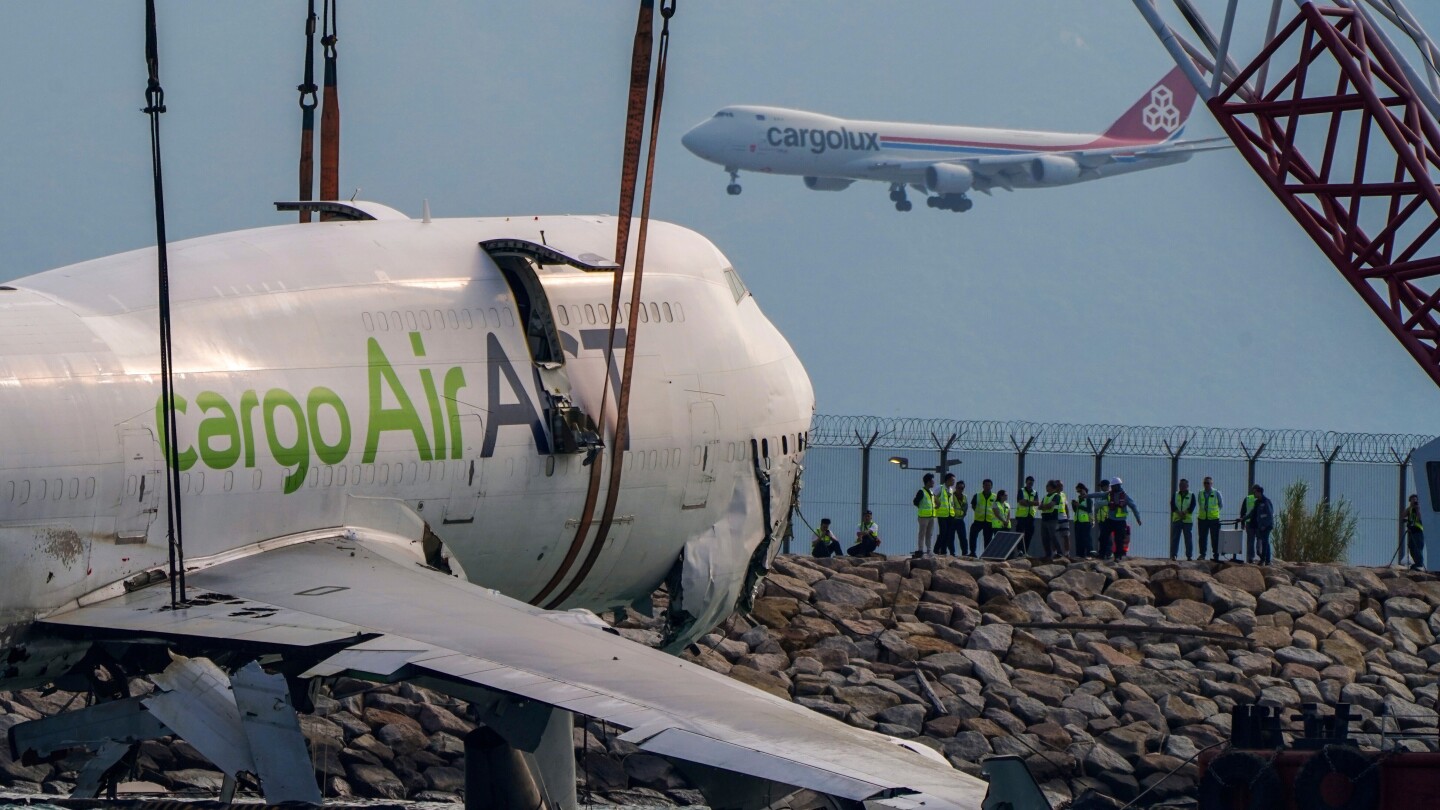
The aircraft, operated by Turkey-based ACT Airlines under lease from Emirates, skidded off the runway at Hong Kong International Airport on October 20 before colliding with a security patrol vehicle. The impact sent both the plane and the vehicle plunging into adjacent waters. Two airport security workers in the patrol car were killed, while all four crew members aboard the aircraft escaped without injuries.
In its preliminary findings, the Air Accident Investigation Authority (AAIA) classified the incident as an accident, highlighting that the plane’s Number 4 engine unexpectedly accelerated after the aircraft had already touched down on the runway.
“The Number 4 engine thrust lever was in the full forward thrust position. Number 4 engine reverse thrust lever was fully forward,” the report stated. In contrast, thrust levers for the plane’s other three engines were appropriately closed, with their reverse thrust levers set to maximum—the standard configuration for landing.
Hong Kong’s Transport and Logistics Bureau, which shared details of the report in a social media post, noted that all other flight conditions appeared normal before the aircraft veered off course. Weather conditions, runway status, and air traffic control operations reportedly functioned as expected during the approach and initial landing.
The bureau has indicated that the investigation will now focus on determining why the Number 4 engine’s thrust lever was positioned for acceleration rather than deceleration, including whether mechanical failures or other issues led to a loss of control. This asymmetric thrust condition—with one engine pushing forward while others were in reverse—would create significant directional control challenges for the pilots during the critical landing phase.
Investigators will conduct a more thorough analysis of aircraft systems and performance, examine the engines’ condition, review maintenance records, and evaluate human factors that might have contributed to the accident. The investigation is expected to be particularly complex as it involves recovering and analyzing parts of the aircraft that were submerged in seawater.
The AAIA is receiving international support for its investigation, with technical representatives from Turkey’s Transport Safety Investigation Center and the U.S. National Transportation Safety Board providing assistance. Boeing, the aircraft manufacturer, has also dispatched experts to aid in the investigation.
The cargo flight had originated in Dubai before the fatal landing attempt in Hong Kong. The Boeing 747, a workhorse of the global air freight industry, was being operated under a leasing arrangement with Emirates, the Dubai-based international carrier.
This accident comes at a challenging time for Boeing, which has faced increased scrutiny over manufacturing and safety issues across its commercial aircraft lineup in recent years. While preliminary findings don’t directly implicate the aircraft’s design or systems, the investigation will thoroughly examine all potential contributing factors.
Hong Kong authorities have stated that a comprehensive report detailing the full circumstances of the crash is expected to be completed within one year, following international aviation investigation standards.
The incident represents one of Hong Kong’s most serious aviation accidents in recent years and has prompted reviews of airport emergency response procedures and runway safety protocols at one of Asia’s busiest air transport hubs.
Fact Checker
Verify the accuracy of this article using The Disinformation Commission analysis and real-time sources.

16 Comments
The fact that the crew escaped unharmed is fortunate, but the loss of life on the ground is tragic. Thorough investigations are crucial to prevent future accidents and save lives.
Yes, it’s a relief the crew survived, but the security personnel who were killed highlight the broader impact of aviation incidents. Safety must be the top priority.
This is a concerning incident. I’m curious to learn more about the investigation into why the engine unexpectedly accelerated after landing. Proper engine control is critical for aviation safety.
Yes, it’s good they are doing a thorough investigation to understand the root cause. Preventing similar accidents in the future is paramount.
This accident is a sobering reminder of the importance of redundancy and fail-safe systems in aviation. Even a single point of failure can have devastating consequences.
Absolutely. Robust engineering and multiple layers of safety are essential to ensure the reliability and resilience of commercial aircraft. Continuous improvement is key.
I’m curious to learn more about the technical issues that led to the engine acceleration. Was it a mechanical failure, a software glitch, or some other factor? Understanding the root cause is key to improving safety.
Excellent point. Determining the exact cause is vital, so that any necessary design changes or maintenance procedures can be implemented to mitigate the risk of similar incidents in the future.
This is a sobering reminder of the risks involved in cargo flights. While passenger safety often gets more attention, freight operations must also adhere to the highest safety standards.
Absolutely. Cargo planes may not have passengers, but the stakes are still incredibly high. Maintaining airworthiness is critical for all commercial aircraft.
The investigation will likely focus on the engine control systems and their interactions with other aircraft systems. I hope the authorities can identify any design flaws or operational issues that contributed to this incident.
Yes, a thorough systems-level analysis is crucial. Ensuring the integrity of all critical components and their integration is paramount for aviation safety.
The report highlights the importance of diligent maintenance and strict safety protocols in the aviation industry. I hope the authorities can determine the exact technical failure that led to this tragic accident.
Agreed. Even small malfunctions can have catastrophic consequences in air travel. Rigorous oversight and continuous improvement of safety systems are essential.
This accident highlights the need for ongoing training and vigilance, even for experienced crews. Maintaining situational awareness and proper response procedures is vital in emergency situations.
Agreed. Pilot training, emergency preparedness, and continuous improvement of safety protocols are essential to mitigate risks and protect both crew and bystanders.