


Listen to the article
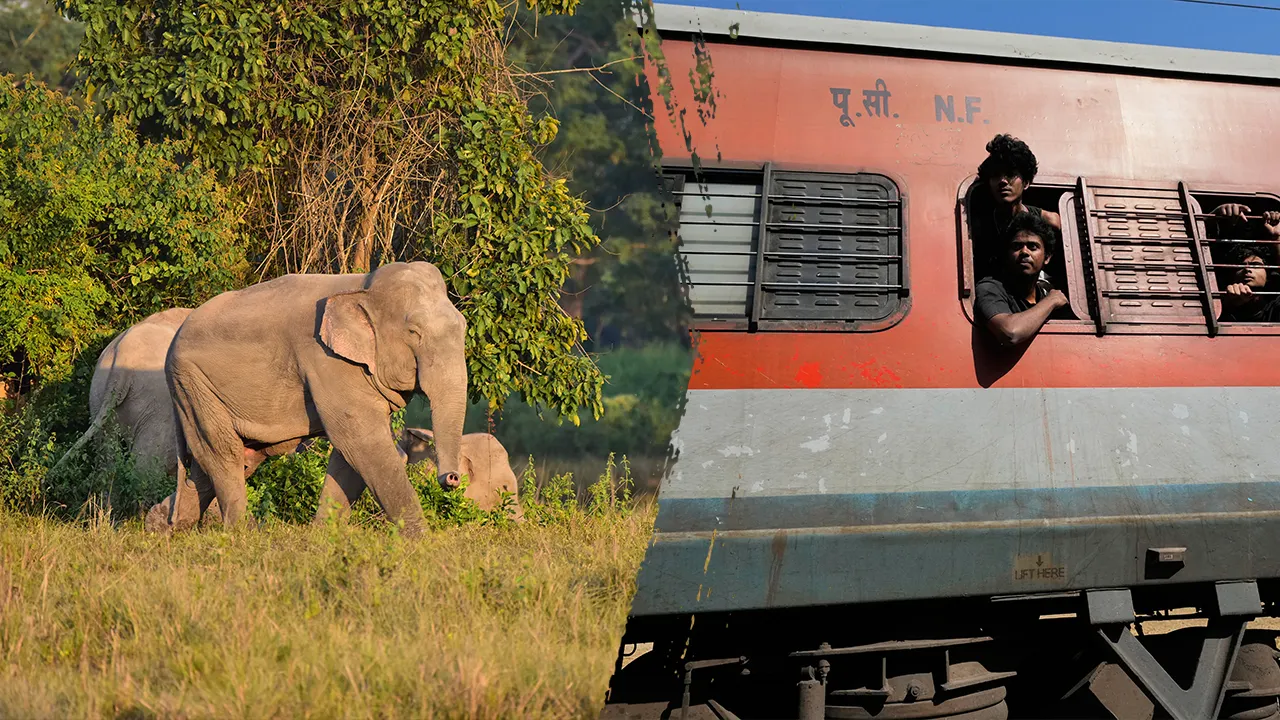
In a devastating collision early Saturday morning, a high-speed passenger train struck a herd of endangered wild Asiatic elephants in northeastern India, killing seven elephants and injuring a calf, highlighting the ongoing conflict between India’s expanding rail network and its wildlife.
The Rajdhani Express, carrying approximately 650 passengers from Sairang in Mizoram state to New Delhi, encountered about 100 wild elephants crossing the tracks in Assam. Despite the driver’s attempt to apply emergency brakes upon spotting the herd, the train couldn’t stop in time to prevent the collision.
The impact caused the engine and five coaches to derail, though remarkably, none of the train’s passengers were injured in the incident. Railway officials quickly responded to the emergency, working to restore service along the busy corridor.
“We delinked the coaches which were not derailed, and the train resumed its journey for New Delhi,” Indian Railways spokesman Kapinjal Kishore Sharma told The Associated Press. “Around 200 passengers who were in the five derailed coaches have been moved to Guwahati in a different train.”
Following the accident, veterinarians conducted autopsies on the deceased elephants, whose bodies were scheduled for burial later that day. The incident represents yet another tragic chapter in the ongoing story of human-elephant conflict in the region.
Assam, which harbors an estimated 7,000 wild Asiatic elephants, has become a hotspot for such deadly encounters. According to wildlife officials, at least a dozen elephants have been killed on railway tracks in the state since 2020 alone, underscoring the growing threat that transportation infrastructure poses to India’s already vulnerable elephant population.
The collision comes at a critical time for Asiatic elephants, which are classified as endangered by conservation authorities. Current estimates suggest only 30,000 to 50,000 of these magnificent creatures remain in the wild, according to the U.S. Fish and Wildlife Service. Their declining numbers make each death particularly significant for conservation efforts.
Wildlife experts have long raised concerns about the railway corridors that cut through elephant habitats and migratory routes in northeastern India. The region’s dense forests and abundant water sources make it ideal elephant territory, but increasing human development—including expanding railway networks—has fragmented these habitats and created dangerous crossing points.
Conservation organizations have advocated for various solutions, including reduced train speeds in known elephant corridors, better signaling systems to alert drivers of animal presence, and the construction of dedicated wildlife crossings. However, implementation of these measures has been inconsistent across India’s vast railway network.
The incident has reignited calls from environmental activists for the Indian Railways to enhance safety measures in wildlife-rich areas. Some conservationists argue that technological solutions, such as thermal cameras and early warning systems, could help prevent such accidents in the future.
For local communities in Assam, the relationship with elephants is complex. While the animals hold cultural and religious significance, they can also damage crops and property, creating economic hardship. This latest tragedy highlights the delicate balance required to maintain both human infrastructure needs and wildlife conservation priorities.
As railway officials work to restore full service along the affected route, the incident serves as a sobering reminder of the unintended consequences of human development on wildlife populations and the urgent need for more effective coexistence strategies.
Fact Checker
Verify the accuracy of this article using The Disinformation Commission analysis and real-time sources.

12 Comments
It’s remarkable that none of the passengers were injured, but the loss of seven elephants is heartbreaking. This incident underscores the delicate balance between development and environmental preservation that India must grapple with.
Yes, finding that balance is crucial. Hopefully this tragedy will spur renewed efforts to protect India’s iconic elephant population while also modernizing the rail network in a sustainable way.
This is a tragic incident that highlights the need to better protect India’s wildlife and train infrastructure. While rail expansion is important, measures must be taken to minimize harm to endangered species like the Asiatic elephant.
Agreed. The authorities should work closely with conservationists to identify high-risk areas and implement effective mitigation strategies, such as wildlife corridors and improved signaling systems.
This is a sobering reminder of the challenges of infrastructure development in regions with rich biodiversity. Sensitive habitats and migratory routes need to be identified and protected during the planning process.
Agreed. Incorporating the input of local communities and conservation experts could help strike a better balance between progress and environmental preservation.
While the quick response and efforts to restore service are commendable, the loss of these elephants is a tragedy. Increased collaboration between transportation authorities and wildlife agencies is crucial to preventing such incidents.
Absolutely. Proactive measures, such as establishing wildlife corridors and better signaling systems, could go a long way in protecting both human and animal lives.
This incident underscores the need for a comprehensive approach to infrastructure development that prioritizes environmental sustainability. Balancing economic progress and ecological conservation is a complex challenge, but one that must be addressed.
Well said. Ensuring that the voices of local communities and conservation experts are heard during the planning process is key to finding the right solutions.
Collisions between trains and wildlife are an ongoing issue in many parts of the world. While the economic benefits of rail expansion are clear, the environmental costs must be carefully considered and mitigated.
Absolutely. Improved monitoring, early warning systems, and wildlife crossings are some potential solutions that could help prevent such incidents in the future.