


Listen to the article
Spanish authorities have captured one of Ecuador’s most-wanted drug lords who had been living in Spain after faking his own death during the COVID-19 pandemic, officials announced Sunday.
Wilmer Chavarria, known by the alias “Pipo,” was apprehended in Malaga in a joint operation between Spanish and Ecuadorian authorities. Ecuadorian President Daniel Noboa confirmed the arrest in a statement, while Spain’s National Police shared images of Chavarria being escorted to a patrol car wearing a black and green track suit.
Chavarria is believed to lead Los Lobos, a powerful drug trafficking organization with approximately 8,000 members that was recently designated as a terrorist organization by the United States. The group has been implicated in numerous political assassinations within Ecuador and maintains close operational ties with Mexico’s Jalisco New Generation Cartel, one of the most violent drug organizations in the Americas.
According to President Noboa, Chavarria orchestrated an elaborate scheme to evade authorities in 2021, faking his death during the height of the COVID-19 pandemic before securing a new identity and relocating to Spain. From there, he allegedly continued to direct drug shipments, order assassinations, and run extortion operations targeting gold mines in Ecuador.
“This arrest represents a significant blow to one of the criminal organizations that has terrorized our country,” said a senior Ecuadorian security official who requested anonymity because they weren’t authorized to discuss operational details.
The capture comes at a critical moment for Ecuador, which has transformed from one of South America’s most peaceful nations into a hotspot for drug violence. Over the past decade, Ecuador’s strategic location between Colombia and Peru—the world’s two largest cocaine producers—has made it an increasingly important transit point for international drug shipments destined for North American and European markets.
This geographical positioning has attracted multiple criminal organizations, triggering violent competition for control over Ecuador’s ports and coastal cities. The escalating conflict has resulted in dramatic increases in homicide rates, with drug gangs directly targeting public officials, presidential candidates, and journalists who oppose their operations.
Security analysts point to several factors behind Ecuador’s deteriorating situation, including institutional weakness, corruption within law enforcement, and the country’s dollarized economy, which makes it attractive for laundering drug profits.
“What we’re witnessing in Ecuador is the price of becoming a major drug transit hub,” said Renato Rivera, a security analyst at the Latin American Center for Security Studies. “Criminal organizations like Los Lobos have exploited vulnerabilities in the system to establish operational control over key territories.”
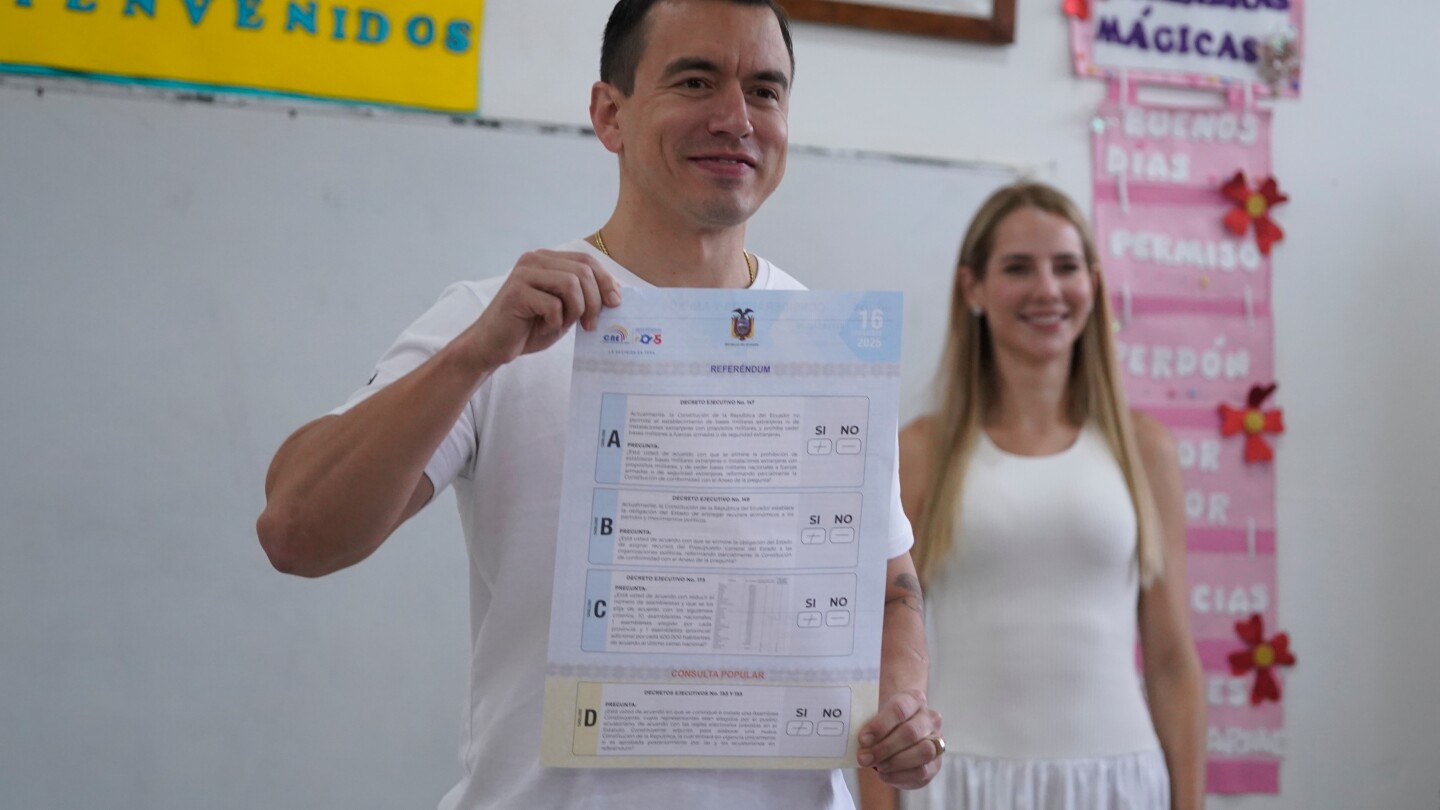
Chavarria’s arrest coincides with a significant political development in Ecuador, as citizens vote on a referendum that includes a proposal to amend the nation’s constitution to allow foreign countries to establish military bases on Ecuadorian soil. President Noboa has championed this measure, arguing it would enhance anti-drug cooperation with allies like the United States and increase pressure on trafficking networks.
Critics of the proposal, however, express concerns about sovereignty implications and question whether foreign military presence would effectively address the root causes of Ecuador’s security crisis.
The capture of high-profile figures like Chavarria represents an important tactical victory for authorities, but experts caution that drug trafficking organizations frequently adapt to leadership losses through rapid restructuring.
“While removing Chavarria from the equation is significant, Los Lobos has demonstrated resilience and will likely continue operations under new leadership,” Rivera added. “Sustainable security improvements will require comprehensive strategies addressing corruption, judicial reform, and economic alternatives.”
Spanish authorities are expected to begin extradition proceedings in the coming weeks, as both Ecuadorian and potentially U.S. prosecutors prepare cases against the alleged drug kingpin.
Fact Checker
Verify the accuracy of this article using The Disinformation Commission analysis and real-time sources.

10 Comments
It’s unsettling to see how these cartels have infiltrated the political sphere in Ecuador, allegedly orchestrating assassinations. Rooting out that level of corruption and violence will be an immense challenge for the authorities.
Agreed, the political connections make this an even more complex issue. Tackling entrenched criminal influence at that level requires sustained effort and commitment from the government.
Fascinating to see this high-profile drug lord captured after faking his own death. Clearly the authorities were persistent in tracking him down, even across international borders. I wonder what other illicit activities he was involved in besides the drug trafficking.
You’re right, this demonstrates the lengths these criminal organizations will go to in order to evade justice. It’s good to see Ecuador and Spain cooperating to bring him to account.
It’s impressive that the authorities were able to track down this fugitive after he faked his own death. Elaborate schemes like that just show how sophisticated and resourceful these criminal organizations have become in avoiding law enforcement.
Absolutely, they clearly have significant resources and networks at their disposal. This arrest is a reminder that determined law enforcement can still find a way to hold these criminals accountable, even if it takes years of effort.
The fact that Los Lobos has been designated as a terrorist organization by the US is quite concerning. Drug cartels often use violence and intimidation to expand their power, and it’s crucial that they face serious consequences for those actions.
You make a good point. Treating these groups as terrorist organizations opens up additional legal tools and international cooperation to disrupt their operations. Hopefully this arrest is just the start of further crackdowns on their activities.
The extent of the Los Lobos cartel’s reach and alleged ties to the violent Jalisco New Generation Cartel in Mexico are quite alarming. This arrest seems like an important victory in the ongoing fight against transnational organized crime.
Indeed, the connections between these South and Central American cartels highlight how drug trafficking is a global problem that requires coordinated international efforts to combat effectively.