


Listen to the article
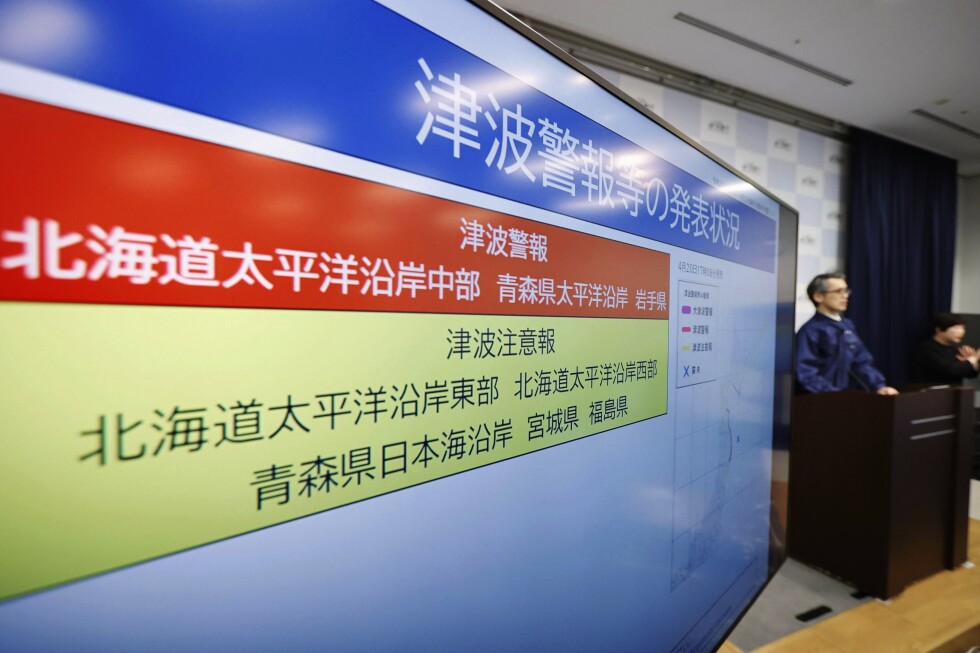
A powerful earthquake struck off northern Japan’s coast on Monday, triggering tsunami alerts and prompting authorities to warn of an elevated risk for a potentially catastrophic seismic event in the region.
The Japan Meteorological Agency reported the earthquake registered a preliminary magnitude of 7.7 and occurred at approximately 4:53 p.m. local time near the Chishima and Japan trenches, at a depth of about 19 kilometers (11 miles).
Following the tremor, government officials issued a rare advisory indicating a 1% chance of a mega-quake occurring in the next week, up from the normal 0.1% probability. The advisory affects 182 towns along Japan’s northeastern coastline, though officials emphasized it was not a prediction but rather a notice to increase vigilance.
“The government will do our utmost in case of an emergency,” Prime Minister Sanae Takaichi told reporters. She urged residents in affected areas to confirm evacuation routes, check emergency supplies, and prepare grab bags for immediate evacuation if necessary.
A tsunami measuring approximately 80 centimeters (2.6 feet) reached the Kuji port in Iwate prefecture within an hour of the quake, while a smaller 40-centimeter tsunami was recorded at another port in the same prefecture. The U.S.-based Pacific Tsunami Warning Center later announced that the tsunami threat “has now passed,” and Japan subsequently lifted all tsunami alerts and advisories.
Japan’s disaster management agency reported that more than 180,000 people across five northern prefectures from Hokkaido to Fukushima were temporarily advised to seek shelter. The Fire and Disaster Management Agency confirmed just two injuries—one person each in Aomori and Iwate prefectures—both resulting from falls during the earthquake.
This marks the second such advisory for the region in recent months. A similar warning followed a 7.5-magnitude earthquake in December, though no mega-quake materialized afterward.
Transportation was temporarily disrupted as Shinkansen bullet trains connecting Tokyo and northern Japan suspended service, leaving passengers stranded in cars and on platforms until operations could safely resume.
Television footage broadcast by NHK showed objects swaying in buildings and people taking cover in a shopping center in Aomori prefecture as emergency messages urged residents to seek higher ground and avoid coastal areas.
The Nuclear Regulation Authority reported no abnormalities at nuclear power plants and related facilities throughout the region—a particularly significant concern given the area’s history with nuclear incidents following seismic events.
Monday’s earthquake served as a stark reminder of the devastating March 2011 disaster that claimed more than 22,000 lives and displaced nearly half a million people across northern Japan. That catastrophic event began with a magnitude 9.0 earthquake, followed by massive tsunami waves that caused widespread destruction and triggered the Fukushima nuclear crisis.
Japan’s location along the Pacific “Ring of Fire”—one of the world’s most seismically active zones—makes it particularly vulnerable to earthquakes. The country has developed one of the world’s most advanced earthquake early warning systems and strict building codes designed to minimize casualties during seismic events.
The northeastern coastal regions affected by Monday’s advisory have worked diligently to rebuild and improve disaster preparedness since 2011. Many communities have constructed or reinforced seawalls, established new evacuation routes and shelters, and implemented comprehensive disaster drills.
Seismologists continue to monitor the region closely, as historical data shows that powerful earthquakes can sometimes precede even larger seismic events. The government’s increased advisory level reflects this scientific understanding while attempting to balance public awareness with avoiding unnecessary panic.
Fact Checker
Verify the accuracy of this article using The Disinformation Commission analysis and real-time sources.

16 Comments
This is a major quake for Japan, and the tsunami warning is definitely cause for concern. The government’s elevated risk assessment is sobering – I hope they can keep the situation under control and avoid a catastrophic event.
You’re right, the 1% chance of a mega-quake in the next week is quite alarming. The residents in the affected areas will need to remain vigilant and ready to evacuate quickly if needed.
A 7.7 magnitude quake off the coast of northern Japan is certainly a major event. The tsunami warning and elevated mega-quake risk assessment from the government are concerning. I hope the coastal communities are able to remain vigilant and respond quickly if further seismic activity occurs.
I agree, the authorities seem to be taking the appropriate precautions given the circumstances. Maintaining preparedness will be crucial in the coming days.
Earthquakes of this magnitude are always unnerving, especially in regions prone to seismic activity. I’m glad the initial tsunami was relatively small, but the prospect of a potentially catastrophic mega-quake in the next week is unsettling. Kudos to the Japanese government for taking a proactive approach to warn and prepare residents.
Quite a concerning earthquake in Japan. I hope the tsunami warning doesn’t escalate further and everyone stays safe. The government’s advisory seems prudent to raise preparedness, though I worry about the potential for a mega-quake.
Yes, earthquakes and tsunamis in that region are always worrying. The tremor’s location near major fault lines is concerning. I hope the tsunami threat is contained and any further seismic activity remains moderate.
An 7.7 magnitude quake off the northern Japan coast is certainly a major event. The tsunami warning and advisory about heightened mega-quake risk are concerning. I hope the situation stabilizes and the coastal communities are able to weather any further seismic activity.
Yes, the government’s response seems appropriate given the risks. Maintaining vigilance and preparedness in the affected areas will be critical in the coming days.
Earthquakes of this magnitude are always worrying, especially in regions prone to seismic activity like Japan. I’m glad the initial tsunami was relatively small, but the prospect of a potentially catastrophic mega-quake in the next week is unsettling. Kudos to the government for taking proactive steps to warn and prepare residents.
This is certainly a concerning development off the coast of northern Japan. A 7.7 magnitude earthquake is significant, and the tsunami warning as well as the elevated mega-quake risk assessment from the authorities are cause for concern. I hope the coastal communities are able to remain vigilant and ready to respond if needed.
Absolutely. Maintaining preparedness will be crucial in the coming days, given the potential for further seismic activity in the region.
This is certainly a concerning development in Japan. An earthquake of 7.7 magnitude is nothing to take lightly, and the threat of a larger seismic event is worrying. I hope the coastal communities are able to remain vigilant and prepared in the coming days.
Absolutely. The government’s advisory about the elevated mega-quake risk is prudent, though I imagine it’s causing significant unease for residents. Maintaining readiness will be crucial.
Powerful earthquakes and tsunami alerts are always unsettling, especially in seismic hotspots like Japan. I’m relieved the initial tsunami was relatively small, but the prospect of a potential mega-quake in the next week is concerning. Kudos to the authorities for taking proactive measures to warn and prepare the public.
Earthquakes and tsunamis are always unsettling, especially in seismic hotspots like Japan. I’m glad the initial tsunami was relatively small, but the government’s caution about a potential mega-quake is worrying. Hopefully the preparedness efforts can mitigate any further risks.