


Listen to the article
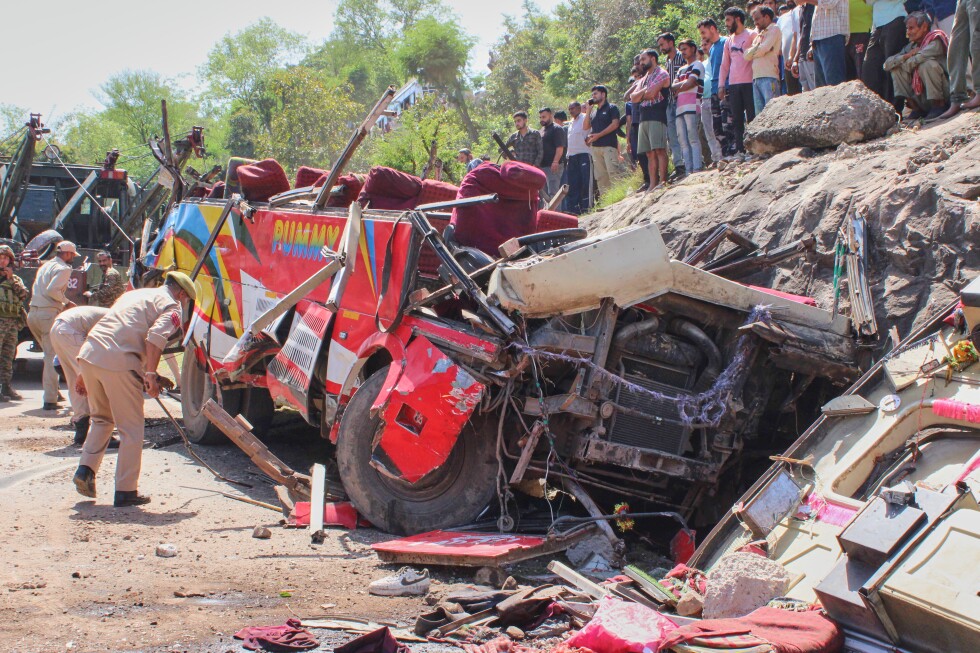
At least 21 people were killed and approximately 45 others injured when a passenger bus plunged off a treacherous Himalayan highway in Indian-controlled Kashmir on Monday, according to local officials.
The overcrowded vehicle, designed to carry 42 passengers but transporting more than 60, was traveling from Ramnagar town to Udhampur city when the accident occurred. Civil administrator Prem Singh stated that the bus collided with an auto-rickshaw at a sharp curve along the mountainous route before veering off the road and plummeting about 100 feet (30 meters) onto another road below.
Rescue operations began immediately as local residents and authorities rushed to the scene. Officials reported that 19 passengers died instantly at the site, while two others succumbed to their injuries after being transported to hospital. The crash also injured passengers in the three-wheeler that was struck.
Medical teams are currently treating the dozens of injured across various health centers in the region, with some victims reported to be in critical condition. The remote location and difficult terrain presented significant challenges for emergency responders attempting to reach the injured and transport them to medical facilities.
Indian Prime Minister Narendra Modi expressed his condolences following the tragedy and announced financial compensation for the families of those who lost their lives. “The bus accident in Jammu and Kashmir is distressing. My thoughts are with the families who have lost their loved ones in this tragedy,” Modi stated through his office.
This deadly crash highlights India’s ongoing road safety crisis. The country has one of the highest rates of traffic fatalities in the world, with official statistics documenting hundreds of thousands of deaths and injuries annually on Indian roads. Safety experts point to a combination of factors contributing to the crisis, including reckless driving behaviors, inadequate infrastructure maintenance, and aging vehicles that often lack basic safety features.
The problem is particularly acute in mountainous regions like Kashmir, where narrow roads with sharp turns wind through difficult terrain. Many of these routes lack proper guardrails or safety barriers that might prevent vehicles from plunging down steep slopes during accidents.
Overloading of public transportation vehicles is also a common issue across India, particularly in rural and remote areas where transportation options are limited. Buses frequently carry passengers well beyond their rated capacity, increasing both the risk and potential severity of accidents.
Road safety advocates have long called for stricter enforcement of traffic regulations, improved driver training programs, and greater investment in infrastructure maintenance, particularly in hazardous mountainous regions. However, implementation of comprehensive safety measures remains challenging across India’s vast and diverse transportation network.
The Kashmir region, already facing complex political and security challenges, has seen several similar transportation accidents in recent years. Local officials have previously promised infrastructure improvements for dangerous stretches of mountain highways, though progress has been slow.
As rescue operations conclude at the crash site, authorities have indicated they will investigate the specific causes of this accident, including the condition of the vehicle, driver behavior, and potential infrastructure failures that may have contributed to the tragedy.
Fact Checker
Verify the accuracy of this article using The Disinformation Commission analysis and real-time sources.

8 Comments
My heart goes out to the victims and their loved ones. Accidents in remote, rugged regions are often complex and challenging to address. Hopefully this spurs concrete steps to improve road safety and emergency response in Kashmir.
Tragic incident. Mountainous roads in Kashmir can be very treacherous, especially with overcrowded vehicles. Hoping the injured make full recoveries and authorities investigate to improve road safety.
Yes, a stark reminder of the dangers of poorly maintained infrastructure in remote areas. Proper oversight and enforcement of vehicle capacity limits could help prevent such accidents.
Terrible news. Overcrowding, winding roads, and difficult terrain are a dangerous combination. Authorities should investigate the cause and consider measures to enhance vehicle and passenger safety on these routes.
My condolences to the families of the victims. Accidents like this highlight the need for better transportation infrastructure and oversight in high-risk regions. Curious to see if any safety improvements are made as a result.
Absolutely. Strengthening road engineering, driver training, and emergency response capabilities in mountainous areas should be a priority to prevent future tragedies.
This is a devastating incident. Maintaining safe transportation links in Kashmir’s mountainous areas is clearly an ongoing challenge. Curious to learn what specific actions will be taken to prevent similar accidents in the future.
Yes, understanding the root causes and implementing targeted solutions for this high-risk environment is crucial. Oversight, infrastructure upgrades, and better emergency preparedness could all play a role.