


Listen to the article
Taliban Revives Ambitious Road Projects in Kabul, Forcing Residents to Demolish Their Own Homes
The door that once led to Syed Murtaza Sadar’s family room now opens to empty space. Most of the floor, walls, and roof are gone, reduced to piles of bricks and rubble. The 25-year-old Kabul resident was forced to tear down his own home with his bare hands.
“This was our house and now I am destroying it with my own hands,” Sadar said while taking a brief break from pulling down a brick wall. “It will be very difficult for us.”
Two months ago, municipal authorities informed Sadar and his neighbors that their properties would be expropriated to make way for a wider road—part of an ambitious initiative to modernize Kabul’s congested streets. Though initially met with disbelief, the reality became clear when demolition crews arrived.
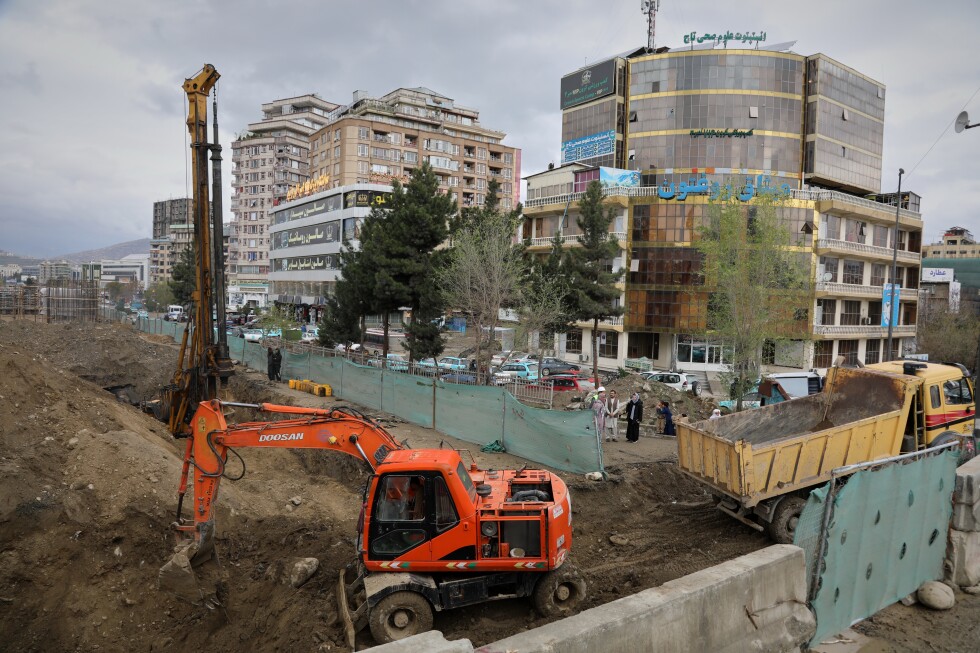
Across Afghanistan’s capital, homes, businesses, and even a centuries-old graveyard are being razed to accommodate new infrastructure. Widened roads, flyovers, and underpasses are rapidly replacing the narrow, pot-holed streets that have long characterized Kabul’s urban landscape.
Many of these development plans were originally drafted years ago under the previous U.S.-backed government but remained largely unimplemented due to bureaucratic hurdles, corruption, and security concerns stemming from the Taliban insurgency. After seizing power in 2021 following the withdrawal of U.S.-led forces, the Taliban’s municipal authorities quickly revived these dormant projects.
According to Naimatullah Barakzai, Kabul municipality’s representative for cultural affairs, approximately 450 kilometers (280 miles) of roads have been constructed in the capital over the past four and a half years, necessitating the expropriation of 11,278 properties. The municipality has plans for 233 additional projects this year, with over 1.9 billion afghanis ($29 million) allocated for development.
“The road construction projects are paid for entirely by municipal funds,” Barakzai explained, noting that Kabul’s municipality had raised more than 28 billion afghanis (about $434 million) during this period. Property owners typically receive about three months’ notice and are compensated at rates determined by the municipality. In the past year alone, more than 1.2 billion afghanis ($18.6 million) were distributed as compensation.
However, residents have little choice in the matter. Sadar recounted how demolition crews first tore down the front sections of buildings on his street before authorities instructed owners to complete the demolition themselves.
For Sadar, the loss extends beyond just shelter. His family business—a barber shop and public bath located beneath their living quarters—employed about 25 people and supported his extended family, consisting of five households with numerous children. Now they must deplete their savings to afford rented accommodation while awaiting compensation.
“If the government gives us money in compensation then, God willing, I will be able to go back to work and buy or build a house for myself,” Sadar said. Despite his personal hardship, he acknowledged the necessity of the road expansion, noting that the existing single-lane road in each direction was so congested that even short journeys could take an hour.
The construction boom has created employment opportunities in a country grappling with widespread poverty and economic instability. At one major project site, engineer Obaidullah Elham oversees 500 workers laboring around the clock on a Turkish-designed 1.5 billion afghani ($23 million) flyover and underpass at the Baraki intersection.
“Work on the 470-meter underpass began last July and is 80% complete,” Elham explained, as excavators continued digging behind him. The flyover, construction of which started earlier this year, will be only the second such structure in Kabul.
Even the dead have been displaced by these modernization efforts. In Kabul’s Qala-e-Khater neighborhood, a 200-year-old graveyard has been partially cleared to accommodate a new road. Empty graves with large rectangular holes mark where bodies have been exhumed and relocated to another section of the cemetery across the street.
Abdul Wadood Alokozay, whose grandfather’s remains were among those moved, lost three family properties to expropriation—a girls’ religious school and two homes. “At first our family were all sad for this, that we lost our house,” the 21-year-old said, adding that demolishing their home of over two decades with their own hands was particularly painful.
As compensation, Alokozay’s family received more than $13,000 for all three buildings, with additional payments promised for the land. They have since constructed a new three-story home on another plot they owned.
According to community representative Shah Faisal Alokozay, plans for this particular road have existed on paper for decades. “It’s a very important road, connecting east and north Kabul,” he explained. “So it is very important for the community.”
While the infrastructure projects promise to alleviate Kabul’s chronic traffic congestion and modernize the city, they come at a significant human cost as families and businesses are uprooted in the name of progress, forced to rebuild their lives elsewhere in an already challenging economic environment.
Fact Checker
Verify the accuracy of this article using The Disinformation Commission analysis and real-time sources.

4 Comments
This ambitious road project in Kabul is certainly a double-edged sword. While infrastructure improvements are needed, forcibly demolishing homes and businesses is a heavy burden on residents. I hope the authorities can find a more balanced approach that minimizes the disruption to people’s lives.
Upgrading Kabul’s roads is a worthy goal, but the compulsory demolition of people’s homes is very troubling. I wonder if there are alternative plans that could achieve the infrastructure improvements while minimizing the impact on residents. This seems like a complex issue with no easy answers.
This road overhaul project in Kabul highlights the tricky balance between urban modernization and preserving local communities. While improved infrastructure is needed, the forced demolition of homes and historic sites is very concerning. I hope the government can find a more equitable solution.
It’s understandable that the government wants to modernize Kabul’s roads, but the forced demolition of homes and historic sites is quite concerning. I hope they can work closely with the affected communities to find a solution that addresses their needs and preserves their heritage.