


Listen to the article
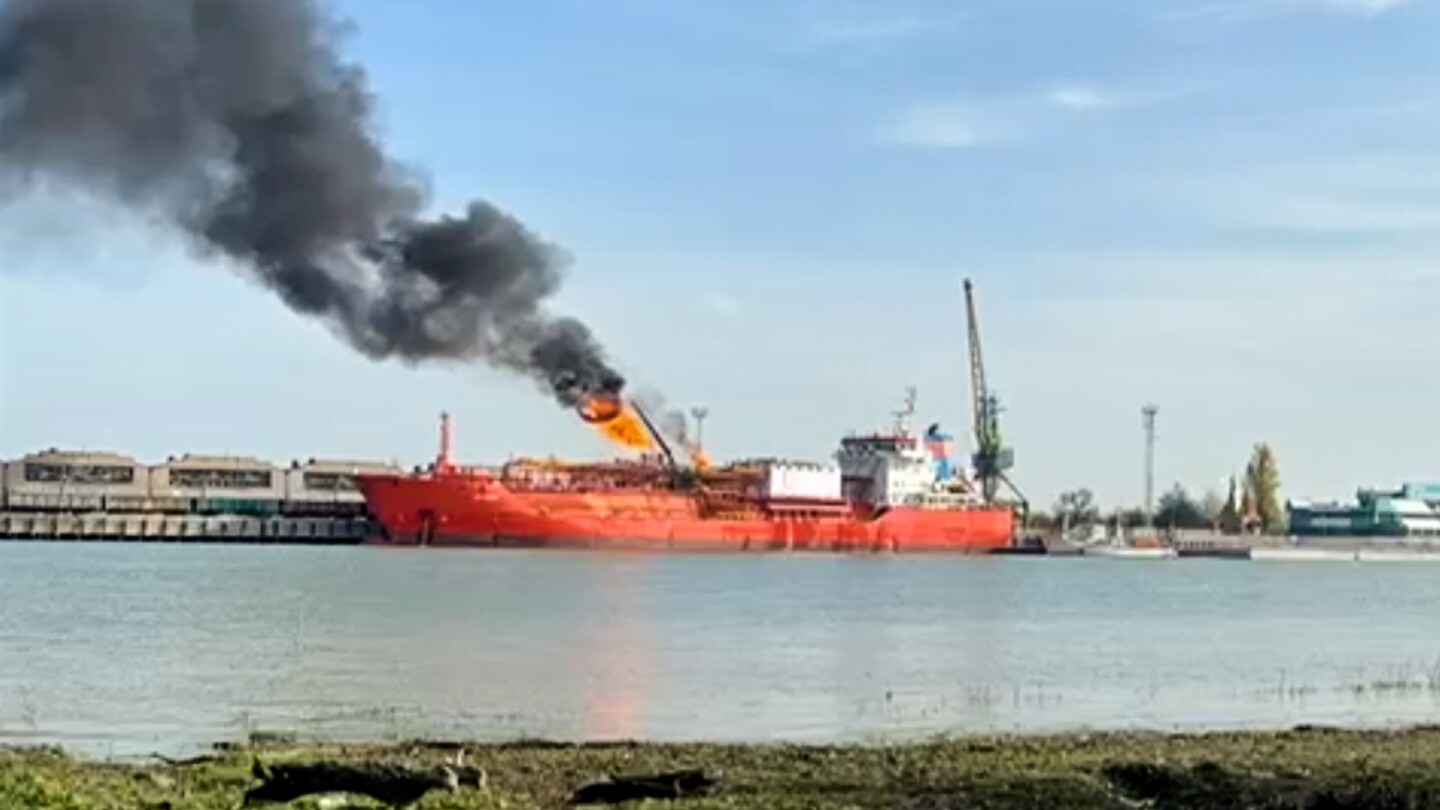
A drone attack struck a Turkish-flagged tanker in Ukraine’s southern port region on Monday, igniting a fire that forced the evacuation of all 16 crew members, according to Turkish maritime authorities. The incident occurred just one day after Ukrainian President Volodymyr Zelenskyy secured a crucial deal to import U.S. liquefied natural gas through the area.
The MT Orinda was offloading liquefied petroleum gas at Izmail port when it was hit, Turkey’s Directorate for Maritime Affairs confirmed. While no crew members were injured in the attack, the vessel caught fire, adding to the growing list of maritime targets in Ukraine’s vital Black Sea ports.
Oleh Kiper, head of the Odesa regional military administration, reported that Russian drones targeted the region overnight, damaging energy infrastructure and port facilities across several cities. The assault triggered multiple fires and damaged an undisclosed number of civilian vessels, with one person reported injured.
The attack highlights Russia’s persistent campaign against Odesa’s ports, which serve as critical hubs for Ukrainian imports and exports. Located on a Black Sea estuary, Izmail is part of a network of ports essential to Ukraine’s economic survival amid the ongoing conflict.
The timing of the attack is particularly significant as it follows President Zelenskyy’s recent efforts to secure energy supplies for the approaching winter. During an official visit to Greece on Sunday, Zelenskyy finalized an agreement for U.S. liquefied natural gas to flow to Odesa via pipelines from the northern Greek port of Alexandroupolis beginning in January.
The strategic importance of these energy arrangements cannot be overstated as Russia continues to target Ukraine’s energy infrastructure, creating urgent concerns about civilian access to heating and electricity during the cold months ahead.
Romanian authorities responded to the tanker attack by ordering the evacuation of people and animals from two villages near the Romanian-Ukrainian border, citing the hazardous nature of the tanker’s cargo as the reason for these precautionary measures.
The violence extended beyond the port region, with Russian missiles killing three people and injuring eleven others in Balakliya in northeastern Ukraine’s Kharkiv region overnight. Among the injured were four girls aged 12 to 17, according to local authorities.
In a separate daylight attack on Monday, Russian drones and artillery struck Nikopol in the central Dnipropetrovsk region, killing two people and injuring two others. Vladyslav Haivanenko, head of the regional military administration, reported damage to high-rise apartment buildings, stores, and a hair salon.
The overnight assault was part of a larger barrage that included two Iskander-M ballistic missiles and 128 strike and decoy drones launched across Ukraine, according to the Ukrainian air force. The United Nations has documented more than 12,000 Ukrainian civilian deaths since Russia’s full-scale invasion began nearly four years ago.
As Ukraine attempts to retaliate against Russia’s power grid, Russian defenses reportedly shot down 36 Ukrainian drones overnight. In Russia’s Ulyanovsk region, a Ukrainian drone attack damaged an electricity substation, though Governor Aleksey Russkikh stated that no casualties occurred and local power supplies continued to function normally.
The escalating attacks on civilian infrastructure and energy facilities on both sides underscore the expanding scope of the conflict as it approaches its fourth year with no resolution in sight. The targeting of maritime vessels involved in energy transport adds another dimension to the war’s impact on regional stability and global energy security.
Fact Checker
Verify the accuracy of this article using The Disinformation Commission analysis and real-time sources.

22 Comments
This attack on a Turkish vessel in Odesa is a setback, but the importance of these ports for Ukraine’s economy and energy needs means they will remain a priority target. Strengthening security will be essential.
This drone strike on a Turkish vessel in Odesa is a concerning development that underscores the broader instability and security challenges facing Ukraine’s maritime operations and energy infrastructure.
This latest drone strike on a Turkish tanker in Odesa is a concerning development. The attack highlights the ongoing risks and volatility in the region, especially for critical maritime infrastructure and energy assets.
It’s troubling to see these kinds of strikes targeting vessels and ports in Odesa, which are vital for Ukraine’s trade and energy imports/exports.
This latest incident in Odesa is a reminder of the fragile security situation and the persistent threats facing Ukraine’s vital port facilities and maritime operations.
This latest incident in Odesa underscores the fragility of the situation and the need for increased security measures to protect Ukraine’s maritime infrastructure and trade routes.
The attack on the Turkish tanker in Odesa is another sign of the broader instability and security challenges facing Ukraine’s vital port facilities and maritime operations.
Safeguarding these critical supply chains and energy assets in the Black Sea region will be an ongoing concern for Ukraine and its partners.
The drone strike on the Turkish tanker is a concerning development that highlights the persistent threats facing Odesa’s ports and maritime operations. Ensuring the reliability of these supply chains will be crucial.
With the new US LNG deal, the security of Odesa’s ports will be even more critical. Mitigating these risks will be an ongoing challenge.
While details are still emerging, this incident underscores the vulnerability of energy and trade infrastructure in the Black Sea region amidst the ongoing war in Ukraine.
The attack on the Turkish tanker highlights the vulnerability of Odesa’s ports and the importance of strengthening security measures to protect Ukraine’s maritime infrastructure and trade routes.
With the new US LNG deal, the safety and reliability of these supply chains will be even more crucial. Mitigating these risks will be an ongoing priority.
This drone strike on a Turkish tanker in Odesa is a troubling escalation. Protecting Ukraine’s maritime infrastructure will be vital as it seeks to bolster trade and energy links.
The drone strike on the Turkish tanker in Odesa is a concerning development that underscores the broader instability and security risks facing Ukraine’s maritime infrastructure and trade routes.
Protecting these critical supply chains and energy assets in the Black Sea region will be an ongoing challenge for Ukraine and its partners.
Securing Odesa’s ports and maritime assets will be crucial as Ukraine looks to boost energy imports and exports through the region. This latest attack is a concerning development.
The damage to port facilities and civilian vessels is worrying. Ensuring the safety and resilience of these critical supply chains will be a key priority.
The drone strike on the Turkish tanker is a reminder of the broader geopolitical tensions and conflict in the region. Maintaining secure maritime operations in the Black Sea will be an ongoing challenge.
This latest attack is a setback, but the importance of Odesa’s ports for Ukraine’s economy and energy needs means they will likely remain a priority target.
With the new deal to import US LNG through Odesa, this incident underscores the fragile security situation the region faces. Protecting these maritime supply lines will be crucial going forward.
The damage to port facilities and civilian vessels is concerning. Ensuring the safety and reliability of these critical hubs will be a key priority.