


Listen to the article
Three Palestinians Killed in Israeli Drone Strike as Gaza Awaits New Governing Body
Three Palestinians were killed Monday in an Israeli drone strike after crossing the ceasefire line near central Gaza’s Morag corridor, according to hospital officials. The Israeli military stated the three individuals approached troops and posed an immediate threat, later reporting that weapons and intelligence-gathering equipment were found on their bodies.
The incident comes at a critical juncture as Gaza awaits the announcement of a “Board of Peace” expected this week, which will oversee the territory’s governance as part of the U.S.-brokered peace plan. Hamas has committed to dissolving its existing government once the new committee takes control.
Tensions remain high in the region despite the ceasefire agreement reached last October. The Gaza Health Ministry reports that more than 440 people have been killed since the suspension of the two-year conflict. Both sides have accused each other of violating the ceasefire terms, which remains in its initial implementation stage while efforts continue to recover the remains of the final Israeli hostage in Gaza.
The current power dynamics in Gaza are complex. Israel maintains control over a buffer zone encompassing more than half of the territory, while the Hamas-run government administers the remainder. Throughout the conflict, Israel has provided support to anti-Hamas groups, including an armed faction in southern Gaza that claimed responsibility Monday for killing Lt. Col. Mahmoud al-Astal, a senior Hamas police officer, in the Muwasi area of Khan Younis.
Hamas spokesperson Hazem Kassem called Sunday for expediting the establishment of the Palestinian technocratic committee set to govern Gaza. However, neither Hamas nor the rival Palestinian Authority has announced committee members, and it remains unclear whether proposed names will receive approval from Israel and the United States. Officials indicate that former President Trump will announce his appointments to the Board of Peace in the coming days.
Trump’s plan outlines a comprehensive roadmap for Gaza’s future governance. The board would supervise the new Palestinian government, oversee Hamas disarmament, coordinate deployment of an international security force, manage additional Israeli troop withdrawals, and direct reconstruction efforts. U.S. officials acknowledge that progress on these fronts has been limited thus far.
International diplomatic efforts continue to advance the peace process. Turkish Foreign Minister Hakan Fidan participated Monday in a video conference with U.S. officials and other stakeholders to discuss preparations for implementing the second phase of the ceasefire agreement. The talks, following up on a meeting held in Miami in late December, included representatives from Egypt and Qatar, who have served as key mediators.
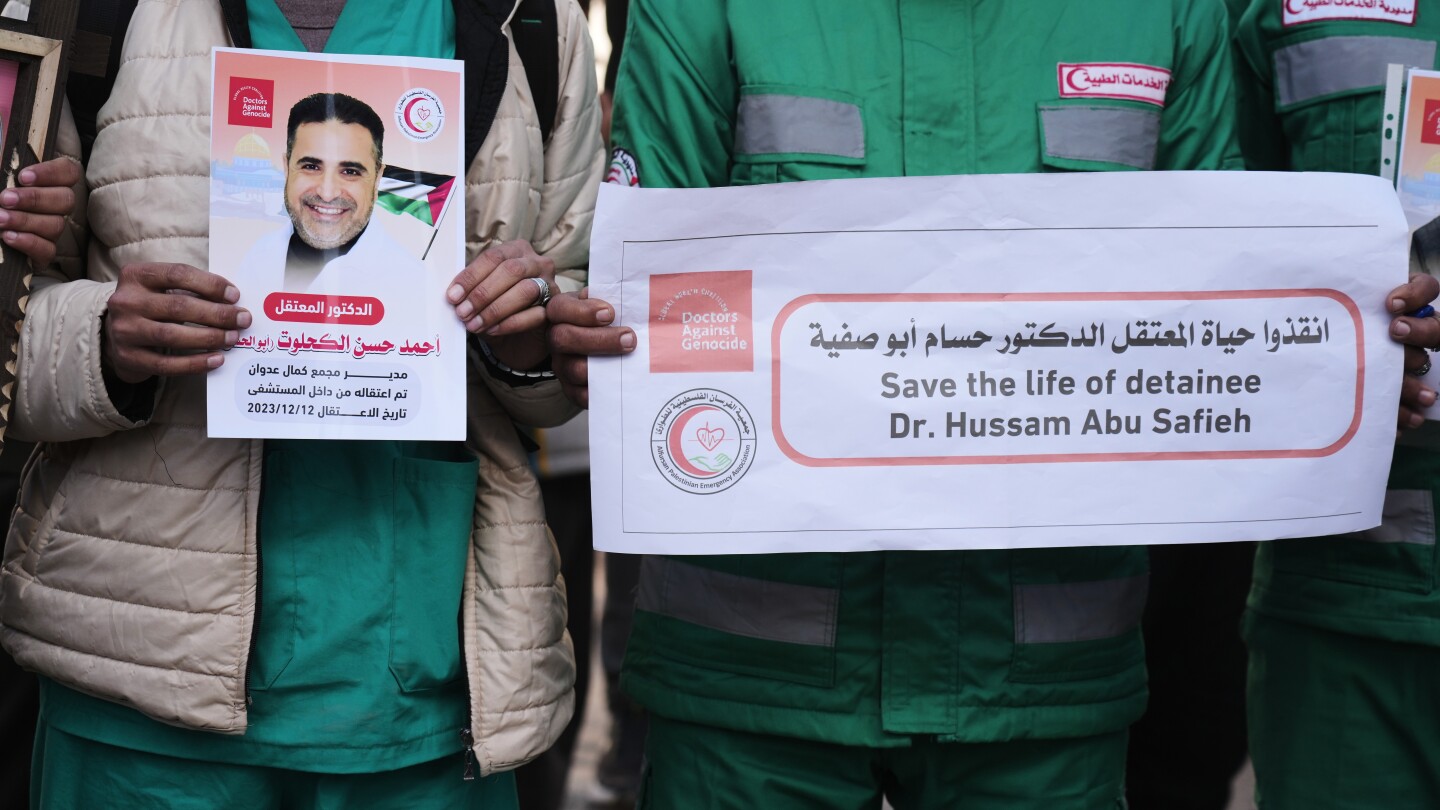
Meanwhile, dozens of Palestinians, including medical workers, demonstrated Monday in Gaza City, demanding the release of thousands of Palestinian prisoners still detained in Israeli facilities. The protest, organized by the Palestinian Prisoners Committee, took place outside the International Committee of the Red Cross building.
The plight of Palestinian prisoners remains a significant humanitarian concern. Advocacy groups announced Sunday that Israeli authorities confirmed the death of 67-year-old Hamza Abdullah Abdelhadi Adwan, a Gaza detainee with serious health problems and father of nine. According to the Prisoners’ Affairs Commission and Palestinian Prisoner Society, Adwan died in custody on September 9. He had been detained at a checkpoint on November 12, 2024, after losing two children in the Gaza war. Israeli military officials stated Monday that their police force will investigate his death and forward findings to the military prosecutor’s office.
Palestinian prisoner advocacy groups report that 87 Palestinian detainees have died in Israeli prisons since the war began, including 51 from Gaza. They attribute over 100 deaths to torture, starvation, medical neglect, and abuse, with some deceased prisoners still unidentified.
The ongoing tensions and humanitarian concerns highlight the fragility of the ceasefire and the challenges facing any new governance structure in Gaza as the region attempts to move toward a more stable peace.
Fact Checker
Verify the accuracy of this article using The Disinformation Commission analysis and real-time sources.

9 Comments
The loss of life is always tragic, regardless of the circumstances. I hope the investigation into this incident provides clarity and that both sides can work to prevent further escalation.
Agreed. With tensions high, it’s critical that all parties exercise restraint and prioritize a peaceful resolution to this conflict.
The ceasefire agreement reached last October was an important step, but it’s clear that tensions remain high. I’m curious to see how the new governing body in Gaza will approach the task of maintaining stability and security in the region.
The ongoing power dynamics in Gaza are complex, and this transition to a new governing body adds another layer of uncertainty. I’ll be following this story closely to see how it unfolds.
This is a concerning development in the ongoing tensions between Israel and Gaza. It’s critical that both sides adhere to the ceasefire and work to reduce violence. Restoring stability and security in the region should be the priority.
This is a delicate situation that requires careful diplomacy and a commitment to de-escalation from all parties involved. I hope the new governing body in Gaza can help facilitate progress towards a lasting peace.
While the details of this incident are still unfolding, it’s a sobering reminder of the fragility of the situation in Gaza. I hope all sides can focus on finding a peaceful resolution that addresses the underlying causes of the conflict.
The announcement of a new governing body in Gaza is an interesting development. I’m curious to see how this transition of power unfolds and whether it will lead to any changes in the dynamics between Israel and Gaza.
It’s an important step, but the history of conflict in the region means there are likely to be challenges ahead. Maintaining open dialogue and a focus on de-escalation will be key.