


Listen to the article
Record Flooding Swamps Welsh Town as Storm Claudia Batters UK and Ireland
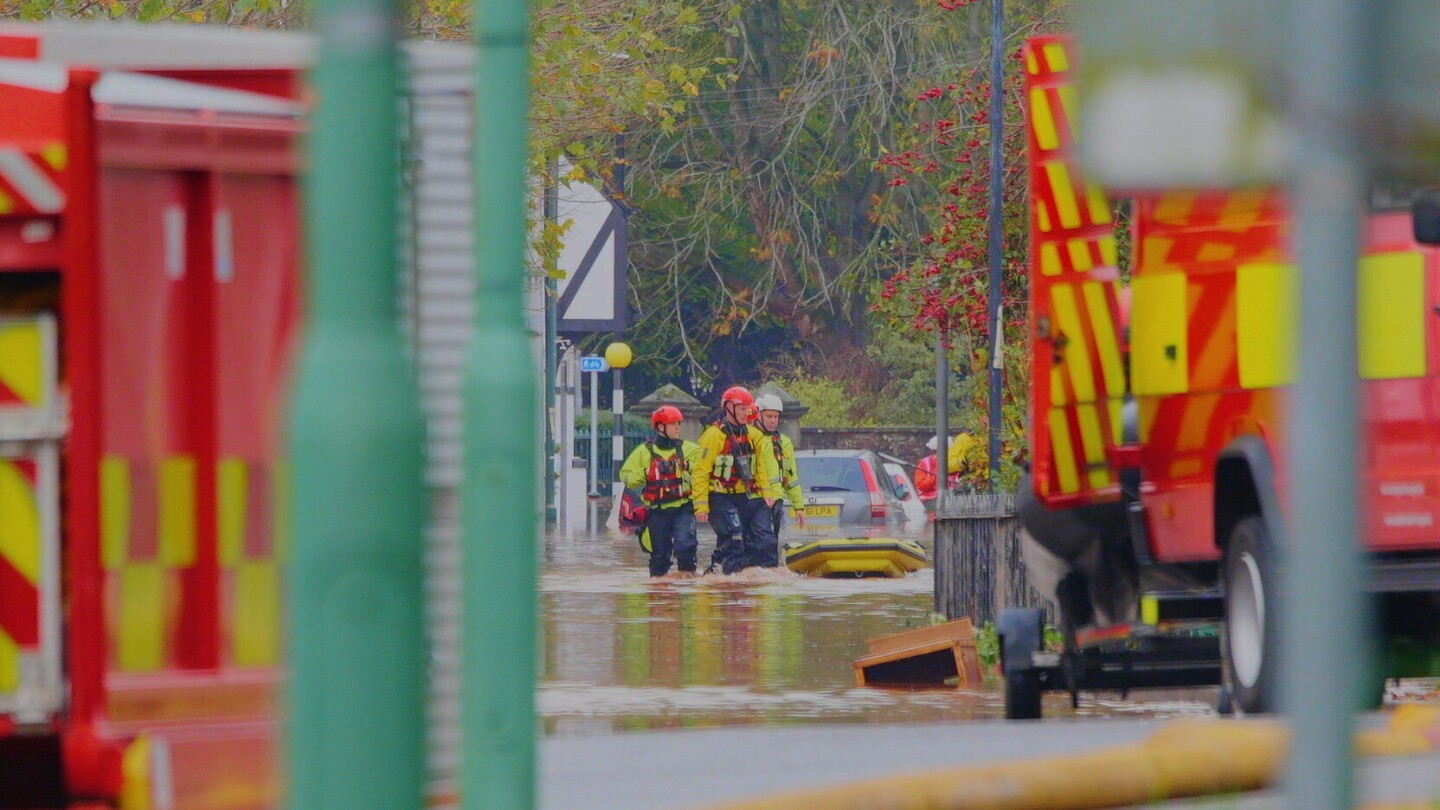
Dozens of residents were rescued from their homes in Monmouth, Wales after the River Monnow reached unprecedented levels and breached its banks following torrential rainfall from Storm Claudia, which has caused widespread disruption across the United Kingdom and Ireland.
Emergency services worked through the night as nearly 12 centimeters (4.7 inches) of rain fell in southeast Wales, transforming Monmouth’s main street into a muddy waterway. Aerial footage revealed the extent of the damage, with roads submerged, cars abandoned in floodwater, and businesses inundated along the town’s commercial center.
“I personally haven’t seen it so bad for probably 40 years,” said Peter Fox, a Conservative member of the Welsh Parliament, referring to the period before flood defenses were constructed for the historic border town. The severity of the flooding suggests these defenses were overwhelmed by the sheer volume of water.
Monmouth’s geographic vulnerability comes from its position at the confluence of two major waterways. The town center sits just upstream from where the River Monnow joins the River Wye, the fourth-largest river in the UK. This location has historically made the town susceptible to flooding events, though rarely of this magnitude.
The meteorological impact extended well beyond Wales. In England, approximately 50 flood warnings remained in place as of Saturday afternoon, indicating that authorities still considered flooding a significant threat in numerous areas. Transportation networks suffered considerable disruption, with multiple rail lines forced to close due to high water levels and trees brought down by powerful winds.
The storm’s effects have been equally severe in neighboring Ireland, where residents in Portarlington faced similar flooding scenarios. Irish emergency services warned that some rivers had yet to reach their peak levels, suggesting the potential for further damage in the coming days. Thousands of homes and businesses across Ireland lost electricity as high winds downed power lines, and fallen trees blocked numerous roadways, hampering emergency response efforts.
Weather forecasters have indicated that the immediate aftermath of Storm Claudia will bring little relief, with a cold spell expected to sweep across the UK. This weather pattern will likely introduce subfreezing temperatures to parts of the country, potentially creating dangerous conditions for those without power or facing damage to their homes.
The flooding in Monmouth represents the latest in a series of increasingly severe weather events affecting the British Isles in recent years. Climate scientists have consistently warned that global warming is intensifying the water cycle, making both droughts and flooding rains more common and more extreme.
Local authorities across the affected regions are now focused on immediate recovery operations, including emergency accommodation for displaced residents, restoration of essential services, and damage assessment. Insurance companies are preparing for a significant influx of claims, with early estimates suggesting the total cost of Storm Claudia’s damage could run into the tens of millions of pounds.
Environmental agencies will also be evaluating the effectiveness of existing flood defense infrastructure, particularly in Monmouth where systems designed decades ago proved inadequate against the rising waters. This assessment may prompt calls for increased investment in climate resilience measures across vulnerable communities throughout the UK and Ireland.
As cleanup operations begin, residents and business owners face the daunting task of salvaging possessions and rebuilding their livelihoods, a process that could take months or even years for the most severely affected.
Fact Checker
Verify the accuracy of this article using The Disinformation Commission analysis and real-time sources.

12 Comments
It’s great that the emergency services were able to evacuate people to safety, but the scale of this flooding event is really concerning. I wonder what long-term solutions might help protect Monmouth from future storms.
Strengthening flood defenses, improving drainage infrastructure, and exploring natural flood management strategies could all be part of the solution. But it will require significant investment.
The images of the flooded town center are quite striking. I hope the residents and businesses can get the support they need to recover from the damage. Climate change appears to be exacerbating these kinds of storm events.
Absolutely. Improving flood management systems and building climate resilience should be top priorities for local and national authorities.
Wow, that’s some intense flooding in Wales! It’s amazing the emergency services were able to rescue so many people from their homes. I wonder how the local businesses and infrastructure will recover from this storm’s devastation.
Yes, the flooding looks quite severe. I hope the town can rebuild and reinforce flood defenses to be more resilient in the future.
Monmouth’s location at the confluence of major rivers makes it particularly vulnerable to flooding. The scale of this event suggests more investment may be needed in flood mitigation and resilience for communities in high-risk areas.
Agreed. As extreme weather events become more common, proactive planning and preparedness will be crucial for protecting towns like Monmouth.
The devastation in Monmouth illustrates the vulnerability of towns located at river confluences. I wonder if there are any opportunities to explore nature-based flood management solutions, in addition to traditional engineered defenses.
That’s a good point. Integrating green infrastructure like wetlands and floodplains could enhance flood protection while also providing other environmental benefits.
This is a stark reminder of the increasing risks communities face from extreme weather. I hope the authorities are able to provide adequate support and resources to help Monmouth recover and build resilience for the future.
Agreed. Disaster relief and recovery efforts will be critical, but also proactive measures to mitigate and adapt to climate change-driven flooding risks.