


Listen to the article
Hundreds of displaced residents returned Monday to Aleppo’s Achrafieh neighborhood in northern Syria, marking the end of nearly a week of intense fighting between government forces and Kurdish fighters that killed at least 23 people and displaced tens of thousands.
The conflict erupted on January 6 in the predominantly Kurdish neighborhoods of Achrafieh, Sheikh Maqsoud, and Bani Zeid after negotiations stalled between the government and the Syrian Democratic Forces (SDF), the primary Kurdish-led military alliance in Syria. The failed talks centered on integrating the SDF into Syria’s national army, a key issue in post-Assad Syria.
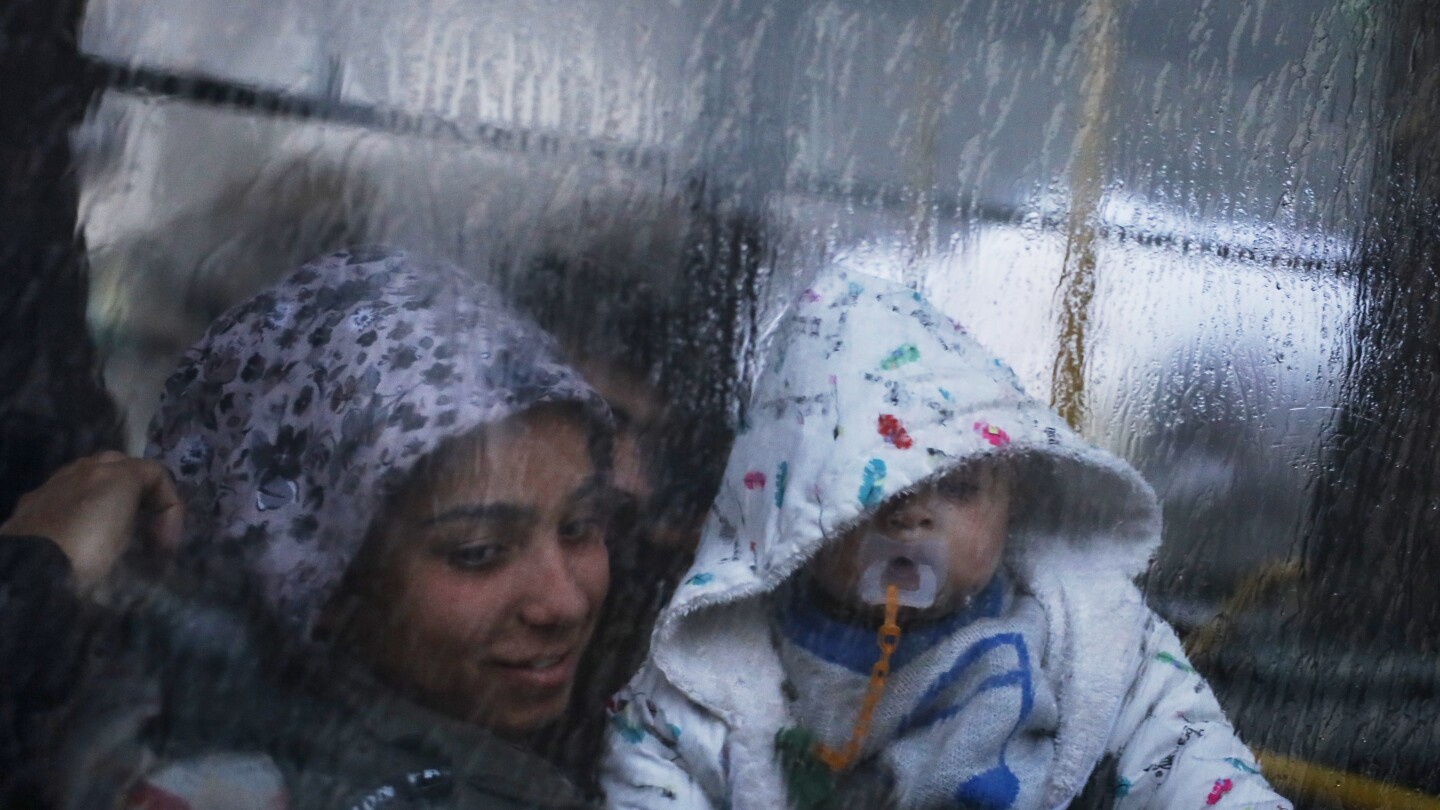
Armed security forces stood guard as traffic flowed through the streets of Achrafieh on Monday. Buses carried displaced families back to their homes, with many shops reopening despite residents complaining about electricity cuts in the area.
“We’ve been waiting for this to happen for a long time, not just recently,” said Jamal al-Youssef, an Arab resident who fled with his family during the fighting. He welcomed the government’s reassertion of control but emphasized there was no tension between Arab and Kurdish civilians. “We have three or four Kurdish families in my building and we don’t feel there’s any difference between us.”
The violence had forced approximately 148,000 people to flee, primarily to the district of Afrin in northwestern Aleppo province. About 10 buses carrying 700 families returned to Achrafieh on Monday, according to Masoud Battal, the Syrian government’s director for the Afrin region.
One returning resident, Mohammed Sheikho, expressed relief: “I left Achrafieh five days ago. I was in Afrin and now we’re returning to our homes, thank God.”
Meanwhile, crews worked to clear Sheikh Maqsoud of unexploded ordnance and remove destroyed vehicles blocking roads. Security forces also inspected tunnels beneath the neighborhood that appeared to have been used by Kurdish fighters during the conflict.
The tensions highlight the complex power dynamics in Syria’s post-Assad landscape. Some factions within the newly formed Syrian army were previously Turkey-backed insurgent groups with a history of clashing with Kurdish forces. These groups gained prominence after former President Bashar Assad was ousted in a rebel offensive in December 2024.
The SDF has served as the main U.S. partner in Syria against the Islamic State group for years. However, Turkey considers the SDF a terrorist organization due to its ties with the Kurdistan Workers’ Party (PKK), which has waged a decades-long insurgency against the Turkish state.
Last week’s fighting represented the most intense conflict between the two sides since Assad’s fall. The violence included shelling and drone strikes across the disputed neighborhoods, resulting in at least 23 casualties over five days.
A negotiated agreement led to hundreds of Kurdish fighters evacuating from the contested areas in Aleppo to SDF-controlled northeastern Syria over the weekend. Despite this withdrawal, tensions remain high between the two forces.
Syria’s state-run news agency SANA reported Monday evening that the Syrian army had dispatched reinforcements to positions east of Aleppo after observing what they described as an SDF military buildup near the towns of Maskana and Deir Hafer.
The SDF promptly denied these claims in an official statement, asserting that “there are no military movements or troop buildups by our forces in the aforementioned areas, and that all circulating claims are entirely unfounded.” The Kurdish-led force accused the government of attempting to “manufacture tension and create pretexts for escalation.”
This recent flare-up underscores the fragile security situation in northern Syria, where multiple armed groups with competing international backers continue to vie for territorial control and political influence in the aftermath of Assad’s overthrow. The successful return of displaced residents to Aleppo’s contested neighborhoods marks a temporary reprieve, but long-term stability remains elusive as underlying tensions between government forces and Kurdish fighters persist.
Fact Checker
Verify the accuracy of this article using The Disinformation Commission analysis and real-time sources.

12 Comments
I hope the return of residents to Aleppo marks the start of a longer-term stabilization process. Rebuilding infrastructure and livelihoods will be crucial next steps.
I’m curious to see how the residents describe the dynamics between Arab and Kurdish civilians. Avoiding further ethnic tensions will be crucial for the region’s recovery.
Good point. The local community’s perspective on inter-communal relations will provide important context. Fostering mutual understanding between groups will be key to a sustainable peace.
The displacement of tens of thousands is a stark reminder of the human toll of these conflicts. I hope the reconstruction process can provide some closure and a path forward for the community.
The integration of the SDF into the national army seems like a major sticking point. Hopefully the government and Kurdish leaders can find a compromise that satisfies all parties.
Yes, the political negotiations will be critical. Respecting the autonomy and security concerns of the Kurds while maintaining national unity will require nuance and compromise on all sides.
The fighting in Aleppo adds to the ongoing instability in Syria. Achieving a durable political settlement between all the major factions remains elusive but essential.
Glad to see some normalcy returning to Aleppo after the recent clashes. Rebuilding and reconciliation will be key to healing these divides and restoring stability in the region.
Absolutely, the displaced residents must feel relieved to return home. Rebuilding trust between the various factions will be a long process, but necessary for lasting peace.
Cutting electricity in the area is concerning. Ensuring basic services are restored will be an important part of the reconstruction efforts.
It’s positive to see security forces maintaining order as residents return home. A delicate balance between stability and respecting local autonomy will be necessary.
Negotiations between the government and SDF are clearly still fragile. Resolving the status of Kurdish forces will be crucial for sustainable peace in post-conflict Syria.