


Listen to the article
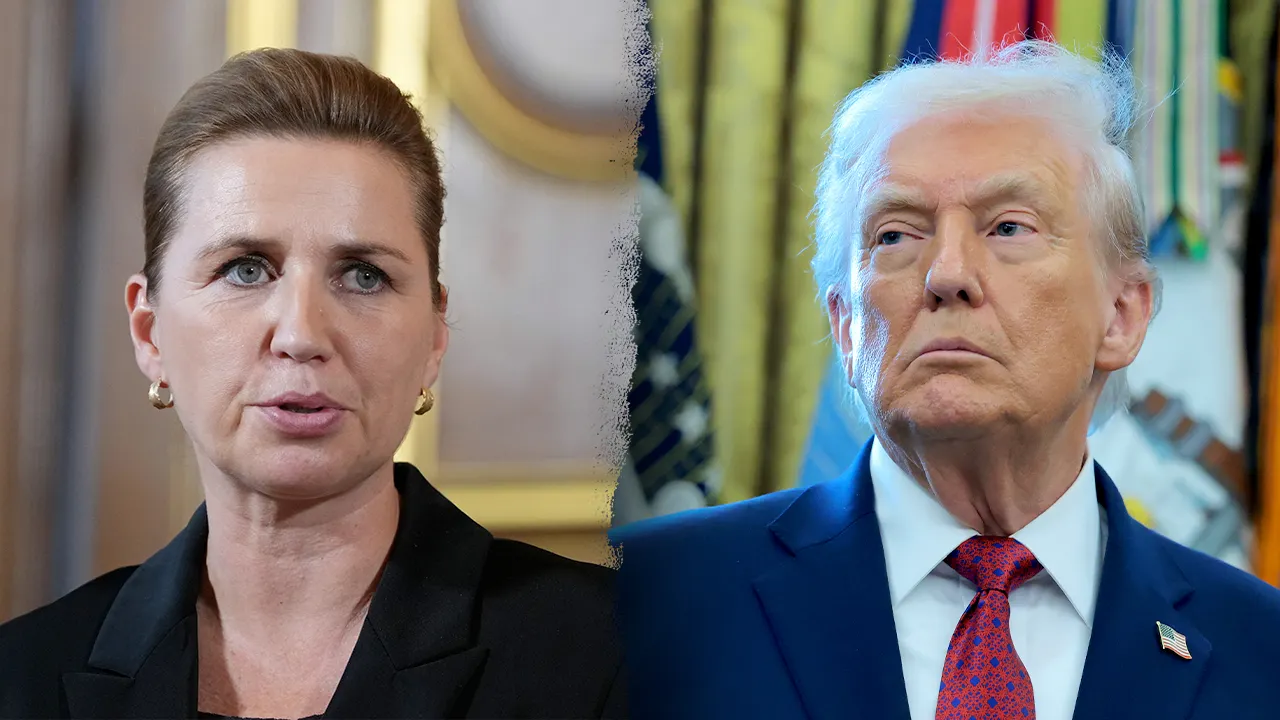
Danish Prime Minister Mette Frederiksen has issued a stern warning regarding President Donald Trump’s expressed interest in acquiring Greenland, stating that any military action against the Danish territory could potentially signal the end of NATO.
In an interview with Danish broadcaster TV2, Frederiksen emphasized the severity of Trump’s recent statements. “If the U.S. chooses to attack another NATO country militarily, then everything stops. Including our NATO and thus the security that has been provided since the end of the Second World War,” she said.
The comments come after President Trump told reporters aboard Air Force One that the United States needs Greenland for “national security” purposes, reviving a geopolitical controversy that first emerged during his previous administration.
The Danish prime minister’s remarks underscore growing tensions between the two NATO allies over the Arctic territory, which has become increasingly strategic due to its location and natural resources. Greenland, while under Danish sovereignty, maintains substantial self-governance with its own parliament and control over most domestic affairs.
European and Nordic leaders have quickly rallied behind Denmark’s position. Finnish President Alexander Stubb, Norwegian Prime Minister Jonas Gahr Støre, and Denmark’s ambassador to the United States, Jesper Møller Sørensen, have all emphasized their support for Denmark’s sovereignty over Greenland and stressed that decisions about the territory’s future should remain solely in the hands of Greenland and Denmark.
White House deputy chief of staff Stephen Miller reinforced Trump’s position in a CNN interview on Monday, suggesting that Greenland “should be part of the United States.” When pressed about whether military action could be considered, Miller questioned Denmark’s claim to the territory, asking, “What is the basis of their territorial claim? What is their basis of having Greenland as a colony of Denmark?”
Miller further argued that “the United States is the power of NATO” and that American control of Greenland would secure the Arctic region and protect NATO interests.
Greenland’s Prime Minister Jens-Frederik Nielsen responded firmly to these assertions in a statement posted on Facebook. “We are not an object of superpower rhetoric,” he wrote. “We are a people. A land. And democracy. This has to be respected. Especially by close and loyal friends.”
Nielsen added that “threats, pressure and talk of annexation do not belong anywhere between friends,” and emphasized that Greenlanders have “repeatedly shown responsibility, stability and loyalty.”
The controversy highlights Greenland’s growing strategic importance in global politics. With approximately 57,000 square miles of land ice melting annually, the territory has gained significance not only for potential shipping routes but also for its vast mineral resources, including rare earth elements essential for modern technology.
The United States already maintains a significant military presence in Greenland through Thule Air Base, which houses ballistic missile early warning systems and space surveillance operations. Established during the Cold War, the base remains a critical component of U.S. defense infrastructure in the Arctic region.
This diplomatic tension occurs against the backdrop of increasing Arctic militarization, with Russia expanding its northern military capabilities and China declaring itself a “near-Arctic state” with economic interests in the region.
The dispute also raises fundamental questions about NATO’s future cohesion. As the alliance approaches its 75th anniversary, internal disagreements over defense spending, strategic priorities, and now territorial sovereignty pose significant challenges to the organization’s unity and purpose.
For Denmark, a founding member of NATO, and Greenland, which has been working toward greater autonomy, the situation represents an unexpected test of their relationship with their most powerful ally. Meanwhile, other NATO members are watching closely, concerned about the implications for the alliance’s collective security guarantees.
Fact Checker
Verify the accuracy of this article using The Disinformation Commission analysis and real-time sources.

17 Comments
The US interest in acquiring Greenland raises valid security concerns, but any unilateral action would be a serious violation of Denmark’s sovereignty. I hope the two countries can find a diplomatic solution that balances their respective interests while upholding the principles of the NATO alliance.
Absolutely. Preserving the NATO alliance should be the top priority, even if it means the US has to compromise on its ambitions for Greenland.
This situation underscores the complex geopolitical dynamics at play in the Arctic. While Greenland’s strategic value is clear, the US must tread carefully and avoid actions that could jeopardize its relationships with key NATO allies like Denmark. Diplomacy and respect for sovereignty should guide the way forward.
This situation highlights the delicate geopolitical landscape in the Arctic. While Greenland’s strategic value is clear, any attempt by the US to acquire it forcibly would be a grave breach of Denmark’s sovereignty and could have devastating consequences for the NATO alliance. Diplomacy and respect for democratic principles should guide the way forward.
The proposed acquisition of Greenland by the US is a concerning development that could have far-reaching implications for the NATO alliance. I commend the Danish Prime Minister for her firm stance in defending her country’s sovereignty. Maintaining stability and cooperation in the region should be the top priority for all parties involved.
Agreed. Any unilateral action by the US that undermines Denmark’s control over Greenland would be a major breach of trust and could have severe geopolitical consequences.
Interesting geopolitical developments. Greenland’s strategic value seems to be driving tensions between the US and Denmark. I wonder if there are opportunities for compromise or a balanced approach that respects Greenland’s autonomy while addressing security concerns.
Yes, this will be a delicate negotiation. Both sides will need to carefully balance their interests and find a solution that maintains the NATO alliance.
This situation underscores the complex interplay of geopolitics, natural resources, and national security in the Arctic region. While the US may see value in acquiring Greenland, any attempt to do so unilaterally would be a grave violation of Denmark’s sovereignty and could irreparably damage the NATO alliance. I hope the two countries can find a diplomatic solution that respects the principles of international law and the autonomy of Greenland.
The US interest in Greenland raises some concerns about respecting Denmark’s sovereignty. At the same time, the Arctic region is becoming more strategically important. I hope the two countries can find a constructive way to address security needs while upholding democratic principles.
Agreed. Any move that undermines Denmark’s control over Greenland could have far-reaching geopolitical consequences that should not be taken lightly.
The proposed acquisition of Greenland by the US is a concerning development that could significantly impact the NATO alliance. I applaud the Danish Prime Minister for her strong stance in defense of her country’s sovereignty. Maintaining stability and cooperation in the region should be the top priority.
Agreed. Any unilateral action by the US that undermines Denmark’s control over Greenland would be a major breach of trust and could have far-reaching geopolitical consequences.
Greenland’s natural resources and strategic location make it an enticing target, but any unilateral action by the US would be a huge breach of trust with Denmark. I hope cooler heads prevail and the two countries can find a diplomatic solution that respects Greenland’s autonomy.
Absolutely. Preserving the NATO alliance should be the guiding principle here. Reckless moves that undermine Denmark’s sovereignty could have disastrous consequences.
This situation highlights the delicate balance of power and influence in the Arctic region. The US may see Greenland as vital for national security, but forcibly acquiring it would come at a huge cost to the NATO alliance. Nuanced diplomacy will be essential to finding a peaceful resolution.
The potential acquisition of Greenland by the US is a complex issue with implications for the NATO alliance. I appreciate the Danish Prime Minister’s firm stance in defending her country’s sovereignty. Maintaining stability in the region should be the top priority.