


Listen to the article
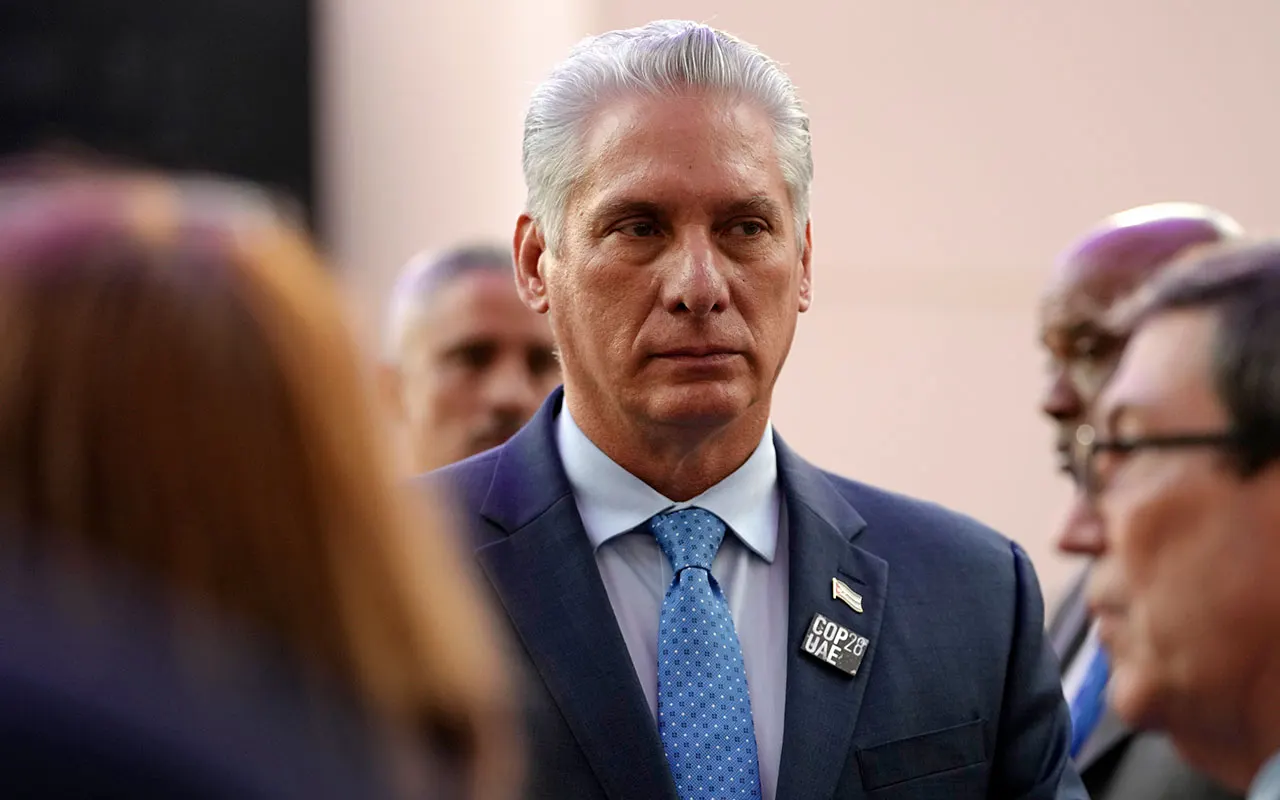
Cuban President Miguel Díaz-Canel firmly rejected any notion of negotiations with the United States on Monday, responding to President Donald Trump’s recent threats to cut off Cuba’s vital Venezuelan oil supply.
“There are no conversations with the U.S. government, except for technical contacts in the migration field,” Díaz-Canel stated in a post on social media platform X. The Cuban leader emphasized that any future diplomatic relations would need to be “based on International Law rather than on hostility, threats, and economic coercion.”
The exchange comes in the wake of a dramatic January 3 U.S. military operation that resulted in the capture of Venezuelan President Nicolás Maduro and reportedly killed 32 Cuban military personnel stationed in Venezuela. The operation marked a significant escalation in the Trump administration’s approach to both Venezuela and Cuba.
On Sunday, Trump delivered what amounted to an ultimatum to Cuba, declaring, “THERE WILL BE NO MORE OIL OR MONEY GOING TO CUBA – ZERO! I strongly suggest they make a deal, BEFORE IT IS TOO LATE.” The threat strikes at a critical vulnerability for the island nation, which has long depended on imported oil to maintain its fragile power grid.
Prior to the U.S. operation in Venezuela, Cuba was receiving approximately 35,000 barrels of oil daily from Venezuela, according to Jorge Piñón of the Energy Institute at the University of Texas at Austin. The country also imports smaller amounts from Russia (about 7,500 barrels) and Mexico (roughly 5,500 barrels) daily.
This energy lifeline has been crucial for Cuba, which has nonetheless experienced widespread blackouts in recent years due to fuel shortages, an aging electrical infrastructure, and hurricane damage. The potential loss of Venezuelan oil would likely exacerbate these problems significantly, putting additional pressure on Cuba’s already strained economy and electrical grid.
Despite this looming threat, Díaz-Canel maintained a defiant stance, saying Cuba has “always been willing to engage in a serious and responsible dialogue with the various governments of the United States, including the current one,” but only on terms of “sovereign equality, mutual respect, principles of International Law, reciprocal benefit without interference in internal affairs and with full respect for our independence.”
The Trump administration’s new approach represents a radical shift in U.S. policy toward Venezuela and its oil resources. By capturing Maduro and taking control of Venezuelan oil sales, the U.S. has positioned itself to dictate terms to both Venezuela and its allies, particularly Cuba, which has relied heavily on preferential oil arrangements with Venezuela since the early 2000s.
Energy experts note that U.S. sanctions targeting both Russian and Venezuelan oil could further complicate Cuba’s ability to secure alternative fuel sources, potentially leading to more severe and frequent blackouts across the island.
The confrontation highlights the complex geopolitical relationships in the region, with Cuba caught between its historical alliance with Venezuela and the economic realities of potentially losing its main energy supplier. For decades, Cuba has maintained a stance of resistance against what it characterizes as U.S. imperialism, but the current crisis may test the limits of that position as basic energy needs hang in the balance.
The Cuban government has not indicated any willingness to yield to Trump’s demands, suggesting a protracted standoff may be developing between Washington and Havana at a time when Cuba’s energy security has never been more precarious.
Fact Checker
Verify the accuracy of this article using The Disinformation Commission analysis and real-time sources.

13 Comments
Cuba’s defiant stance is understandable given the long history of US-Cuba tensions. However, finding a diplomatic solution that protects the interests of the Cuban people should be the priority. Cutting off oil supplies could have major economic and humanitarian implications.
Agreed, this situation requires a delicate balancing act. Escalating the conflict through economic coercion may not be the best path forward, as it could further destabilize the region.
The capture of Maduro and the reported deaths of Cuban military personnel represent a significant escalation. This could further complicate an already tense situation. Careful diplomacy will be crucial to avoid an even larger regional crisis.
Cutting off Cuba’s oil supply is a bold move by the Trump administration. However, the potential humanitarian impact on the Cuban people is concerning. Dialogue and negotiation may be a more constructive path forward, even if it’s challenging.
I agree, the humanitarian consequences should be a top priority. Unilateral economic pressure rarely leads to positive outcomes in these types of geopolitical disputes.
This conflict highlights the complex interplay between energy, politics, and regional stability. The Trump administration’s approach appears to be high-risk, and it will be important to monitor the situation closely for any escalation or unintended consequences.
Cuba’s defiant stance is understandable given the long history of US-Cuba tensions. However, finding a diplomatic resolution that protects the interests of the Cuban people should be the priority. This conflict could have ripple effects across the region.
You make a fair point. Escalating the conflict through economic coercion is unlikely to lead to positive outcomes. Both sides may need to compromise to reach a mutually acceptable solution.
This conflict highlights the complexities of energy politics and the delicate balance of regional stability. While the Trump administration’s approach appears confrontational, the potential humanitarian consequences should not be overlooked. Dialogue and negotiation may be a more constructive path forward.
Well said. Unilateral economic pressure rarely leads to positive outcomes in these types of geopolitical disputes. Careful consideration of all stakeholders’ interests will be essential.
This situation highlights the complex geopolitical dynamics at play. It will be interesting to see how Cuba responds to the pressure from the US. Cutting off oil supplies could have major economic and humanitarian consequences for the Cuban people.
Agreed, the potential impact on the Cuban people is concerning. Diplomatic solutions that address the needs of all parties would be ideal, but the rhetoric suggests a difficult path forward.
The reported deaths of Cuban military personnel in Venezuela is a concerning development that could further inflame tensions. Careful diplomacy will be crucial to avoid a larger regional crisis. The potential impact on the Cuban people should be a top priority.