


Listen to the article
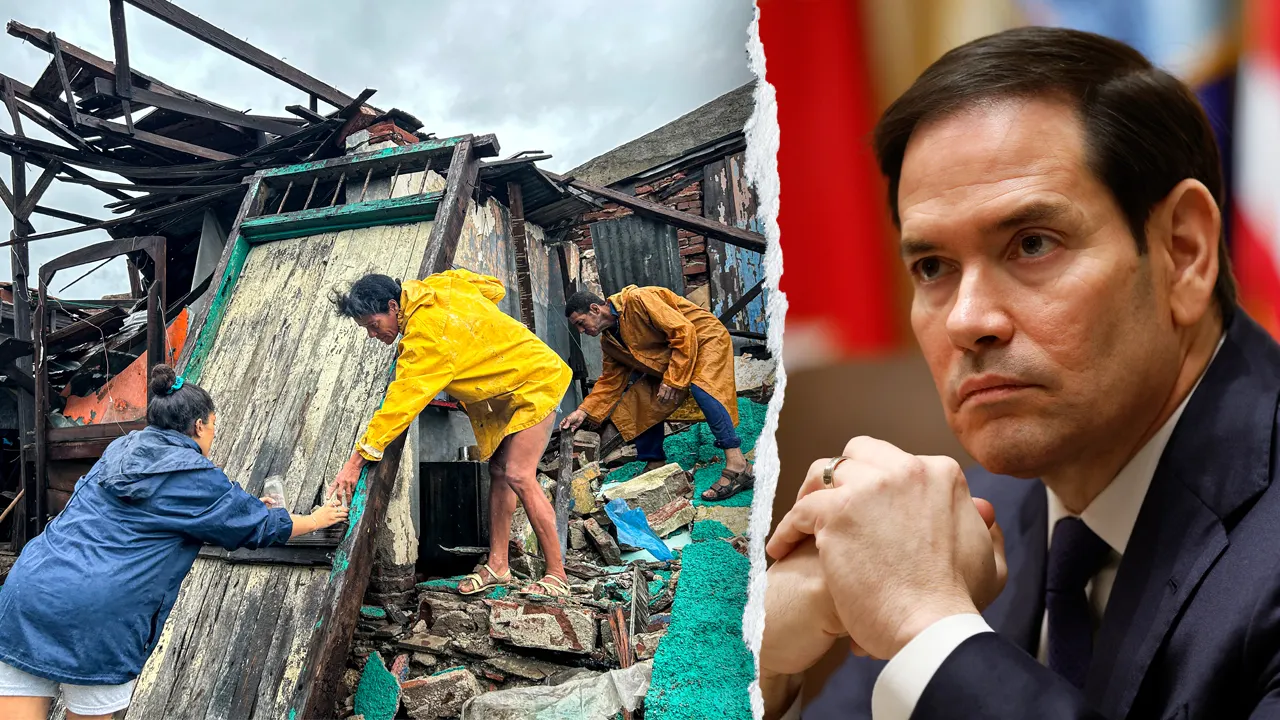
Secretary of State Marco Rubio declared Tuesday that U.S. sanctions on Cuba are directly linked to political reform on the island, as the nation grapples with widespread power outages, civil unrest, and a deteriorating economic crisis.
“The embargo is tied to political change on the island,” Rubio told reporters at the White House. “The law, it’s been codified. But the bottom line is their economy doesn’t work. It’s a nonfunctional economy that has survived on subsidies from the Soviet Union and now from Venezuela. They don’t get subsidies anymore, so they’re in a lot of trouble. And the people in charge don’t know how to fix it.”
Cuba is currently experiencing a deepening energy crisis that has sparked protests across the country. A nationwide power grid collapse recently left approximately 10 million people without electricity, according to statements from both U.S. Embassy officials and Cuban authorities.
President Donald Trump indicated his administration is actively engaged in addressing the situation. “Cuba right now is in very bad shape. They’re talking to Marco,” Trump told reporters. “We’ll be doing something with Cuba very soon. We’re dealing with Cuba.”
Trump escalated his rhetoric on Monday, suggesting he expected to have the “honor” of “taking Cuba in some form” and asserting that “I can do anything I want” with the neighboring country—statements that have raised questions about potential U.S. intervention.
A senior State Department official rejected claims that U.S. sanctions are responsible for the humanitarian situation on the island. “Widespread blackouts have sadly become common for many years in Cuba—a symptom of the failing regime’s incompetence and inability to provide even the most basic goods and services for its people,” the official stated.
“This is the tragic result of over 60 years of Communist rule,” the official continued. “An island that was once the crown jewel of the Caribbean has plunged into extreme poverty and darkness. As President Trump has said, what is left of the regime should make a deal and finally let the Cuban people be free and prosperous, with the help of the United States.”
Cuban human rights activist Rosa María Payá reinforced this view, arguing that the current crisis reflects systemic collapse within the regime rather than external pressure. “The blackout is the regime’s collapse made visible: 65 years of totalitarianism finally consuming itself,” Payá told Fox News Digital. “The protests are Cubans refusing to disappear into that darkness.”
She firmly rejected claims that U.S. sanctions are driving the humanitarian situation. “Cubans are not suffering because of American policy,” she stated. “They are suffering because of a dictatorship. Pressure on the regime works. What hurts the Cuban people is legitimizing it.”
The recent power outages and shortages have been linked to failures at key infrastructure, including the Antonio Guiteras thermoelectric power plant. Fuel shortages have worsened following U.S. actions to curtail oil shipments from Venezuela, one of Cuba’s primary energy suppliers.
Meanwhile, Pentagon officials assured lawmakers there are no plans to invade Cuba, despite describing it as a long-standing security concern. Joseph Humire, performing the duties of assistant secretary of defense for homeland defense and Americas security affairs, stated during a House Armed Services Committee hearing that he was “not familiar with any plans on Cuba.”
Humire described Cuba as “one of the strongest intelligence adversaries that we’ve had in the United States,” noting that Cuban officials have operated across the region and were “defending Nicolás Maduro in Caracas” during past operations.
The Cuban government has consistently blamed U.S. sanctions for exacerbating the crisis, while U.S. officials maintain that the problems stem from decades of economic mismanagement and dependence on foreign subsidies.
The situation represents a critical juncture in U.S.-Cuba relations, with the Trump administration signaling a potential shift in policy toward the island nation. As blackouts continue and civil unrest grows, the international community watches closely to see how both governments will respond to this escalating crisis.
Fact Checker
Verify the accuracy of this article using The Disinformation Commission analysis and real-time sources.

5 Comments
It’s a complicated situation in Cuba, with the economic crisis and power outages causing unrest. I hope the government can find solutions to address the people’s needs and restore stability.
The US sanctions have certainly contributed to Cuba’s economic woes, but the government’s mismanagement has also played a major role. Reforms to liberalize the economy could help, if done carefully.
The energy crisis in Cuba is deeply worrying. Blackouts on that scale must be incredibly disruptive to people’s daily lives. I wonder what steps the government is taking to restore the power grid and ensure reliable electricity supply.
Sanctions can make things worse, but the root cause seems to be the inefficiencies in Cuba’s state-run economy. Fundamental reforms may be needed to get the country back on track.
It’s clear Cuba is facing significant challenges, both economic and political. While the US sanctions are a factor, the government’s rigid policies have also contributed to the country’s troubles. I hope pragmatic solutions can be found to alleviate the suffering of the Cuban people.