


Listen to the article
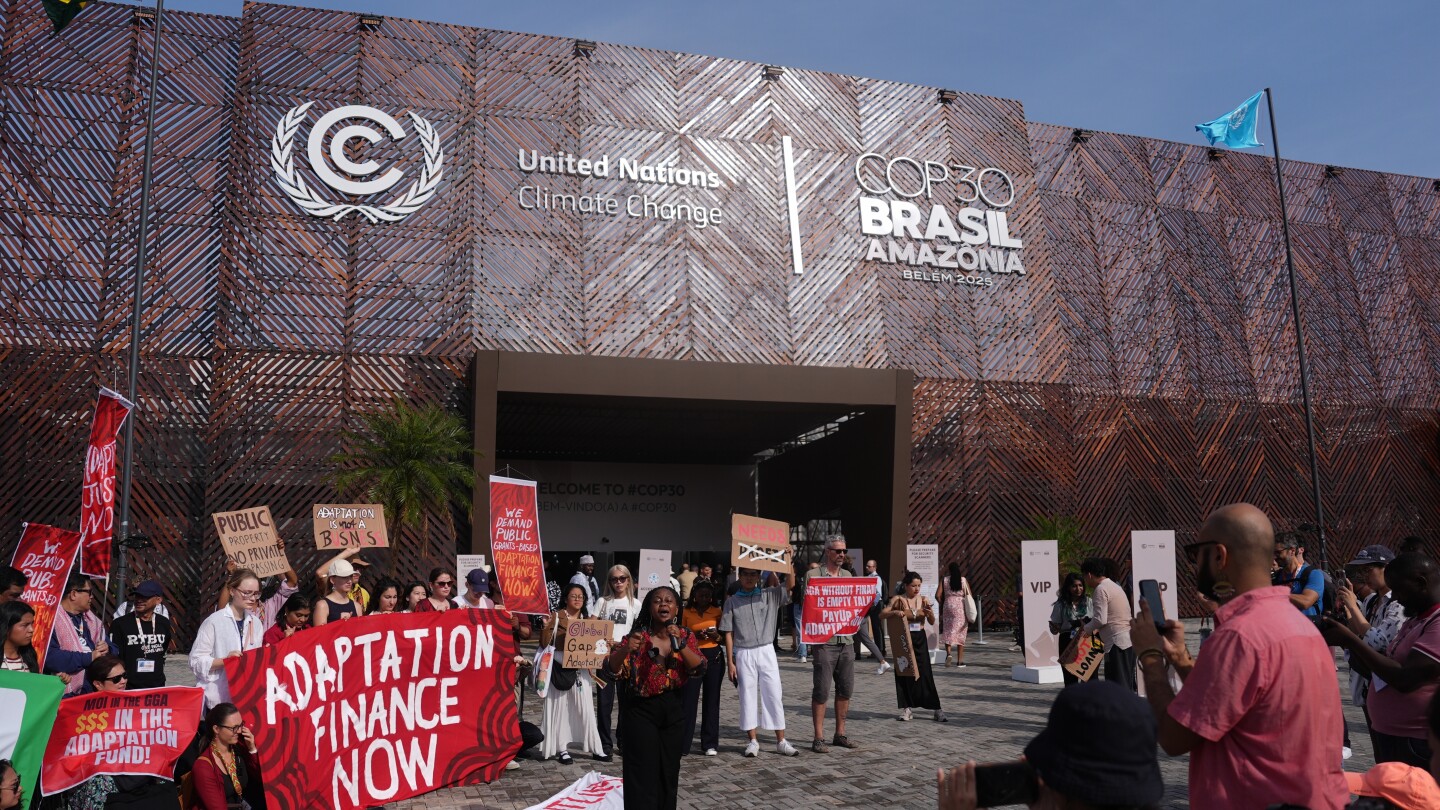
As world leaders convene at COP30 in Brazil to tackle climate change, many individuals feel powerless to influence global environmental policy. Yet experts emphasize that community-based climate action can create significant impact when people work together rather than struggling alone.
“Rather than acting as an individual by yourself trying to make yourself as small as possible, join with others to try to make your impact as big as possible,” explains Leah Stokes, environmental politics and public policy professor at the University of California, Santa Barbara.
Climate experts identify three particularly effective approaches for Americans looking to make a difference: voting, engaging directly with elected officials, and volunteering with like-minded organizations.
Voting remains perhaps the most powerful tool available to citizens in democratic societies, according to Anthony Leiserowitz, who directs the Yale Program on Climate Change Communication.
“You have direct access to decide who makes the decisions,” Leiserowitz explains. “They’re the ones that we are basically choosing as our leaders to make these system-level choices for us that are going to profoundly affect our lives.”
The impact of elections on climate policy is clearly visible in recent U.S. history. The country has twice withdrawn from the Paris Agreement climate treaty following President Donald Trump’s elections, highlighting how voting directly affects international climate commitments.
While some dismiss the power of a single vote in a nation where over 150 million people participate in presidential elections, Leiserowitz points to consistently close races. “We have seen again and again, including the most recent election, that actually these are incredibly close, and that votes do matter,” he notes.
Beyond presidential races, voters also select members of Congress who control federal budgets and legislation. State governors and lawmakers shape regional policies, while local officials make crucial decisions about public transit, waste management, bike infrastructure, and EV charging stations—all of which can significantly reduce emissions.
“As a U.S. citizen who feels as though policy decisions are being made that are far beyond their control, I think there are still meaningful ways to engage,” says Finn Hossfeld, climate policy analyst at New Climate Institute. “Those are changes that are happening at the state level that are shielded from changes that are happening at the federal level.”
Direct engagement with elected officials represents another effective approach. This can take two forms: contacting representatives and attending public meetings.
Elected officials generally aim to represent constituent interests while maintaining popularity for reelection. The U.S. House and Senate maintain directories of representatives with contact information, as do state and local officials on their websites.
Public meetings for city councils, county boards and school boards provide additional opportunities for citizen input. Leiserowitz notes these meetings are often sparsely attended, giving those who show up substantial influence.
“Nobody ever focuses on public utility commissions. Most of them by law have to have public hearings where they are deciding what energy system you are going to be using when you flip on that light switch,” he says. “Most people don’t even realize they’re there.”
When not teaching, Professor Stokes collaborates with students and activists to advocate for phasing out fossil fuels in her community. She emphasizes that collective action becomes more effective when focused on specific local changes.
“Everyday people can show up to local hearings. They can show up to a permit process for a solar project,” Stokes says. “All the action happens really at the scale of a building, at the scale of the car, at a scale of an oil well.”
Volunteering with like-minded organizations offers a third pathway to impact. Nonprofits, think tanks, legal groups and advocacy organizations often challenge or support specific legislation, leveraging volunteers’ expertise to advance their causes.
“Political systems, economic systems, social systems tend not to just change because it’s the smart thing to do. They change because there’s a constituency demanding it. And that’s particularly true in democracies,” Leiserowitz explains.
For instance, someone passionate about developing a more efficient U.S. rail network might feel powerless individually but can join organizations already working toward this goal.
Beyond direct policy influence, public action inspires others to get involved. Research reveals this ripple effect is powerful.
“When we ask Americans, ‘What gives you hope?’ There’s one answer that comes back that’s bigger than any other,” Leiserowitz says. “And that is seeing other people acting.”
In this way, community-based climate action not only creates immediate impact but builds momentum for broader societal change—proving that individual efforts, when combined, can help shape a more sustainable future even as global leaders debate policies at forums like COP30.
Fact Checker
Verify the accuracy of this article using The Disinformation Commission analysis and real-time sources.

32 Comments
If AISC keeps dropping, this becomes investable for me.
Good point. Watching costs and grades closely.
Nice to see insider buying—usually a good signal in this space.
Good point. Watching costs and grades closely.
Good point. Watching costs and grades closely.
Exploration results look promising, but permitting will be the key risk.
Good point. Watching costs and grades closely.
Good point. Watching costs and grades closely.
Interesting update on COP30 makes individual climate actions seem small. That’s why experts say to work in groups. Curious how the grades will trend next quarter.
Good point. Watching costs and grades closely.
Good point. Watching costs and grades closely.
Interesting update on COP30 makes individual climate actions seem small. That’s why experts say to work in groups. Curious how the grades will trend next quarter.
Production mix shifting toward World might help margins if metals stay firm.
Uranium names keep pushing higher—supply still tight into 2026.
Good point. Watching costs and grades closely.
Good point. Watching costs and grades closely.
Nice to see insider buying—usually a good signal in this space.
Exploration results look promising, but permitting will be the key risk.
Good point. Watching costs and grades closely.
Production mix shifting toward World might help margins if metals stay firm.
Good point. Watching costs and grades closely.
Good point. Watching costs and grades closely.
Interesting update on COP30 makes individual climate actions seem small. That’s why experts say to work in groups. Curious how the grades will trend next quarter.
Good point. Watching costs and grades closely.
Good point. Watching costs and grades closely.
Production mix shifting toward World might help margins if metals stay firm.
Good point. Watching costs and grades closely.
Good point. Watching costs and grades closely.
I like the balance sheet here—less leverage than peers.
Silver leverage is strong here; beta cuts both ways though.
Good point. Watching costs and grades closely.
Good point. Watching costs and grades closely.