


Listen to the article
Congo and Rwanda-backed rebel group M23 took a significant step toward resolving the long-running conflict in eastern Democratic Republic of Congo on Saturday, signing a framework agreement in Doha that outlines the path to a potential peace deal.
The agreement, mediated by Qatar and the United States, represents a fresh attempt to end one of Africa’s most intractable conflicts. The framework does not immediately halt hostilities but establishes parameters for future negotiations that could lead to a comprehensive peace settlement.
Benjamin Mbonimpa, who led the M23 delegation at the talks, clarified the preliminary nature of the agreement in a statement posted on social media. “There will be neither any change in the situation on the ground, nor any activity whatsoever, until the measures are debated, negotiated and discussed one by one and a final peace agreement is reached,” he said.
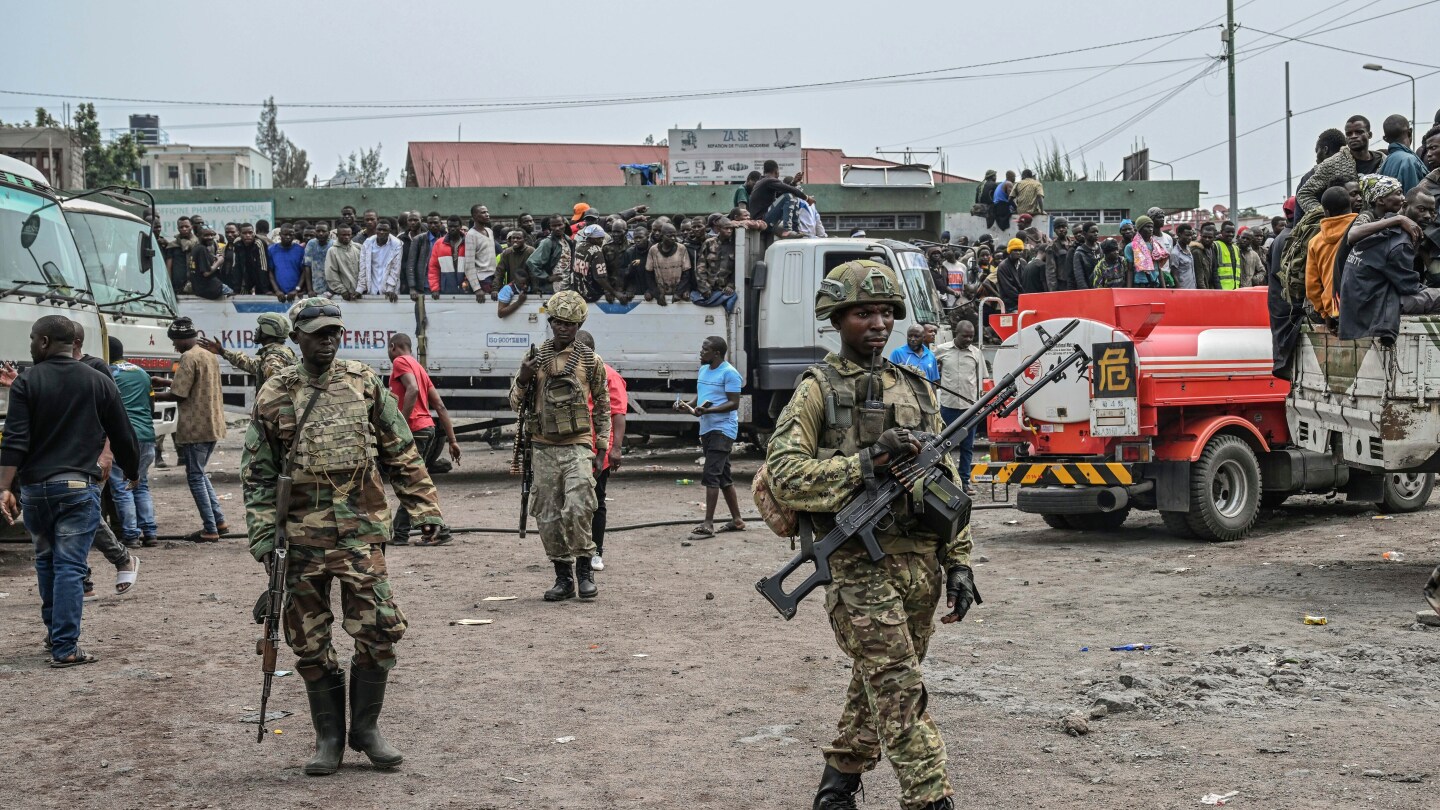
The development comes months after a major escalation in the conflict when M23 forces captured two strategic cities in eastern Congo – Goma and Bukavu – earlier this year. These territorial gains highlighted the group’s growing influence and military capability in the region.
According to the Congolese government, the framework consists of eight measures that will serve as the foundation for a comprehensive peace deal. Two of these measures – agreements on prisoner releases and the establishment of a ceasefire oversight mechanism – had already been signed in September and October.
The remaining six measures address critical issues including the restoration of state authority in rebel-controlled territories, ensuring humanitarian access to affected populations, and the resettlement of refugees. These points will be subject to intense negotiation over the next two weeks as both sides work toward finalizing a deal.
The conflict in eastern Congo has created one of the world’s most severe humanitarian crises. United Nations officials have described it as “one of the most protracted, complex, serious humanitarian crises on Earth,” with approximately seven million people displaced. Eastern Congo’s rich mineral resources, which include gold, cobalt, and coltan – essential for modern electronics – have fueled decades of violence as armed groups compete for control.
M23, which takes its name from a March 23, 2009 peace agreement that later collapsed, is widely believed to receive backing from neighboring Rwanda, though Rwanda consistently denies these allegations. The group is the most prominent among more than 100 armed factions operating in the mineral-rich eastern provinces of Congo.
Qatar has hosted multiple rounds of talks since April, primarily focused on establishing preconditions for a peace agreement and confidence-building measures. Despite these efforts, both sides have continued to accuse each other of violating preliminary agreements, and fighting has persisted.
In July, Congo and M23 signed a declaration of principles in Qatar, committing to a comprehensive peace agreement with an ambitious August 18 deadline. That deadline passed without a final agreement, with each party blaming the other for breaches of the initial terms.
Massad Boulos, senior adviser to U.S. President Donald Trump, attended Saturday’s ceremony in Doha and characterized the framework agreement as a “starting point” and a “historic” opportunity. “It is only the beginning, but we know the final outcome will be very fruitful,” he said.
The Trump administration has been actively involved in regional diplomacy, mediating between Congo and Rwanda. These efforts culminated in the signing of a separate peace agreement between the two nations in June, addressing the interstate dimensions of a conflict that has regional implications across Central Africa.
The success of this latest framework will depend on the willingness of all parties to make difficult compromises during the upcoming negotiations and, more importantly, to implement any final agreement on the ground, where previous peace efforts have frequently collapsed.
Fact Checker
Verify the accuracy of this article using The Disinformation Commission analysis and real-time sources.

13 Comments
Resolving the Congo-M23 conflict is crucial not just for the country, but for the broader stability of the Great Lakes region. A successful peace deal could pave the way for much-needed economic development and investment in the resource-rich area.
I’m curious to see how the framework agreement will handle issues of justice and accountability for past atrocities committed by both sides. Meaningful reconciliation efforts will be key to lasting peace.
That’s an excellent point. Transitional justice mechanisms that address grievances and prevent future cycles of violence should be a central part of the negotiations.
This conflict has roots in the complex geopolitics of the region, with involvement from neighboring countries like Rwanda. Addressing the external factors that fuel the instability in eastern Congo should be a priority for the peace process.
While the framework is a positive step, the real challenge will be translating it into a comprehensive peace deal that is implemented and adhered to by all parties. Skepticism is warranted given the history of failed agreements in this conflict.
The framework agreement is a welcome development, but the path to a final peace deal remains fraught with obstacles. Maintaining international attention and support for the process will be crucial to prevent a return to hostilities.
The capture of strategic cities by M23 earlier this year underscores the group’s military capabilities. Reaching a comprehensive peace deal that addresses their demands and provides a path to disarmament will be challenging, but necessary to end the cycles of violence.
Securing a sustainable peace in eastern Congo is essential for the country’s economic and social development. Investments in infrastructure, education, and public services will depend on a stable security environment.
The involvement of Qatar and the US as mediators is interesting. Their ability to remain impartial and guide the parties towards a compromise will be critical to the success of the peace process.
The peace deal framework is a positive step, but the true test will be whether it leads to a lasting ceasefire and negotiations to address the root causes of the conflict in eastern Congo. Decades-long instability has taken a heavy toll on the region’s economy and civilians.
While this agreement provides a glimmer of hope, the M23 rebels have a history of reneging on deals. Sustained international pressure and commitment to the peace process will be crucial to ensure the framework translates into a durable settlement.
Absolutely. Verification and accountability mechanisms will be key to building trust and ensuring both sides uphold their commitments.
This conflict has had devastating humanitarian consequences for civilians. I hope the peace process will prioritize protection of vulnerable populations and address the root causes of the violence, not just the symptoms.