


Listen to the article
Colombian President Threatens to “Take Up Arms” Against U.S. Following Trump’s Accusations
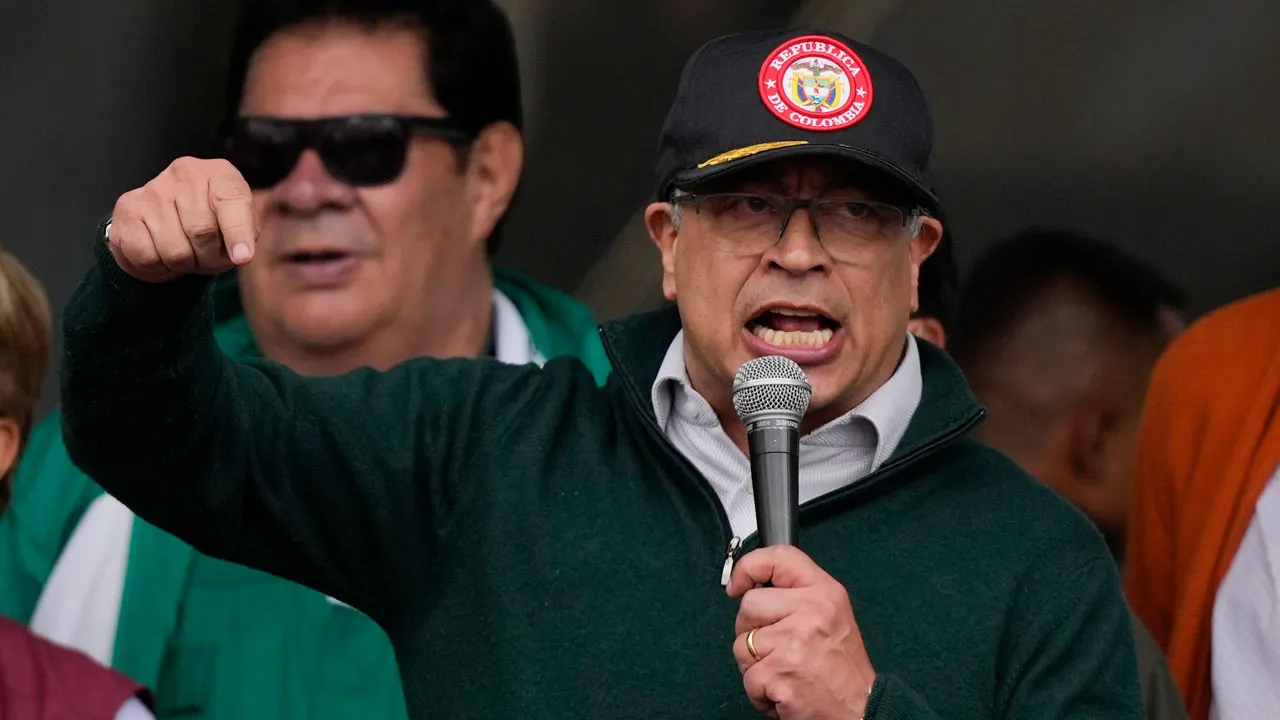
Colombian President Gustavo Petro declared Monday he would “take up arms” against the United States if it launches military operations against his country, escalating tensions between the two nations amid the recent U.S. capture of Venezuelan President Nicolás Maduro.
Petro, who was previously a member of the leftist M-19 guerrilla movement that laid down arms in the early 1990s, made the provocative statement in a post on social media platform X after President Trump suggested Colombia could be the next target in his administration’s expanded war on drugs.
“Although I have not been a military man, I know about war and clandestinity,” Petro wrote. “I swore not to touch a weapon again since the 1989 Peace Pact, but for the Homeland I will take up arms again that I do not want.”
The Colombian leader firmly rejected Trump’s accusations of involvement in drug trafficking, stating: “I am not illegitimate, nor am I a narco. I only have as assets my family home that I still pay for with my salary. My bank statements have been published. No one could say that I have spent more than my salary. I am not greedy.”
The heated exchange follows remarks Trump made to reporters aboard Air Force One on Sunday, where he characterized Colombia as “very sick” and described Petro as a “sick man who likes making cocaine and selling it to the United States.” Trump claimed Petro operates “cocaine mills and cocaine factories” and, when asked directly about potential U.S. military action in Colombia, responded, “It sounds good to me.”
This isn’t the first time Trump has targeted Petro. In December, the U.S. president warned that the Colombian leader “better wise up” or risk becoming a target. Trump has repeatedly labeled Petro an “illegal drug dealer” and a “lunatic.”
The escalating rhetoric comes at a particularly sensitive time for U.S.-Latin American relations following the dramatic capture and arrest of Venezuelan President Maduro. The operation has already created significant diplomatic tensions across the region and drawn criticism from various international actors, including Russia and China.
Colombia, which shares a 1,400-mile border with Venezuela, has historically been one of Washington’s closest allies in the region. However, relations have deteriorated significantly under Petro’s administration, which has taken a more independent foreign policy approach and has been critical of U.S. counter-narcotics strategies.
Petro has been one of Trump’s most outspoken critics in Latin America. He previously condemned U.S. strikes on suspected drug-smuggling vessels in the Caribbean, claiming that many of those killed were “poor fishermen” forced into the drug trade out of economic necessity. Last November, Petro called Trump a “barbarian” and temporarily suspended intelligence sharing with Washington.
Colombia remains one of the world’s largest cocaine producers despite decades of U.S.-backed eradication efforts. The country’s narcotics trade is largely controlled by various armed groups, including the Gulf Clan, the National Liberation Army (ELN), and dissident factions of the Revolutionary Armed Forces of Colombia (FARC) who rejected a 2016 peace agreement.
Petro warned that U.S. bombing campaigns would only radicalize rural communities, claiming that peasant farmers would become “thousands of guerrillas in the mountains” in response to military intervention.
The diplomatic rift deepened when the Trump administration revoked Petro’s U.S. visa over what it described as “reckless and incendiary actions” after he allegedly urged U.S. soldiers to disobey orders while speaking in New York City.
The escalating tensions between the two nations threaten to further destabilize an already volatile region and complicate international efforts to address drug trafficking, migration, and political instability throughout Latin America.
Fact Checker
Verify the accuracy of this article using The Disinformation Commission analysis and real-time sources.

13 Comments
While Petro’s comments are concerning, Trump’s suggestion of military action against Colombia is even more alarming. Both leaders need to dial down the rhetoric and work together to find a peaceful, negotiated solution to this complex problem.
Petro’s willingness to take up arms is a bold statement, but it risks escalating the situation further. Ultimately, the best path forward is for the US and Colombia to engage in constructive dialogue and seek mutually agreeable solutions to the drug trade challenge.
Petro’s reaction seems quite strong, but Trump’s suggestion of military action against Colombia is extremely concerning. Both leaders need to dial down the rhetoric and focus on addressing the drug trafficking issue through cooperation, not confrontation.
You’re right, this is no time for sabre-rattling. The US and Colombia should work together to combat the drug trade, not threaten each other with military force.
While Petro’s response is understandable, threatening military action is not the answer. The US and Colombia should work together through diplomatic channels to find a cooperative, sustainable solution to the drug trade that respects the sovereignty of both nations.
This situation highlights the delicate balance between national sovereignty and international cooperation in the fight against drug trafficking. Petro and Trump must find a way to work collaboratively rather than resorting to threats and ultimatums.
This is a concerning escalation of tensions between the US and Colombia. Petro’s threat to take up arms is a worrying response, though understandable given the accusations from Trump. Hopefully cooler heads can prevail and this situation can be resolved diplomatically.
I agree, this is a very delicate situation that requires careful diplomacy from both sides. Resorting to military action would be disastrous for the region.
This is a complex geopolitical issue with no easy solutions. Both Petro and Trump need to exercise restraint and focus on finding a cooperative approach to tackling the drug trade, rather than escalating tensions. Unilateral military action would be disastrous.
This is a concerning development that could have serious regional implications. Both Petro and Trump need to exercise restraint and focus on finding a diplomatic solution that respects Colombia’s sovereignty while also addressing the shared challenge of drug trafficking.
Petro’s willingness to take up arms is a strong statement, but it’s worrying to see this level of confrontation between the US and Colombia. Diplomatic efforts to address the drug trafficking issue should be the priority, not military posturing.
This situation highlights the complex geopolitical dynamics at play in the region. Petro and Trump must find a way to de-escalate tensions and work together to address the drug trafficking issue in a manner that respects the interests and sovereignty of both countries.
While Petro’s statement is understandable given the gravity of the situation, it’s concerning to see such inflammatory language from a head of state. Hopefully this can be resolved through diplomatic channels rather than military means.