


Listen to the article
Colombia Suspends Intelligence Sharing with US Amid Escalating Tensions
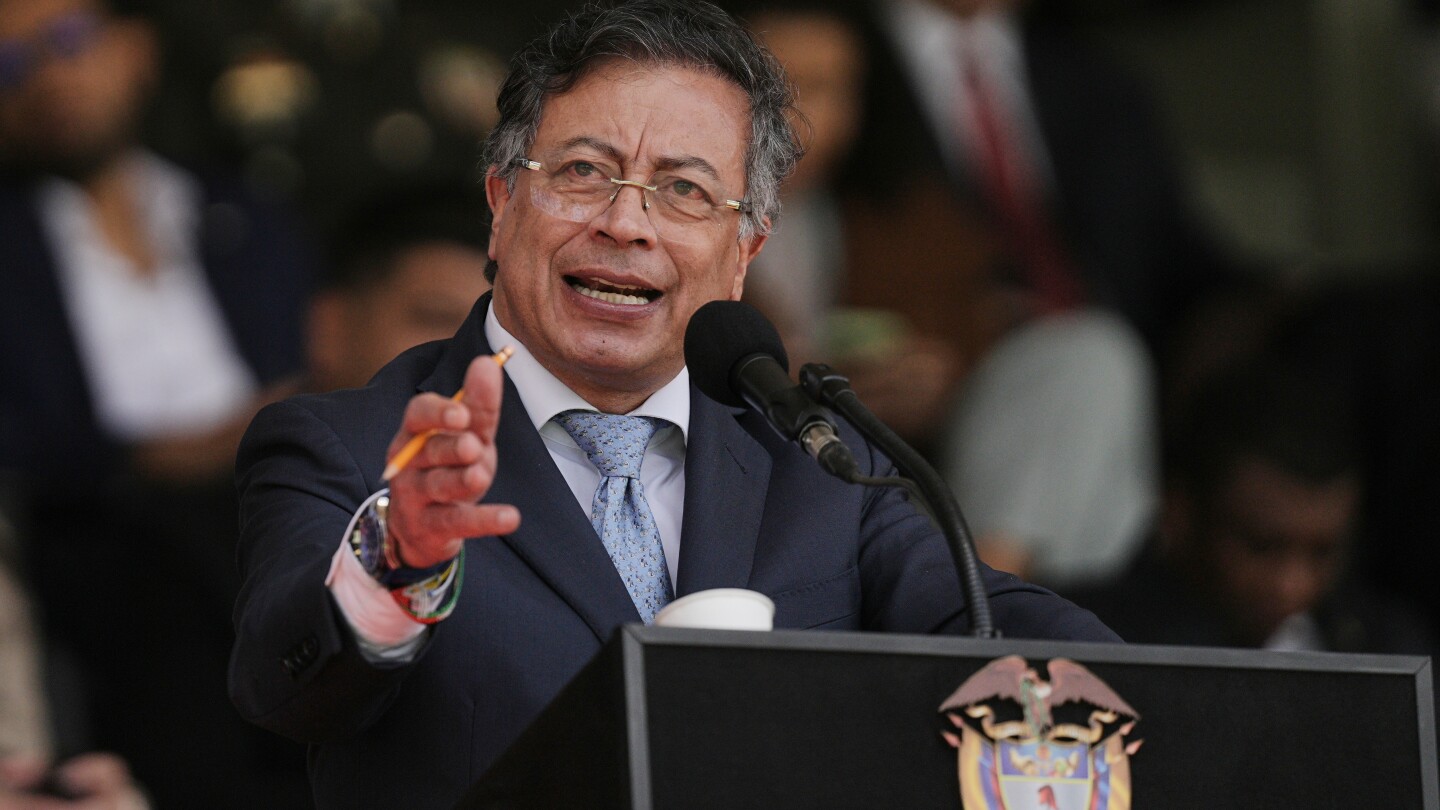
Colombian President Gustavo Petro ordered an immediate halt to intelligence sharing with the United States on Tuesday, marking a significant rupture in relations between the two nations that were once close allies in combating drug trafficking.
In a message posted on social media platform X, Petro directed Colombia’s military to end “communications and other agreements with U.S. security agencies” until Washington ceases its controversial maritime strikes against suspected drug traffickers in the Caribbean, operations that critics have likened to extrajudicial executions.
“The fight against drugs must be subordinated to the human rights of the Caribbean people,” Petro wrote, underscoring his administration’s increasingly vocal opposition to U.S. anti-narcotics tactics. The White House has not yet responded to this latest development.
According to figures from the Trump administration, U.S. military operations have resulted in at least 75 deaths in international waters since August. These strikes initially focused on the southern Caribbean near Venezuela but have recently shifted to the eastern Pacific, targeting vessels off Mexico’s coast.
The Colombian president has gone so far as to call for U.S. President Donald Trump to be investigated for war crimes over these operations, which have claimed the lives of citizens from Venezuela, Ecuador, Colombia, and Trinidad and Tobago.
Petro, a leftist leader who has consistently criticized U.S. drug policies, accuses the Trump administration of disproportionately targeting small-scale coca farmers rather than major drug traffickers and money launderers. On Sunday, during a summit between Latin American and European Union leaders, Petro mentioned meeting with the family of a Colombian fisherman allegedly killed in one of these strikes.
“He may have been carrying fish, or he may have been carrying cocaine, but he had not been sentenced to death,” Petro said. “There was no need to murder him.”
The relationship between the two countries has deteriorated significantly in recent months. The Trump administration has labeled Petro as being lenient with drug traffickers and criticized his decision to protect certain Colombian rebel leaders involved in the drug trade from extradition to the United States.
Tensions escalated further in October when the Trump administration imposed financial sanctions on Petro and members of his family, alleging involvement in the global drug trade. Treasury Secretary Scott Bessent claimed that Petro “has allowed drug cartels to flourish and refused to stop this activity,” adding that “President Trump is taking strong action to protect our nation and make clear that we will not tolerate the trafficking of drugs into our nation.”
This diplomatic crisis unfolds against the backdrop of increased U.S. naval presence in the southern Caribbean. The United States has deployed eight warships, a submarine, fighter jets, and marines to the region, with the aircraft carrier USS Gerald Ford expected to arrive this month.
Venezuela’s government, led by Nicolas Maduro, views this military buildup as a direct threat to its sovereignty. Venezuelan officials have expressed concerns that the U.S. is preparing for military action against Maduro’s government, which Trump administration officials have characterized as a drug cartel.
While U.S. officials maintain that the deployment targets drug trafficking operations, President Trump has hinted at possible strikes within Venezuelan territory. In response, Venezuelan Defense Minister Vladimir Padrino López announced Tuesday that military personnel, civilian militia members, police officers, and ruling-party organizers would participate in training exercises to protect the country’s airspace.
The defense minister delivered his announcement while standing beside a surface-to-air missile system at a military base in Caracas, signaling Venezuela’s readiness to defend against potential U.S. military action.
Fact Checker
Verify the accuracy of this article using The Disinformation Commission analysis and real-time sources.

18 Comments
President Petro’s decision to halt intelligence cooperation with the US over the maritime strikes is a bold step, but one that aligns with his administration’s focus on human rights. This could put strain on the long-standing security partnership between the two countries.
It will be crucial for the US and Colombia to engage in constructive dialogue and find a solution that addresses the concerns of both sides. Maintaining effective cooperation on counternarcotics is in the interest of both nations.
This move by Colombia underscores the tensions between the country’s new leadership and the US approach to the drug war. President Petro is clearly prioritizing human rights, even if it means disrupting long-standing security cooperation.
Finding a way to balance the fight against drug trafficking with respect for human rights will be a significant challenge for the US and Colombia going forward. Both sides will need to show flexibility and a willingness to compromise.
This is a significant development in the Colombia-US relationship. It seems President Petro is taking a firm stance against the US maritime strikes, which have become increasingly controversial. Balancing the drug war with human rights will be a delicate challenge.
I’m curious to see how this unfolds and if the US responds. Cooperation on security and anti-narcotics has long been a pillar of the bilateral ties.
This suspension of intelligence sharing highlights the tensions between Colombia’s new administration and the US approach to the drug war. It will be a delicate balancing act to maintain security cooperation while addressing human rights concerns.
The US has been a key partner for Colombia in combating drug trafficking, so this move could have significant implications. Both sides will need to find common ground to move forward effectively.
The suspension of intelligence sharing between Colombia and the US is a dramatic step, but it reflects the Petro administration’s desire to shift the focus of the drug war towards human rights concerns. This could have far-reaching implications for the bilateral relationship.
It will be critical for the two countries to engage in constructive dialogue and find a way to address Colombia’s concerns while still maintaining effective cooperation on counternarcotics operations. Both sides have a stake in ensuring regional security and stability.
President Petro is taking a principled stand, but this could create challenges for the US and Colombia in their joint fight against narcotics. Maintaining the right balance between security and human rights will be crucial.
It will be interesting to see how this plays out diplomatically. The US and Colombia have been close allies on this issue, so finding a compromise solution will be important.
Colombia is asserting its sovereignty and pushing back against what it sees as heavy-handed US tactics. This suspension of intelligence sharing could complicate efforts against drug trafficking in the region.
It will be interesting to see if the two countries can find a compromise that addresses Colombia’s human rights concerns while still allowing for effective anti-drug operations.
Ending intelligence cooperation is a bold move by Colombia, but it seems President Petro is serious about shifting the focus of the drug war towards human rights. This could put strain on the traditionally close US-Colombia relationship.
I wonder how this will impact the flow of US counternarcotics aid and resources to Colombia. The two countries will need to find a way to work together constructively on this issue.
This move by Colombia reflects the changing political dynamics in the region, with a greater emphasis on human rights in the drug war. It remains to be seen how the US will respond and if the two countries can find a way to cooperate effectively.
The suspension of intelligence sharing could hamper efforts to disrupt drug trafficking networks in the Caribbean. Both sides will need to be willing to compromise to find a mutually acceptable way forward.