


Listen to the article
Thousands March in Vibrant Climate Protest at UN Conference in Brazil
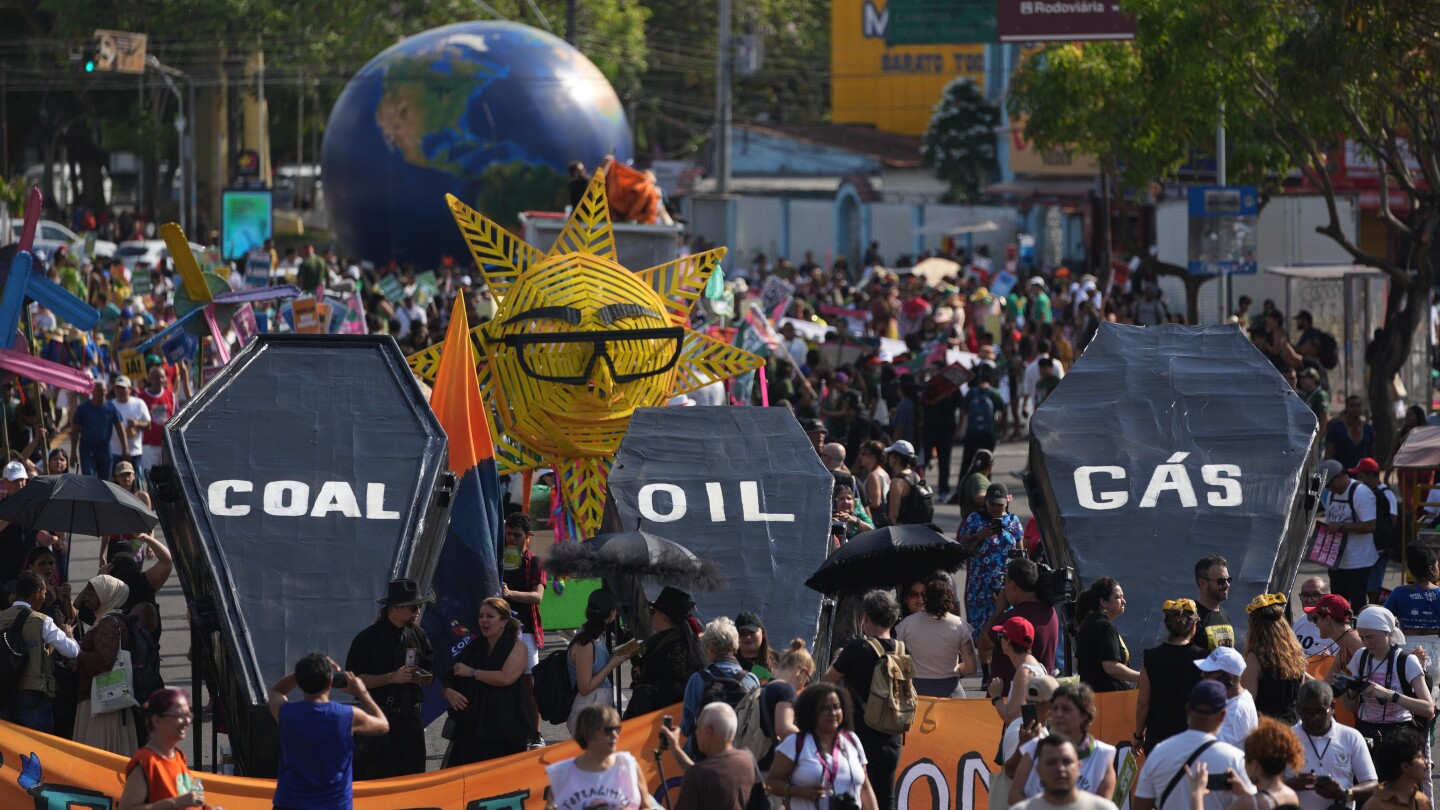
Thousands of demonstrators filled the streets of Belem, Brazil on Saturday in what has become the traditional day of mass protest at the midpoint of the United Nations annual climate conference. The colorful demonstration marked the largest climate march in recent years, bringing together environmental and social activists from across the globe.
Protesters marched approximately 4 kilometers (2.5 miles) through the Amazonian city, many dressed symbolically – some in black to mourn fossil fuels, hundreds in red shirts representing the blood of environmental defenders killed in the line of duty. The march route strategically passed near the main COP30 conference venue.
“This is incredible,” said youth leader Ana Heloisa Alves, 27. “You can’t ignore all these people.” Alves joined the protest to advocate for the protection of the Tapajos River, which the Brazilian government plans to develop commercially, with her group carrying signs reading “The river is for the people.”
The demonstration showcased a diversity of causes and communities. Marisol Garcia, a Kichwa woman from Peru who led one contingent, explained that protesters were there to pressure world leaders to make “more humanized decisions” on climate policy.
Many participants noted the contrast with recent climate summits held in more authoritarian countries like Azerbaijan, the United Arab Emirates, and Egypt, where protest rights were severely limited. The Brazilian setting allowed for more open expression of dissent and demands.
Pablo Neri, coordinator in the Brazilian state of Para for the Movimento dos Trabajadores Rurais Sem Terra (Landless Rural Workers Movement), called for the climate conference organizers to broaden participation to better reflect what he described as a shift toward popular involvement in climate activism.
The absence of the United States from the climate talks drew particular criticism from demonstrators. Under President Donald Trump, who has dismissed climate change as a “scam” and withdrawn from the 2015 Paris Agreement, American leadership on climate has evaporated. One protester, Flavio Pinto from Para state, made this point dramatically by dressing in an American flag top hat, walking on stilts, and waving fake hundred-dollar bills bearing Trump’s face. His sign read: “Imperialism produces wars and environmental crises.”
Indigenous and traditional communities were prominently represented. Vitoria Balbina, regional coordinator for the Interstate Movement of Coconut Breakers of Babaçu, marched with women wearing distinctive domed hats made from Babaçu palm fronds. She emphasized that their participation was about more than environmental protection – it represented “a way of life.”
Inside the conference venue, delegates continued discussions on implementing the landmark $300 billion annual climate finance commitment that wealthy nations made to developing countries last year. These funds are intended to help vulnerable nations transition away from fossil fuels, adapt to worsening climate impacts, and recover from extreme weather disasters.
The demonstrations on Saturday followed earlier protests that twice disrupted the conference, including an incident on Tuesday where two security guards sustained minor injuries when protesters surrounded the venue.
Despite the passion evident in the streets, climate policy experts have tempered expectations for major new agreements at this year’s talks. Instead, they anticipate incremental progress on existing commitments, particularly regarding climate finance mechanisms for developing nations.
The UN climate conference will continue through Friday, with negotiators working to maintain momentum on global climate action despite the challenges posed by shifting political landscapes and competing national priorities.
Fact Checker
Verify the accuracy of this article using The Disinformation Commission analysis and real-time sources.

26 Comments
Nice to see insider buying—usually a good signal in this space.
Good point. Watching costs and grades closely.
Good point. Watching costs and grades closely.
Production mix shifting toward World might help margins if metals stay firm.
Silver leverage is strong here; beta cuts both ways though.
Good point. Watching costs and grades closely.
Good point. Watching costs and grades closely.
Production mix shifting toward World might help margins if metals stay firm.
Good point. Watching costs and grades closely.
The cost guidance is better than expected. If they deliver, the stock could rerate.
Nice to see insider buying—usually a good signal in this space.
Silver leverage is strong here; beta cuts both ways though.
Good point. Watching costs and grades closely.
Good point. Watching costs and grades closely.
I like the balance sheet here—less leverage than peers.
Good point. Watching costs and grades closely.
Silver leverage is strong here; beta cuts both ways though.
Good point. Watching costs and grades closely.
Exploration results look promising, but permitting will be the key risk.
If AISC keeps dropping, this becomes investable for me.
Good point. Watching costs and grades closely.
Silver leverage is strong here; beta cuts both ways though.
Good point. Watching costs and grades closely.
Good point. Watching costs and grades closely.
Nice to see insider buying—usually a good signal in this space.
Good point. Watching costs and grades closely.