


Listen to the article
China’s Foreign Minister Signals Hope for Reset in U.S. Relations Ahead of Xi-Trump Summit
China has struck an optimistic tone regarding its relationship with the United States, describing 2024 as potentially a “landmark year” for bilateral ties despite ongoing tensions between the world’s two largest economies.
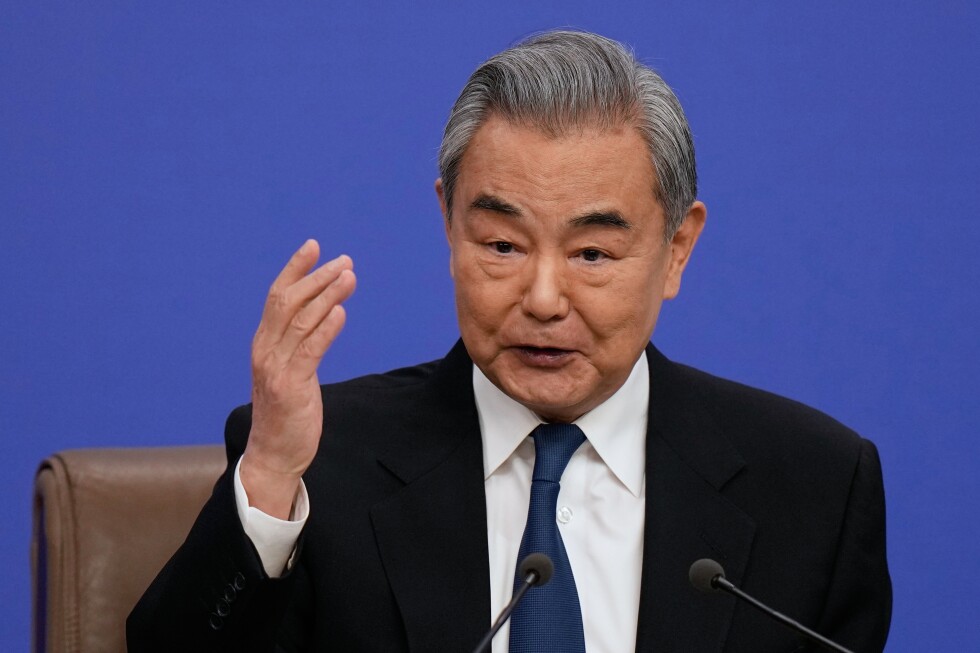
Speaking Sunday at a press briefing during China’s annual legislative session, Foreign Minister Wang Yi emphasized the importance of high-level dialogue between the two nations. “The two heads of state have personally maintained good exchanges at the highest level,” Wang noted, suggesting these leadership connections provide a “strategic guarantee” for the complex relationship.
Wang’s comments come as preparations advance for an anticipated summit between Chinese President Xi Jinping and U.S. President Donald Trump in Beijing later this month. While not explicitly confirming the visit, Wang made clear that China is positioning itself for improved relations.
“The agenda for high-level exchanges is already on our table. What needs to be done now is for both sides to make thorough preparations, foster a suitable atmosphere, manage existing differences, and eliminate unnecessary distractions,” Wang said. “China’s attitude has always been positive and open, and the key is for the U.S. side to meet us halfway.”
The relationship between Beijing and Washington has been fraught for years, particularly since Trump initiated a trade war during his previous administration. Last year, Trump imposed significant tariffs on Chinese goods, citing trade imbalances. Though the two leaders reached a temporary truce last October that paused the most severe tariffs, fundamental economic disputes remain unresolved.
George Chen of consultancy The Asia Group characterized Wang’s speech as setting “the overall tone for U.S.-China relations for the year” and representing “a welcoming gesture from Beijing for Trump to come and visit.” Chen added that the “Chinese side is prepared to talk,” signaling Beijing’s readiness to host the American president.
Wang’s remarks also reflected China’s increasingly confident international posture, particularly regarding its role in global institutions. He emphasized China’s support for the United Nations at a time when the organization faces budget cuts and staffing reductions following U.S. withdrawal from multiple U.N. initiatives.
As one of the five permanent members of the U.N. Security Council with veto power, China has strategically leveraged its position to build international relationships while filling diplomatic voids left by the United States since Trump’s first term. Wang highlighted President Xi’s Global Governance Initiative, first unveiled last September, stating that it will “center the United Nations.”
“The clearest signal from global governance initiatives is that the U.N.’s leading role must be upheld and cannot be shaken; its core role should be strengthened, not weakened,” Wang insisted. “Although the U.N. is not perfect, without it the world would only be worse. Bypassing the U.N. to set up alternative arrangements, going one’s own way, or cobbling together various small groupings will win no support and are not sustainable.”
The foreign minister also addressed ongoing global conflicts, calling for “an immediate stop to military actions” in the Middle East. Without directly naming the United States, Wang delivered a thinly-veiled criticism: “Might does not equal right, and the world cannot revert to the law of the jungle.”
Wang urged major powers to “play a constructive role” and return to negotiations to resolve conflicts, highlighting China’s desire to position itself as a responsible global stakeholder committed to diplomatic solutions.
The upcoming Xi-Trump summit, if confirmed, would represent a critical juncture in U.S.-China relations during a period of economic competition, technological rivalry, and divergent geopolitical interests. Analysts will be watching closely to see if concrete progress can be achieved on trade issues, security concerns, and other points of contention that have defined the relationship in recent years.
Fact Checker
Verify the accuracy of this article using The Disinformation Commission analysis and real-time sources.

18 Comments
China’s emphasis on high-level dialogue is encouraging, but the proof will be in the substantive outcomes and whether tensions can be meaningfully reduced over time.
Well said. Sustained progress requires addressing core issues, not just managing differences. The path forward remains challenging but dialogue is a start.
A US-China summit later this month could be a critical opportunity to set the relationship on a more constructive path. Both sides will need to show flexibility and pragmatism.
Absolutely. With the complexities involved, managing expectations and finding common ground will be essential for any meaningful breakthroughs.
China’s outreach is a positive sign, but the US-China relationship remains highly complex with deep-seated disagreements. Careful management and compromise will be essential.
Well put. Addressing core issues like trade, technology, and geopolitics will require political will and pragmatism on both sides.
China’s optimism about a ‘landmark year’ in 2026 for US relations seems ambitious given the current tensions. Sustained, good-faith dialogue and pragmatic compromise will be required on both sides.
Agree. Steady, incremental progress is more realistic than major breakthroughs in the near term. The path forward remains highly uncertain and will require political will and flexibility from all parties.
Cautious optimism is warranted, but major progress in US-China relations by 2026 seems ambitious given the current state of tensions and mistrust between the two countries.
Agreed. Steady, incremental improvements in communication and cooperation would be a more realistic and sustainable path forward.
Given the depth of US-China tensions, 2026 may be an overly optimistic timeline for a ‘landmark’ improvement in relations. Steady, incremental progress seems more realistic.
Agree, a more measured approach is prudent. Small wins that build trust could pave the way for bigger breakthroughs down the line.
The proposed US-China summit presents an opportunity, but the two countries’ competing interests and divergent visions make meaningful progress a major challenge. Careful diplomacy will be essential.
Absolutely. Finding common ground and building on incremental successes will be key, rather than setting overly ambitious timelines for transformational change.
Interesting to see China’s optimistic tone about the US relationship. High-level dialogue and managing differences will be key to progress, though the path forward remains uncertain.
Agreed. With ongoing tensions, a ‘landmark year’ in 2026 would be an ambitious goal, but diplomatic outreach is a positive step.
China’s positioning for improved ties with the US is understandable, but the path forward remains highly uncertain. Tangible results will depend on substantive concessions and compromise from both sides.
Well said. A ‘landmark’ improvement by 2026 would be an impressive achievement, but the two countries have a long way to go in rebuilding trust and addressing core differences.